
Picture this: you’re replying to a coworker’s email, texting a friend, or leaving a quick comment in a team chat. You suddenly want to add one extra piece of information that isn’t the main topic. Instead of starting a new sentence awkwardly, you type “BTW” and continue your message naturally. It’s a small abbreviation, yet it plays a big role in making digital conversations feel smooth and efficient.
BTW is one of the most widely recognized internet abbreviations in English. Whether you’re a professional, student, ESL learner, or content creator, understanding its meaning and knowing when to use it can improve your communication. While it’s perfect for casual conversations and informal messages, it isn’t always the best choice in professional or formal writing. Learning suitable alternatives helps you communicate with greater clarity, confidence, and the right tone for every audience.
What Does “BTW” Mean?
BTW stands for “By The Way.” It is an abbreviation used to introduce an additional thought, related detail, or side note without changing the main topic of a conversation. People commonly use BTW in text messages, emails, online chats, social media posts, and informal workplace communication to add information naturally and efficiently.
Origin & History of “BTW”
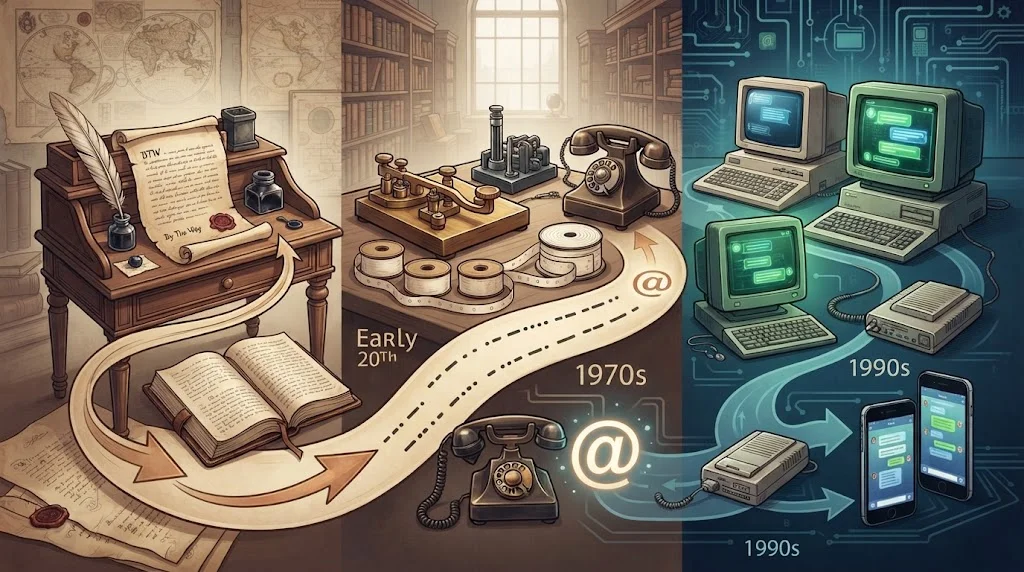
The phrase “by the way” has existed in English for centuries as a conversational transition that introduces an additional point or shifts attention briefly without changing the main discussion. Long before digital communication, writers and speakers used the expression in letters, books, and everyday conversations to smoothly insert extra information.
The abbreviation BTW emerged during the early days of internet culture in the 1980s and 1990s. Online chat rooms, bulletin board systems (BBS), IRC chats, and early instant messaging encouraged users to shorten common phrases because typing speed and character limits mattered. As a result, abbreviations such as LOL, BRB, FYI, and BTW became part of everyday digital language.
With the rise of texting, smartphones, social media platforms, and workplace messaging apps like Slack and Microsoft Teams, BTW became even more common. Today, although many people still write the full phrase “by the way,” the abbreviation remains a familiar and widely accepted shortcut in informal communication across English-speaking countries.
Its meaning has stayed remarkably consistent over time. Rather than changing definitions, its usage has expanded from casual online conversations to emails, collaborative workspaces, educational discussions, and everyday digital communication.
Synonyms & Alternatives by Tone
Professional & Neutral Alternatives
- Additionally
- Furthermore
- Also
- In addition
- As an additional point
Polite & Supportive Alternatives
- I’d also like to mention
- Just to let you know
- You may also want to know
- One more thing
- I’d like to add
Encouraging & Reassuring Alternatives
- Just so you know
- On a positive note
- While we’re discussing this
- It’s worth mentioning
- One helpful point
Casual, Playful & Idiomatic Alternatives
- Oh, and
- By the way
- Speaking of that
- Also
- Before I forget
When Should You Use “BTW”?
BTW works best when you want to introduce a related idea without interrupting the natural flow of a conversation. It signals that the following information is useful but not the primary focus of the discussion.
Professional Settings
In modern workplaces, BTW can be appropriate in internal chats, informal emails between colleagues, and collaborative messaging platforms. It helps add reminders or extra details quickly without making the conversation feel overly formal.
Example:
BTW, the client moved tomorrow’s meeting to 3 PM.
Casual Conversations
Friends and family frequently use BTW in text messages and social media conversations. It creates a relaxed, conversational tone while smoothly introducing another topic.
Example:
BTW, are we still meeting for dinner tonight?
Writing, Presentations, and Digital Communication
Although presentations and formal reports usually avoid abbreviations, BTW is common in digital communication such as Slack messages, WhatsApp chats, online forums, and collaborative documents where brevity is valued.
When It Is Especially Effective
Use BTW when:
- You have a related detail to share.
- The information is useful but not urgent.
- The conversation is informal or semi-professional.
- You want the message to sound natural and conversational.
- Quick communication is more important than strict formality.
When Should You Avoid “BTW”?
Although BTW is widely understood, it isn’t appropriate for every situation. Choosing the full phrase or a more formal alternative can improve clarity and professionalism.
Avoid using BTW in:
- Formal business proposals.
- Academic essays and research papers.
- Legal contracts and official documentation.
- Sensitive workplace conversations.
- Customer complaints or disciplinary communications.
- Executive presentations and board reports.
In these contexts, phrases such as “Additionally,” “Furthermore,” or “I’d also like to mention” create a more polished and professional impression.
Is “BTW” Professional, Polite, or Casual?
BTW is generally considered casual to semi-professional. Its suitability depends largely on your audience, communication channel, and relationship with the reader.
From a formality perspective, it sits comfortably in everyday digital communication but below fully professional transition phrases like “Additionally” or “Furthermore.”
Emotionally, BTW carries very little weight. It simply signals that another point is coming, making the conversation feel relaxed rather than authoritative or formal.
Audience perception also varies:
- Friends usually see BTW as natural and conversational.
- Colleagues often accept it in internal chats and informal emails.
- Managers may appreciate it in quick updates but prefer full wording in official documents.
- Clients and external stakeholders generally expect more formal transitions in professional correspondence.
As a general rule, if the message represents you or your organization officially, spelling out “by the way” or choosing a formal alternative is usually the safer option.
Pros and Cons of Using “BTW”
Advantages
Clarity
BTW immediately tells readers that additional information is coming. Most English speakers recognize it instantly, reducing confusion during digital conversations.
Efficiency
Because it’s only three letters, BTW saves typing time and keeps messages concise, especially in chats, text messages, and fast-moving workplace discussions.
Accessibility
The abbreviation is widely understood across age groups and English-speaking regions, making it one of the most universally recognized internet acronyms.
Potential Drawbacks
Oversimplification
Sometimes the extra information introduced by BTW may actually be important enough to deserve its own sentence or paragraph instead of appearing as an afterthought.
Tone Mismatch
Using BTW in formal reports, legal documents, or executive communications can make the writing appear overly casual or insufficiently professional.
Repetition
Starting multiple messages or paragraphs with BTW can become repetitive and reduce the overall quality of your writing. Varying your transition phrases helps keep communication more engaging and polished.
Real-Life Examples of “BTW” by Context
Understanding BTW is easier when you see how native speakers naturally use it in different situations. While the abbreviation always introduces additional information, the surrounding context determines whether it sounds friendly, professional, or simply conversational.
Emails
In informal workplace emails, BTW helps add a useful reminder without interrupting the main message.
Example
Hi Sarah,
I’ve attached the revised proposal for your review. BTW, the client requested that we include the updated pricing before tomorrow’s meeting.
Meetings
During team discussions, speakers often use the full phrase “by the way” rather than the abbreviation, but BTW frequently appears in meeting chats.
Example
BTW, the marketing team has already approved the campaign timeline.
Presentations
Formal presentations usually avoid the abbreviation. However, presentation notes or internal discussion channels may include it.
Example
BTW, the latest customer survey results are available if anyone wants additional data after the presentation.
Conversations
Friends naturally use BTW when changing topics or adding another thought.
Example
BTW, did you finish watching that series you recommended?
Social Media
Social media encourages short, conversational language, making BTW especially common.
Example
Loving the new update. BTW, the dark mode looks amazing!
“BTW” vs Similar Expressions (Key Differences)
| Phrase | Meaning Difference | Tone Difference | Best Use Scenario |
| By the way | The complete version of BTW with identical meaning | Slightly more natural and polished | Conversations, emails, meetings |
| Also | Adds another point without changing direction | Neutral and straightforward | Business writing, reports, emails |
| Additionally | Introduces supporting information more formally | Professional and formal | Reports, proposals, academic writing |
| Furthermore | Adds a stronger supporting argument | Formal and authoritative | Research papers, presentations, official documents |
| Speaking of that | Connects directly to something just mentioned | Casual and conversational | Friendly conversations and discussions |
| One more thing | Introduces one final point before ending | Friendly and personal | Meetings, emails, conversations |
Common Mistakes & Misuse of “BTW”
One of the biggest mistakes people make is overusing BTW. When every message begins with the abbreviation, writing starts to feel repetitive and less polished. Varying your transitions creates smoother communication.
Another common issue is using BTW in overly formal situations. Academic papers, legal agreements, executive reports, and official business correspondence generally require complete transition phrases instead of internet abbreviations.
Some writers also use BTW to introduce critical information. Because the abbreviation suggests an extra or secondary point, placing essential instructions after BTW can unintentionally reduce their importance.
Cultural misunderstandings may occur as well. Although BTW is familiar in many English-speaking environments, some ESL learners or professionals in highly formal workplaces may find the abbreviation confusing or too casual.
Psychological Reason People Prefer “BTW”
One reason BTW remains popular is its ability to reduce cognitive load. Readers instantly recognize that an additional idea is coming, allowing them to process information without mentally adjusting to an abrupt topic change.
The abbreviation also supports the fast pace of modern communication. In emails, instant messaging, and social platforms, people value efficiency, and BTW delivers an extra point with minimal effort.
From a communication perspective, BTW often signals openness rather than authority. It makes conversations feel less rigid and more collaborative, encouraging natural interaction.
It also fits today’s attention economy, where shorter messages are more likely to be read completely. By quickly introducing secondary information, BTW helps maintain reader engagement without unnecessary wording.
US vs UK Usage of “BTW”
Both the United States and the United Kingdom widely recognize BTW, and its meaning remains the same across regions.
In the United States, the abbreviation appears frequently in text messages, workplace chats, emails, online forums, and social media. American professionals often accept it in internal communication while avoiding it in formal documents.
In the United Kingdom, BTW is equally common in personal messaging and online conversations. British workplaces may favor writing the complete phrase “by the way” slightly more often in professional emails, although the abbreviation is still well understood.
Overall, there is little regional difference. The deciding factor is usually formality, not geography.
“BTW” in Digital & Modern Communication
Emails
Internal emails often include BTW to introduce reminders, updates, or extra information. For external clients or formal communication, writing “by the way” or using a professional alternative is generally more appropriate.
Slack and WhatsApp
Messaging platforms encourage brief communication, making BTW one of the most common transition abbreviations. It allows team members to add another thought without creating a separate message.
Social Media
On platforms like X, Instagram, Facebook, and Reddit, BTW keeps posts conversational while helping writers smoothly introduce related comments or observations.
AI-Generated Summaries
Modern AI writing tools generally recognize BTW but often replace it with more formal transitions such as “Additionally,” “Also,” or “Furthermore” when producing professional documents. This helps improve clarity while matching the expected tone.
Linguistic & Communication Insight
Emotional Weight & Subtext
Although BTW literally means “by the way,” native speakers often interpret it as a signal that the following information is helpful but not central to the conversation. It creates an informal, approachable tone that reduces pressure and keeps discussions feeling natural. At the same time, placing highly important information after BTW may unintentionally make it seem less significant.
Direct vs Indirect Phrasing
Compared with direct transitions such as “Additionally” or “Furthermore,” BTW introduces information more casually. It doesn’t suggest urgency or authority. Instead, it gently shifts the conversation without sounding demanding, making it effective for collaborative discussions but less suitable for situations requiring emphasis or precision.
Professional Communication Perspective
In workplace communication, BTW often reflects a relaxed team culture where quick exchanges are common. Colleagues usually interpret it as friendly and efficient. However, in client-facing emails, executive communication, or official documents, many readers expect complete transition phrases because they project greater professionalism and attention to detail.
Pragmatic Reasons for Alternatives
Experienced communicators frequently replace BTW with alternatives like “Additionally,” “I’d also like to mention,” or “One more point” when they want to strengthen credibility, reduce informality, or ensure that readers recognize the importance of the added information. Choosing the right transition helps match both the audience and the communication goal.
Social Signaling
Word choice communicates more than information. Using BTW can signal friendliness, efficiency, and familiarity with digital communication. Selecting a more formal alternative may signal expertise, professionalism, and careful attention to the audience. The transition you choose subtly shapes how others perceive your confidence and communication style.
Tone & Context Guidance

Use BTW when the conversation is informal, collaborative, or conversational, and the additional information is genuinely secondary. Avoid it when communicating with clients, writing academic work, preparing legal documents, or sharing sensitive information where every detail deserves equal emphasis. Matching the transition to the context helps improve clarity, trust, and overall communication effectiveness.
By the Way
Meaning: “By the Way” is the complete version of BTW. It introduces an additional thought, reminder, or related piece of information without changing the main subject of the conversation.
Why This Phrase Works: Writing the full phrase feels more natural and polished than the abbreviation while remaining friendly and easy to understand.
Real-World Usage Insight: Native English speakers often say “by the way” in conversations and write it in emails when they want to sound approachable without being overly casual.
Best Use: Professional emails, conversations, meetings, and messages where a relaxed but complete expression is preferred.
Avoid When: You need highly formal or technical language in legal, academic, or official documents.
Tone: Friendly, neutral, conversational.
US vs UK Usage: Equally common in both American and British English.
Example (Email): Hi Emma, I’ve attached the revised proposal. By the way, the client has confirmed Friday’s meeting.
Additionally
Meaning: “Additionally” introduces another important point that supports or expands the previous information.
Why This Phrase Works: It creates a structured flow and immediately signals that another relevant detail follows.
Real-World Usage Insight: Professionals frequently use “additionally” in reports, presentations, proposals, and business correspondence to sound organized and credible.
Best Use: Business writing, reports, proposals, presentations, and formal emails.
Avoid When: Casual conversations where it may sound overly formal.
Tone: Professional, formal, objective.
US vs UK Usage: Widely used in both the US and UK with no meaningful regional difference.
Example (Email): The software update has been completed. Additionally, all user accounts have been successfully migrated.
Also
Meaning: “Also” simply adds another related point without changing the direction of the discussion.
Why This Phrase Works: It is short, universally understood, and fits almost every style of communication.
Real-World Usage Insight: Native speakers use “also” naturally in speech, emails, presentations, and everyday writing because it sounds effortless.
Best Use: Emails, conversations, articles, presentations, and general business communication.
Avoid When: You need a stronger or more formal transition between ideas.
Tone: Neutral, flexible, natural.
US vs UK Usage: Extremely common across both American and British English.
Example (Meeting): We’ve finalized the budget. Also, the finance team has approved next quarter’s forecast.
Furthermore
Meaning: “Furthermore” introduces another supporting argument that strengthens the previous statement.
Why This Phrase Works: It signals logical progression and adds authority to professional or academic writing.
Real-World Usage Insight: Writers often choose “furthermore” when building persuasive arguments rather than simply adding another thought.
Best Use: Research papers, business reports, proposals, policy documents, and formal presentations.
Avoid When: Informal chats or friendly text messages.
Tone: Formal, authoritative, analytical.
US vs UK Usage: Common in both countries, particularly in formal writing.
Example (Presentation): Customer satisfaction increased by 18%. Furthermore, retention rates reached their highest level in three years.
In Addition
Meaning: “In addition” introduces extra information that complements the main point.
Why This Phrase Works: It connects ideas smoothly while maintaining a professional and readable tone.
Real-World Usage Insight: Professionals regularly use this phrase in emails and reports because it sounds polished without becoming overly technical.
Best Use: Business emails, reports, presentations, and educational writing.
Avoid When: Very casual conversations with friends.
Tone: Professional, neutral.
US vs UK Usage: Equally familiar in American and British English.
Example (Email): We’ve completed the security review. In addition, the compliance team approved the new policy yesterday.
I’d Like to Add
Meaning: “I’d like to add” politely introduces another idea or clarification.
Why This Phrase Works: It softens the transition and shows respect for the listener or reader.
Real-World Usage Insight: Speakers often use this phrase during meetings when contributing without interrupting the discussion.
Best Use: Meetings, collaborative discussions, presentations, and professional conversations.
Avoid When: Writing highly concise documents where shorter transitions work better.
Tone: Polite, collaborative, respectful.
US vs UK Usage: Frequently used in both regions, especially in workplace communication.
Example (Meeting): I’d like to add that customer feedback has improved significantly since the new onboarding process began.
One More Thing
Meaning: “One more thing” signals that there is one final point before ending the discussion.
Why This Phrase Works: It prepares the audience for a closing remark without sounding abrupt.
Real-World Usage Insight: Native speakers commonly use this phrase at the end of meetings, conversations, and emails to mention an important reminder.
Best Use: Conversations, meetings, emails, and team discussions.
Avoid When: The additional point is lengthy or introduces an entirely new topic.
Tone: Friendly, conversational, slightly informal.
US vs UK Usage: Very common in both American and British English.
Example (Meeting): One more thing before we finish—the client would like weekly progress updates starting next Monday.
Just So You Know
Meaning: “Just so you know” introduces information that may be useful even if it doesn’t require immediate action.
Why This Phrase Works: It sounds warm and conversational while keeping the listener informed.
Real-World Usage Insight: Friends, coworkers, and managers frequently use this phrase to share updates without creating unnecessary urgency.
Best Use: Team chats, emails, text messages, and everyday conversations.
Avoid When: Delivering critical instructions or urgent announcements.
Tone: Friendly, supportive, conversational.
US vs UK Usage: Widely used and easily understood throughout both the US and the UK.
Example (Message): Just so you know, the office parking lot will be closed tomorrow morning for maintenance.
Conclusion
BTW is much more than a simple internet abbreviation—it is a practical communication tool that helps introduce additional information naturally and efficiently. Whether you’re texting a friend, collaborating with coworkers, or participating in an online discussion, BTW keeps conversations flowing without disrupting the main topic. However, choosing when to use it is just as important as understanding what it means. In casual conversations and internal workplace chats, it feels friendly and approachable. In formal emails, legal documents, or academic writing, replacing it with alternatives such as “Additionally,” “In addition,” or “I’d like to add” creates a more polished impression.
Knowing these alternatives allows you to match your language to your audience, strengthen your credibility, and communicate with greater confidence. By understanding the meaning, history, tone, and practical applications of BTW, you can make smarter language choices that improve clarity, professionalism, and engagement across both personal and professional communication.
FAQs
What does BTW stand for?
BTW stands for “By The Way.” It is a common English abbreviation used to introduce additional information or a related thought without changing the main topic. It appears frequently in text messages, social media, emails, and workplace chats because it keeps communication brief while maintaining a natural conversational flow.
Is BTW considered professional?
BTW is generally considered semi-professional rather than fully professional. It is acceptable in internal team chats, informal emails, and collaborative messaging platforms. However, in formal business correspondence, executive communication, legal documents, or academic writing, using the full phrase or a more formal transition is usually the better choice.
Can I use BTW in business emails?
Yes, but only when the email is informal or sent to colleagues who are comfortable with casual communication. If you’re emailing clients, executives, or external partners, writing “By the way” or choosing alternatives like “Additionally” or “I’d also like to mention” creates a more professional impression.
Is BTW the same as “By the way”?
Yes. BTW is simply the abbreviated form of “By the way.” Both expressions have the same meaning and introduce additional information. The difference lies in formality: the full phrase appears more polished, while the abbreviation is better suited for casual digital communication.
What are the best alternatives to BTW?
Some excellent alternatives include “Additionally,” “Also,” “In addition,” “I’d like to add,” “One more thing,” “Just to let you know,” “Speaking of that,” and “It’s worth mentioning.” The best option depends on whether your communication is formal, professional, or conversational.
Is BTW appropriate in academic writing?
No. Academic writing generally avoids internet abbreviations such as BTW because they may appear too informal. Instead, use transitions like “Additionally,” “Furthermore,” “Moreover,” or “In addition” to maintain clarity, professionalism, and academic tone.
Why is BTW so popular in digital communication?
BTW saves time, reduces typing effort, and is widely understood by English speakers. It fits naturally into fast-paced communication on messaging apps, social media, and workplace collaboration tools while allowing writers to introduce extra information without interrupting the conversation.
Do Americans and British people use BTW differently?
Not significantly. Both American and British English speakers commonly understand and use BTW. The primary difference is not regional but contextual. In both countries, the abbreviation is widely accepted in informal communication but generally avoided in highly formal writing.
Can BTW make a message sound too casual?
Yes. Because BTW originated in internet and texting culture, it naturally creates a relaxed tone. When used in official reports, customer-facing communication, or sensitive discussions, it may make the message appear less professional than intended. Choosing a formal alternative helps match the expected tone.
How can I choose the right alternative to BTW?
Start by considering your audience and purpose. For formal communication, choose transitions like “Additionally” or “In addition.” For collaborative meetings, “I’d like to add” works well. In everyday conversations or friendly emails, “By the way” or “One more thing” keeps the message warm, natural, and easy to understand.


