
Imagine you’re sitting in a meeting, but one colleague keeps shifting in their chair, tapping their feet, checking their phone, and glancing at the clock every few seconds. Someone quietly jokes, “Looks like they’ve got ants in their pants.” Most people immediately understand the meaning is not that there are actual insects involved, but that the person seems unable to stay still.
The phrase “Ants in Your Pants” is a well-known English idiom used to describe someone who is unusually restless, impatient, energetic, or unable to sit quietly. It appears in everyday conversations, classrooms, workplaces, parenting discussions, and even marketing content because it quickly conveys a familiar image that native English speakers recognize.
Understanding this expression matters because idioms often carry emotional and social meaning beyond their literal words. Choosing whether to use “Ants In Your Pants” or a more neutral alternative can influence how your message is received. In professional communication, a playful idiom may lighten the mood, while in formal writing, a clearer alternative may improve credibility and avoid misunderstandings, especially for ESL readers.
What Does “Ants In Your Pants” Mean?
“Ants In Your Pants” describes someone restless, fidgety, impatient, or unable to remain still for long. The phrase is commonly used in informal conversation to describe physical or emotional restlessness, excitement, nervousness, or excessive energy, especially when someone has difficulty sitting quietly or waiting patiently.
Origin & History of “Ants In Your Pants”

The exact origin of “Ants In Your Pants” is uncertain, but language historians generally agree that it emerged as an American English idiom during the early twentieth century. The expression relies on a vivid mental image: if ants were inside someone’s clothing, they would naturally squirm, jump, and move constantly to escape the discomfort.
Because the image is immediately understandable, the phrase spread quickly through everyday speech. It became especially common in conversations about energetic children, impatient adults, and people who struggled to sit still during long events.
By the mid-1900s, the idiom had become firmly established in popular culture. Children’s books, television shows, comics, and family conversations helped reinforce its meaning. It also inspired games and humorous expressions, making it recognizable even to people who rarely use it themselves.
Today, “Ants In Your Pants” remains an informal idiom rather than a formal expression. Although it still describes physical restlessness, modern speakers also use it for emotional impatience, excitement before an important event, nervous anticipation, or the inability to focus during long meetings or classes. Its meaning has expanded while preserving the same memorable imagery that made it popular decades ago.
Synonyms & Alternatives by Tone
Professional & Neutral Alternatives
- Restless
- Fidgety
- Unable to sit still
- Feeling impatient
- Full of nervous energy
Polite & Supportive Alternatives
- Feeling a little restless
- Having extra energy today
- Finding it difficult to stay focused
- Eager to get moving
- Looking ready for action
Encouraging & Reassuring
- Channel that energy positively
- Stay engaged
- Take a short break
- Put your energy to good use
- Let’s keep moving forward
Casual, Playful & Idiomatic Alternatives
- Bouncing off the walls
- Full of beans
- Raring to go
- Can’t keep still
- On edge
When Should You Use “Ants In Your Pants”?
The phrase works best when your audience understands informal English and the situation benefits from lighthearted language.
Professional Settings
Although generally informal, “Ants In Your Pants” can work in relaxed workplace environments, team-building sessions, or friendly conversations among colleagues. It can describe someone excited about starting a project or impatient for results without sounding overly critical. Avoid using it in official reports, executive presentations, or client-facing documents.
Casual Conversations
This is where the expression feels most natural. Friends, parents, teachers, and family members often use it to describe children who cannot sit still or adults who seem unusually energetic or impatient before an event.
Writing, Presentations, Digital Communication
The phrase fits blogs, newsletters, social media posts, storytelling, and conversational presentations where personality and relatability matter. In digital communication, it adds warmth and humor, provided the audience is familiar with English idioms.
When It Is Especially Effective
Use the expression when you want to describe visible restlessness in a memorable, friendly way. It works especially well when the behavior is temporary, harmless, and easy for the audience to visualize.
When Should You Avoid “Ants In Your Pants”?
Avoid using “Ants In Your Pants” in highly formal, legal, academic, or medical writing. In these contexts, direct language such as “restless,” “agitated,” or “unable to remain seated” is usually more precise.
The idiom may also confuse ESL learners or international audiences who interpret expressions literally. If clarity is essential, especially in training materials, contracts, healthcare communication, or safety instructions, choose straightforward wording instead.
Be cautious when describing someone experiencing anxiety, ADHD, or another medical or psychological condition. A playful idiom may unintentionally minimize a serious situation or appear insensitive.
Is “Ants In Your Pants” Professional, Polite, or Casual?
Tone Analysis
The phrase is primarily playful, conversational, and descriptive. It creates a vivid mental picture while keeping the mood light.
Formality Level
Its formality level is low. It belongs in everyday speech rather than formal business or academic communication.
Emotional Subtext
The expression usually suggests harmless excitement, impatience, or excess energy rather than criticism. However, tone depends on delivery and context.
Audience Perception
Most native English speakers perceive it as humorous and friendly. Professional audiences may appreciate it in informal conversations, while international readers or formal audiences may prefer clearer alternatives.
Pros and Cons of Using “Ants In Your Pants”
Advantages
- Creates an instantly recognizable mental image.
- Communicates restlessness quickly and clearly.
- Makes conversations feel friendly and approachable.
- Works well in storytelling and conversational writing.
- Adds personality to informal communication.
Potential Drawbacks
- May sound childish in formal settings.
- Can confuse readers unfamiliar with English idioms.
- May not suit sensitive or medical discussions.
- Could weaken professionalism in business documents.
- Repeated use can make writing feel repetitive or informal.
Real-Life Examples of “Ants In Your Pants” by Context
Emails
“You seem to have ants in your pants about launching the campaign. Let’s review everything once more before we go live.”
Meetings
“Everyone has ants in their pants waiting for the client to announce the final decision.”
Presentations
“The audience had ants in their pants during the delayed product demonstration, but the live demo quickly regained their attention.”
Conversations
“The kids have ants in their pants because school finishes tomorrow.”
Social Media
“I’ve had ants in my pants all day waiting for the concert tickets to go on sale.”
“Ants In Your Pants” vs Similar Expressions (Key Differences)
| Phrase | Meaning Difference | Tone Difference | Best Use Scenario |
| Ants In Your Pants | Physical or emotional restlessness | Playful, informal | Casual conversations and storytelling |
| Can’t Keep Still | Focuses on constant movement | Neutral | Everyday conversation and workplace discussions |
| Bouncing Off the Walls | Suggests extremely high energy | Very playful | Talking about excited children or energetic people |
| Raring to Go | Emphasizes enthusiasm rather than fidgeting | Positive | Before events, projects, or competitions |
| On Edge | Highlights nervous tension instead of movement | More serious | Stressful or uncertain situations |
| Full of Beans | Describes abundant energy and enthusiasm | Cheerful | Friendly conversations and family settings |
Common Mistakes & Misuse of “Ants In Your Pants”
One common mistake is using the phrase in highly formal communication, where it may appear unprofessional or childish. Business reports, academic papers, and legal documents usually require more precise wording.
Another frequent issue is applying the idiom to situations involving genuine medical conditions or emotional distress. Since the phrase is humorous, it may unintentionally dismiss someone’s experience.
Some writers also overuse the expression, reducing its impact. Because it is memorable, using it repeatedly within the same article or presentation can make the writing feel repetitive.
Finally, international audiences may interpret the phrase literally. When writing for global readers, consider replacing it with a direct alternative if absolute clarity is the priority.
Psychological Reason People Prefer “Ants In Your Pants”
People naturally remember language that creates strong mental images. “Ants In Your Pants” instantly evokes movement, discomfort, and constant motion, allowing listeners to understand the intended meaning without lengthy explanations.
The phrase also reduces cognitive effort. Instead of describing multiple behaviors—fidgeting, impatience, excitement, and restlessness—a single familiar idiom captures them all at once.
From a communication perspective, playful idioms help build rapport because they make conversations feel more relaxed and human. In social settings, they often create shared understanding and emotional connection.
Modern communication also favors memorable language. Whether in conversations, presentations, or online content, vivid expressions capture attention more effectively than plain descriptions.
US vs UK Usage of “Ants In Your Pants”
The phrase is widely recognized in both the United States and the United Kingdom, although it is generally more common in American English.
In the United States, speakers frequently use it in conversations involving children, sports, schools, and everyday life. It carries a lighthearted and humorous tone.
In the United Kingdom, the idiom is understood but may appear less frequently than alternatives such as “can’t sit still” or “fidgety.” British speakers often prefer more direct descriptions in everyday conversation, though the phrase remains familiar through media and popular culture.
“Ants In Your Pants” in Digital & Modern Communication
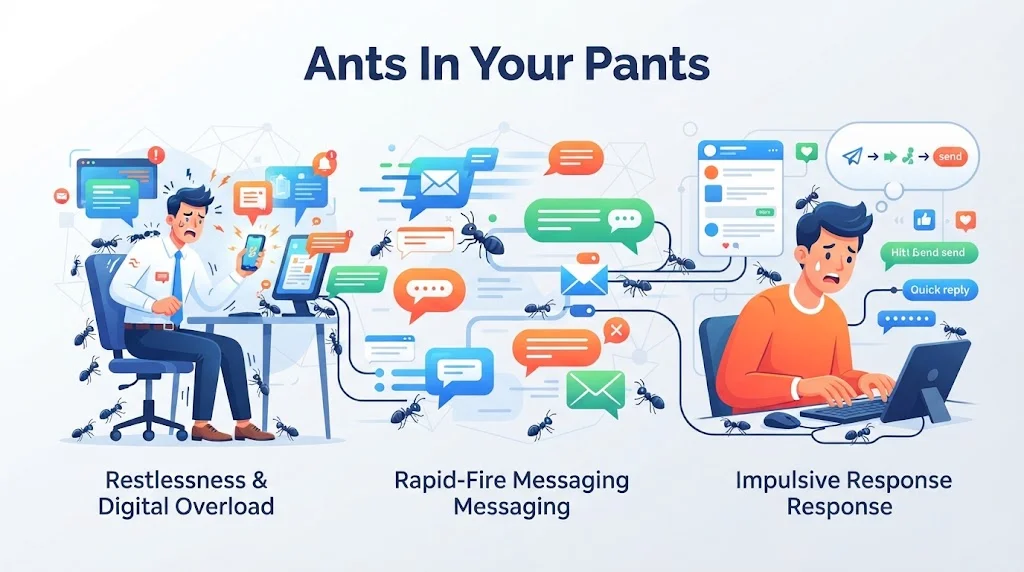
In emails, the phrase can make informal workplace messages sound warmer and more conversational when used appropriately among familiar colleagues.
On Slack, Microsoft Teams, WhatsApp, and similar messaging platforms, it effectively communicates excitement or impatience without lengthy explanations.
On social media, “Ants In Your Pants” works well in captions, humorous posts, and personal updates because it quickly conveys anticipation before vacations, concerts, sporting events, or product launches.
AI-generated summaries and professional writing tools typically replace the idiom with clearer alternatives such as “restless,” “impatient,” or “unable to remain still” to improve accessibility for wider audiences.
Linguistic & Communication Insight
Emotional Weight & Subtext
Although the literal meaning refers to imaginary ants causing discomfort, native speakers primarily hear playful restlessness rather than criticism. The phrase often signals excitement, anticipation, impatience, or youthful energy. Depending on tone, it can sound affectionate, humorous, or gently teasing instead of negative.
Direct vs Indirect Phrasing
Compared with direct descriptions like “You’re being restless” or “Please sit still,” “Ants In Your Pants” softens the message through humor. It communicates the same observation while reducing the risk of sounding overly critical or confrontational. In professional situations, however, direct wording may provide greater clarity.
Professional Communication Perspective
Experienced communicators recognize that idioms strengthen engagement but can reduce precision. In informal workplace conversations, the phrase may build rapport and lighten the atmosphere. In executive communication, client interactions, policy documents, or multicultural teams, straightforward alternatives often communicate the intended message more effectively and inclusively.
Pragmatic Reasons for Alternatives
Professionals frequently replace idioms with neutral expressions to avoid ambiguity, improve accessibility for non-native speakers, and maintain an appropriate level of formality. Alternatives such as “restless,” “eager to begin,” or “unable to sit still” preserve the meaning while reducing the chance of misunderstanding or unintended humor.
Social Signaling
Word choice influences how speakers are perceived. Using “Ants In Your Pants” can signal friendliness, warmth, and conversational confidence, while choosing more literal alternatives often conveys professionalism, precision, and objectivity. Effective communicators adjust their wording based on audience expectations rather than personal preference.
Tone & Context Guidance
Use the phrase when the goal is to create a relaxed, relatable atmosphere among people who are likely to understand the idiom. Avoid it when accuracy, cultural clarity, or sensitivity is essential. Matching the expression to the audience and situation ensures that the message remains both engaging and appropriate.
Restless
Meaning: Describes someone who feels unable to relax, remain still, or stay focused because of excitement, impatience, anxiety, or excess energy.
Why This Phrase Works: It is clear, widely understood, and suitable for both professional and casual communication without relying on an idiom.
Real-World Usage Insight: Native speakers commonly use “restless” to describe children, employees waiting for important news, travelers before a trip, or anyone struggling to stay calm.
Best Use: Workplace discussions, healthcare conversations, educational settings, and everyday communication.
Avoid When: You specifically want a humorous or playful tone.
Tone: Neutral, professional, descriptive.
US vs UK Usage: Equally common and natural in both American and British English.
Example (Meeting): “The team seemed restless while waiting for the client to join the video call, so we reviewed tomorrow’s agenda instead.”
Fidgety
Meaning: Refers to someone who frequently makes small movements because they are nervous, excited, bored, or uncomfortable.
Why This Phrase Works: It paints a clear picture of physical behavior without sounding overly dramatic.
Real-World Usage Insight: Teachers, parents, and managers often describe someone as “fidgety” when they cannot stop tapping, shifting, or moving.
Best Use: Conversations about behavior, classrooms, meetings, and informal workplace discussions.
Avoid When: Referring to emotional excitement rather than visible movement.
Tone: Friendly, observational, slightly informal.
US vs UK Usage: Common and familiar in both regions.
Example (Email): “You seemed a little fidgety during today’s presentation. Hopefully the next session will feel more comfortable.”
Unable to Sit Still
Meaning: Indicates that someone cannot remain seated or calm for an extended period.
Why This Phrase Works: It is direct, easy to understand, and appropriate for international audiences.
Real-World Usage Insight: Frequently used by educators, parents, healthcare professionals, and managers because it avoids figurative language.
Best Use: Formal writing, workplace communication, and educational content.
Avoid When: You want a colorful or humorous expression.
Tone: Neutral, straightforward.
US vs UK Usage: Widely used across both dialects.
Example (Meeting): “After three hours of workshops, everyone was unable to sit still, so we scheduled a short break.”
Feeling Impatient
Meaning: Describes someone who wants something to happen sooner than it currently is.
Why This Phrase Works: It focuses on emotional anticipation instead of physical movement.
Real-World Usage Insight: Professionals often use this expression when discussing deadlines, project updates, or waiting for decisions.
Best Use: Business communication, presentations, and everyday conversations.
Avoid When: The main point is physical restlessness rather than waiting.
Tone: Professional, calm, clear.
US vs UK Usage: Very common in both countries.
Example (Email): “I know everyone is feeling impatient for the final approval, but we’ll share the update as soon as it arrives.”
Full of Nervous Energy
Meaning: Describes someone whose excitement or anxiety causes visible energy and movement.
Why This Phrase Works: It acknowledges both emotional and physical reactions without sounding negative.
Real-World Usage Insight: Native speakers use it before interviews, speeches, competitions, and major life events.
Best Use: Coaching, mentoring, workplace conversations, and personal discussions.
Avoid When: Describing calm enthusiasm without anxiety.
Tone: Encouraging, empathetic.
US vs UK Usage: Common in both American and British English.
Example (Meeting): *”She was full of nervous energy before presenting to the executive team, but her presentation went exceptionally well.”
Feeling a Little Restless
Meaning: Suggests that someone is experiencing mild restlessness or has difficulty remaining calm without implying serious discomfort.
Why This Phrase Works: It softens the description, making it sound understanding rather than judgmental.
Real-World Usage Insight: Managers, teachers, parents, and friends often use this phrase to acknowledge someone’s behavior in a supportive way without drawing unnecessary attention to it.
Best Use: Workplace conversations, classrooms, coaching sessions, and friendly discussions.
Avoid When: You need to describe extreme excitement or constant movement.
Tone: Polite, supportive, empathetic.
US vs UK Usage: Common and natural in both American and British English.
Example (Meeting): “After sitting through several presentations, everyone was feeling a little restless, so we paused for a quick coffee break.”
Having Extra Energy Today
Meaning: Indicates that someone appears more energetic than usual and may find it difficult to stay still.
Why This Phrase Works: It frames the behavior positively, avoiding criticism while recognizing the person’s enthusiasm.
Real-World Usage Insight: Parents, teachers, coaches, and supervisors often use this expression when they want to encourage rather than correct someone’s behavior.
Best Use: Schools, family conversations, team meetings, and coaching environments.
Avoid When: The behavior is caused by stress, anxiety, or frustration rather than enthusiasm.
Tone: Positive, encouraging, friendly.
US vs UK Usage: Widely understood and equally natural in both regions.
Example (Conversation): “You seem to be having extra energy today. Want to help me organize these supplies before the meeting starts?”
Finding It Difficult to Stay Focused
Meaning: Describes someone who is struggling to concentrate because of distractions, excitement, or mental restlessness.
Why This Phrase Works: It emphasizes attention rather than physical movement, making it suitable for professional settings.
Real-World Usage Insight: Managers, educators, and trainers frequently use this wording because it sounds constructive and respectful.
Best Use: Performance discussions, education, productivity coaching, and workplace communication.
Avoid When: You simply want to describe physical fidgeting.
Tone: Professional, thoughtful, supportive.
US vs UK Usage: Frequently used in both American and British English.
Example (Email): “If you’re finding it difficult to stay focused this afternoon, let’s prioritize the most important tasks and revisit the rest tomorrow.”
Eager to Get Moving
Meaning: Refers to someone enthusiastic and ready to begin an activity without unnecessary delay.
Why This Phrase Works: It highlights motivation and readiness instead of impatience or restlessness.
Real-World Usage Insight: Team leaders and coaches commonly use this phrase to describe positive momentum before a project, event, or competition.
Best Use: Project launches, workshops, presentations, sports, and collaborative meetings.
Avoid When: Someone is anxious or visibly unable to stay still.
Tone: Positive, optimistic, motivational.
US vs UK Usage: Equally familiar and widely used in both countries.
Example (Meeting): “The entire team is eager to get moving now that we’ve received the client’s approval.”
Looking Ready for Action
Meaning: Suggests that someone appears prepared, motivated, and enthusiastic to begin immediately.
Why This Phrase Works: It emphasizes confidence and readiness rather than restlessness, creating a more encouraging impression.
Real-World Usage Insight: Leaders often use this expression to recognize enthusiasm before presentations, product launches, or important meetings.
Best Use: Workplace recognition, motivational conversations, coaching, and presentations.
Avoid When: The person’s behavior reflects nervousness or impatience rather than confidence.
Tone: Encouraging, professional, upbeat.
US vs UK Usage: Naturally understood in both American and British English.
Example (Meeting): “You all look ready for action, so let’s begin today’s strategy session and build on last week’s progress.”
Conclusion
The phrase “Ants In Your Pants” is a colorful English idiom that describes someone restless, energetic, impatient, or unable to stay still. Its playful imagery makes it memorable and easy to recognize in everyday conversations, especially among native English speakers. While the expression works well in casual settings, family conversations, and lighthearted workplace interactions, it may not be the best choice for formal, academic, or international communication where literal language improves clarity.
Understanding both the meaning and the tone of this idiom helps you choose the right words for different audiences and situations. Whether you use “Ants In Your Pants” or a professional alternative like “restless” or “unable to sit still,” the goal is always effective communication. By learning its history, usage, common mistakes, and suitable alternatives, you can confidently adapt your language, improve your writing, and communicate with greater precision, professionalism, and cultural awareness.
FAQs
What does “Ants In Your Pants” mean?
“Ants In Your Pants” means someone is extremely restless, fidgety, excited, or unable to stay still. It is an informal English idiom used to describe physical movement caused by impatience, enthusiasm, nervousness, or excess energy. The phrase is figurative and does not refer to actual ants, making it a common example of idiomatic English.
Is “Ants In Your Pants” a formal expression?
No. “Ants In Your Pants” is an informal, conversational idiom. It is appropriate for everyday speech, blogs, storytelling, and friendly workplace conversations. In formal writing, business reports, legal documents, or academic papers, clearer alternatives such as “restless” or “unable to remain still” are generally more suitable and professional.
When should I use “Ants In Your Pants”?
Use the phrase when speaking casually with friends, family, classmates, or colleagues who understand English idioms. It works well when describing excitement before an event, energetic children, or someone impatiently waiting for news. Avoid it when precise, literal communication is necessary or when speaking to audiences unfamiliar with English expressions.
Is “Ants In Your Pants” rude or offensive?
Generally, no. The idiom is considered playful and humorous rather than insulting. However, context matters. Using it to describe someone experiencing anxiety, a medical condition, or emotional distress could seem dismissive or insensitive. Choosing a more neutral description may be more appropriate in those situations.
What are the best synonyms for “Ants In Your Pants”?
Some of the best alternatives include restless, fidgety, unable to sit still, feeling impatient, full of nervous energy, eager to get moving, and can’t keep still. The right choice depends on whether you want a professional, neutral, supportive, or playful tone.
Is “Ants In Your Pants” commonly used in the US and UK?
Yes, the idiom is recognized in both countries. It is generally more common in American English, where it appears frequently in family conversations, education, and popular culture. British English speakers understand the phrase but often prefer direct alternatives like “restless” or “can’t sit still.”
Can I use “Ants In Your Pants” in professional communication?
It depends on the setting. In informal team chats or friendly meetings, the phrase can add personality and humor. However, for client communication, executive presentations, formal emails, or official documents, professional alternatives such as “restless” or “eager to begin” communicate more clearly and appropriately.
Why is “Ants In Your Pants” easy to remember?
The idiom creates a vivid mental image of someone constantly moving because ants are inside their clothing. This memorable imagery helps listeners understand the intended meaning almost instantly. Expressions with strong visual associations are often easier to remember and more engaging than literal descriptions.
Can English learners use “Ants In Your Pants”?
Yes. Learning common idioms helps English learners sound more natural in conversations. However, learners should also understand that idioms are culture-specific and may confuse some audiences. In professional or international communication, plain-English alternatives often provide greater clarity and reduce the risk of misunderstanding.
How do I choose between “Ants In Your Pants” and its alternatives?
Choose “Ants In Your Pants” when you want a friendly, humorous, and conversational tone. Select alternatives like “restless,” “unable to sit still,” or “feeling impatient” when communicating in professional, educational, or multicultural settings. Matching your language to the audience and purpose makes your message more effective and appropriate.