
Imagine scrolling through social media and seeing someone comment, “Good morning, pookie!” under a friend’s post or hearing a couple affectionately call each other “pookie.” If you’re unfamiliar with the term, it may seem confusing or overly personal. In reality, “Pookie” is an affectionate nickname used to express warmth, fondness, or playful love toward someone. While it is common in romantic relationships, it has also become popular among close friends, family members, and online communities. Understanding what Pookie means and knowing suitable alternatives can help you communicate naturally while matching the right tone for different audiences and situations.
What Does “Pookie” Mean?
Pookie is an affectionate nickname used to show love, closeness, or endearment toward another person. It is commonly used between romantic partners, close friends, family members, or even pets. The term carries a warm, playful, and informal tone and is typically reserved for personal rather than professional communication.
Origin & History of “Pookie”

The exact origin of Pookie is uncertain, but linguists generally consider it part of the long tradition of affectionate pet names that developed naturally in spoken English. Unlike formal vocabulary, many nicknames evolve from playful sounds rather than having a specific dictionary origin.
The name appeared in American popular culture decades ago, including children’s books, television, and family conversations. Over time, it became associated with affection and emotional closeness instead of referring to a particular person or object.
In recent years, Pookie has experienced renewed popularity through TikTok, Instagram, memes, and viral videos. Social media creators often use the nickname humorously or romantically, introducing it to younger audiences worldwide. Today, the word is recognized as a lighthearted expression of affection that can signal intimacy, friendship, or playful admiration depending on the relationship and context.
Synonyms & Alternatives by Tone
Professional & Neutral Alternatives
- Colleague
- Friend
- Partner
- Team Member
- Associate
Polite & Supportive Alternatives
- Dear
- My Friend
- Sweet Friend
- Lovely
- Kind Soul
Encouraging & Reassuring
- Sunshine
- Champ
- Superstar
- Buddy
- My Favorite Person
Casual, Playful & Idiomatic Alternatives
- Sweetheart
- Honey
- Babe
- Love
- Cutie
- Darling
- Bestie
- Pumpkin
- Boo
- Angel
- Snuggle Bug
- Muffin
- Peanut
- Sunshine
- Lovebug
When Should You Use “Pookie”?
Pookie works best when there is an established relationship built on trust, affection, and familiarity.
In romantic relationships, it can express love playfully and intimately. Many couples use it as a personal nickname during conversations, texts, or social media interactions.
Among close friends, the term often carries a humorous or affectionate meaning. It can strengthen feelings of closeness when both people are comfortable with playful nicknames.
Within families, parents, grandparents, or siblings may use Pookie as a loving nickname for children or younger relatives.
In digital communication, the word appears frequently in text messages, memes, comments, and captions where a casual, friendly tone is appropriate.
It is especially effective when you want your message to sound warm, personal, and emotionally expressive without being overly serious.
When Should You Avoid “Pookie”?
Although Pookie is affectionate, it is not appropriate in every situation.
Avoid using it in professional workplaces, particularly when speaking with clients, managers, or colleagues who may view the nickname as overly personal.
It should also be avoided in legal documents, academic writing, official presentations, and formal business emails, where clear and professional language is expected.
Be cautious when communicating with people you do not know well. An affectionate nickname may feel overly familiar or uncomfortable if there is no close relationship.
The phrase can also lose its intended warmth in cross-cultural communication, where pet names may not translate naturally or may be interpreted differently.
When uncertainty exists, choosing a more neutral form of address is usually the safer option.
Is “Pookie” Professional, Polite, or Casual?
Pookie is overwhelmingly a casual and affectionate expression rather than a professional one.
From a formality perspective, it sits at the informal end of the communication spectrum. It is designed to create emotional closeness rather than maintain professional distance.
Its emotional subtext is positive, warm, playful, and caring. Depending on the relationship, it can express romance, friendship, admiration, or family affection.
Audience perception varies significantly. Close friends or partners may appreciate the nickname, while coworkers, clients, or strangers could perceive it as overly intimate or inappropriate.
The effectiveness of Pookie depends less on the word itself and more on the relationship between the people using it. Context determines whether it feels sweet, funny, or out of place.
Pros and Cons of Using “Pookie”
Advantages
- Creates emotional warmth by expressing affection naturally.
- Strengthens personal relationships through friendly and intimate communication.
- Easy to understand because it is widely recognized in modern English-speaking cultures.
- Fits digital communication such as texting, social media, and casual messaging.
- Makes conversations feel more personal than using someone’s actual name.
Potential Drawbacks
- Too informal for professional or academic environments.
- Can make strangers uncomfortable if used without an established relationship.
- May be misunderstood across cultures, where affectionate nicknames are less common.
- Overusing the nickname can reduce its emotional impact.
- Not appropriate for every audience, particularly in formal or sensitive discussions.
Real-Life Examples of “Pookie” by Context
Although Pookie is rarely appropriate in business emails, it can work in personal emails between family members or partners.
Example:
“Hi Pookie, I hope your meeting went well today. Dinner will be ready around seven, so don’t forget to come home hungry!”
Meetings
The nickname generally does not belong in professional meetings. However, it may appear jokingly before or after an informal team gathering between people who share a close friendship.
Example:
“Alright, Pookie, you’ve convinced us. Let’s celebrate after we finish the project.”
Presentations
Avoid using Pookie during formal presentations. If it appears at all, it should only be as part of an anecdote or humorous personal story.
Example:
“My little sister still calls me ‘Pookie,’ which reminds me that even serious professionals have playful sides outside work.”
Conversations
Daily conversations are where the nickname feels most natural.
Example:
“Good morning, Pookie! Did you sleep well?”
Social Media
Social media is one of the most common places to see the term today.
Example:
“Happy birthday, Pookie! Thanks for always making life more fun.”
“Pookie” vs Similar Expressions (Key Differences)
| Phrase | Meaning Difference | Tone Difference | Best Use Scenario |
| Sweetheart | Shows romantic affection or kindness more directly | Warm and affectionate | Romantic relationships or family |
| Honey | Traditional pet name with broad usage | Friendly and caring | Couples, spouses, close family |
| Babe | Often implies romantic attraction | Modern, casual, flirty | Dating and romantic conversations |
| Bestie | Refers specifically to a close friend | Casual and playful | Friendships and social media |
| Darling | Expresses admiration and affection with elegance | Warm, gentle, slightly traditional | Family, romantic partners, polite conversation |
| Love | Common affectionate term, especially in British English | Friendly and caring | Couples, family, and casual interactions |
Common Mistakes & Misuse of “Pookie”
One of the most common mistakes is using the nickname too early in a relationship. Calling someone Pookie before building familiarity can make interactions feel awkward or overly personal.
Another mistake is using it in professional communication. Business emails, client meetings, and workplace discussions usually require neutral language rather than affectionate nicknames.
Some people also overuse the term, repeating it so frequently that it loses its emotional value and begins to sound forced.
A cultural misunderstanding can also occur because affectionate pet names are accepted differently around the world. In some cultures, using such nicknames outside close family or romantic relationships may feel inappropriate.
Finally, avoid using Pookie sarcastically unless the relationship clearly supports playful teasing, as the intended warmth may be misunderstood.
Psychological Reason People Prefer “Pookie”
Affectionate nicknames like Pookie simplify emotional communication. Instead of expressing affection through long explanations, one familiar word immediately signals warmth, trust, and closeness.
From a cognitive perspective, people process familiar emotional language quickly. Pet names reduce mental effort while strengthening emotional connection.
These nicknames also create a sense of exclusivity. Having a unique name for someone reinforces belonging and strengthens interpersonal bonds.
Modern communication, especially texting and social media, rewards short, expressive language. Pookie fits this pattern because it is memorable, emotionally positive, and easy to recognize across digital platforms.
US vs UK Usage of “Pookie”
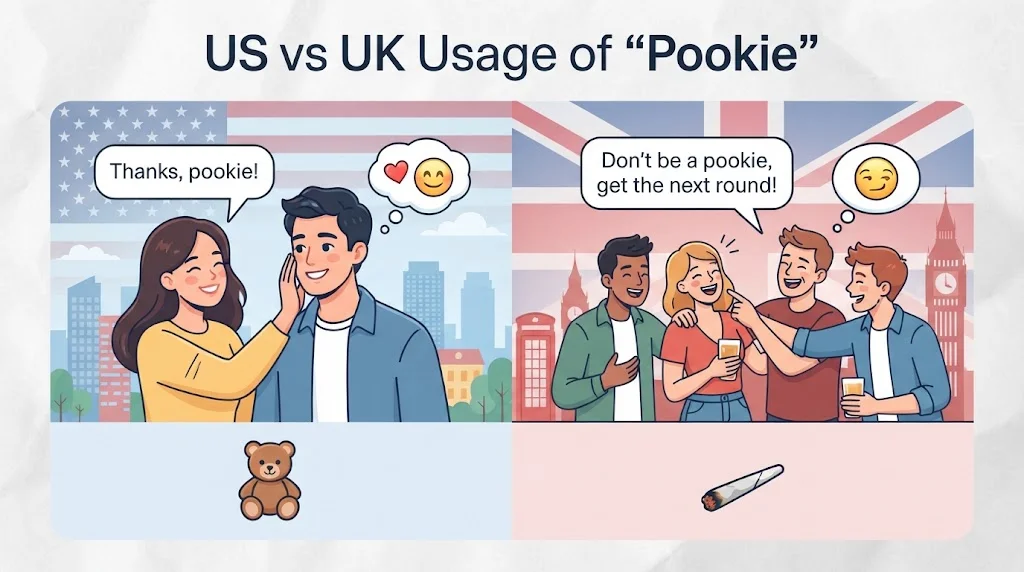
In the United States, Pookie is widely recognized as an affectionate nickname. It frequently appears in everyday conversation, social media trends, memes, and romantic relationships.
In the United Kingdom, the word is understood but is generally less common than traditional pet names such as love, darling, or pet. British speakers may view Pookie as more playful or influenced by American internet culture.
Despite regional differences, both audiences generally interpret the nickname as informal, affectionate, and emotionally warm.
“Pookie” in Digital & Modern Communication
Digital communication has significantly increased the popularity of Pookie.
In text messages, it often replaces a person’s name to make conversations feel more affectionate.
On WhatsApp, Messenger, and Slack, it may appear in private chats between close friends or partners but should generally be avoided in professional workspaces.
Across TikTok, Instagram, and X, the nickname is commonly used in captions, comments, memes, and viral trends, often adding humor or romantic charm.
Even in AI-generated summaries and conversational assistants, understanding the emotional meaning of Pookie helps preserve the intended tone when interpreting or rewriting casual conversations.
Linguistic & Communication Insight
Emotional Weight & Subtext
Native English speakers usually hear Pookie as more than just a nickname. It communicates affection, emotional safety, familiarity, and closeness. Depending on the relationship, it may express romance, friendship, comfort, or playful admiration without requiring additional explanation.
Direct vs Indirect Phrasing
Unlike neutral names or titles, Pookie communicates emotion directly. It immediately signals warmth instead of simply identifying the other person. Softer alternatives such as dear or friend create less emotional intensity, making them suitable for broader audiences.
Professional Communication Perspective
In workplace communication, using Pookie can unintentionally reduce perceived professionalism because it emphasizes personal intimacy over professional boundaries. Most professionals reserve affectionate nicknames for private conversations rather than business interactions.
Pragmatic Reasons for Alternatives
Experienced communicators often choose alternatives such as friend, colleague, dear, or the person’s actual name when they want to maintain respect, reduce the chance of misunderstanding, or communicate with diverse audiences. Selecting the right expression helps balance friendliness with credibility.
Social Signaling
Word choice influences how others perceive relationships. Calling someone Pookie publicly signals emotional closeness and familiarity, while using a neutral name suggests professionalism or respectful distance. These subtle signals shape trust, comfort, and audience expectations.
Tone & Context Guidance
The nickname works best when both people share an established, comfortable relationship. It becomes risky in formal settings, with unfamiliar audiences, or in situations where professionalism, neutrality, or cultural sensitivity should take priority. Choosing language that matches the relationship remains the most effective communication strategy.
Sweetheart
Meaning: A classic affectionate nickname used to express love, care, or deep fondness toward someone close.
Why This Phrase Works: Sweetheart is widely understood and conveys genuine warmth without sounding overly trendy.
Real-World Usage Insight: Couples, parents, and even older family members commonly use it in everyday conversations. It feels sincere and timeless across generations.
Best Use: Romantic relationships, family conversations, heartfelt messages.
Avoid When: Formal business communication or with people you do not know well.
Tone: Warm, loving, caring.
US vs UK Usage: Common in both the US and UK, though it is slightly more traditional in British English.
Example (Message): “Good luck with your interview today, sweetheart. I know you’re going to do great.”
Honey
Meaning: An affectionate nickname expressing kindness, affection, or emotional closeness.
Why This Phrase Works: Honey feels friendly and comforting while remaining one of the most recognizable pet names in English.
Real-World Usage Insight: Frequently used by couples and family members, and in some regions it is also used politely with familiar acquaintances.
Best Use: Romantic relationships, family, supportive conversations.
Avoid When: Professional settings or when speaking with strangers who may misunderstand the familiarity.
Tone: Gentle, affectionate, comforting.
US vs UK Usage: Very common in American English and understood throughout the UK.
Example (Email): “Hi Honey, I picked up your favorite dessert on my way home. See you tonight!”
Babe
Meaning: A casual nickname commonly used between romantic partners to express attraction and affection.
Why This Phrase Works: It sounds modern, natural, and emotionally close without requiring elaborate expressions of affection.
Real-World Usage Insight: Younger couples frequently use Babe in texts, calls, and social media posts.
Best Use: Dating relationships, romantic conversations, casual texting.
Avoid When: Workplace interactions or conversations with acquaintances.
Tone: Casual, romantic, playful.
US vs UK Usage: Extremely popular in both countries, particularly among younger speakers.
Example (Message): “Babe, don’t forget our dinner reservation tonight at seven.”
Darling
Meaning: A traditional term of affection that expresses love, appreciation, or gentle kindness.
Why This Phrase Works: Darling combines warmth with elegance, making it feel more refined than many modern nicknames.
Real-World Usage Insight: It is often heard among spouses, older couples, and family members, especially in British English.
Best Use: Romantic relationships, family conversations, warm personal letters.
Avoid When: Strictly formal documents or conversations with unfamiliar people.
Tone: Loving, elegant, sincere.
US vs UK Usage: More frequently used in the UK but well understood in the US.
Example (Meeting): “Darling, let’s talk about the travel plans after dinner.”
Love
Meaning: An affectionate way to address someone warmly without necessarily implying romance.
Why This Phrase Works: It sounds natural and caring while remaining simple and memorable.
Real-World Usage Insight: In parts of the UK, shopkeepers and older adults may casually call customers love as a friendly expression.
Best Use: Romantic relationships, family, casual conversations where culturally appropriate.
Avoid When: International business communication or audiences unfamiliar with the expression.
Tone: Friendly, affectionate, relaxed.
US vs UK Usage: Significantly more common in the UK than in the US.
Example (Conversation): “Thanks for stopping by, love. Have a wonderful afternoon.”
Cutie
Meaning: A playful nickname highlighting someone’s charm, attractiveness, or lovable personality.
Why This Phrase Works: Cutie creates a cheerful and lighthearted atmosphere without sounding overly serious.
Real-World Usage Insight: Friends, couples, and parents often use it jokingly or affectionately in everyday conversations.
Best Use: Casual relationships, flirting, playful compliments.
Avoid When: Professional communication or serious discussions.
Tone: Cute, playful, cheerful.
US vs UK Usage: Popular in both regions, particularly among younger speakers.
Example (Social Media): “Happy graduation, cutie! So proud of everything you’ve achieved.”
Bestie
Meaning: A casual nickname for someone’s closest friend or best friend.
Why This Phrase Works: It immediately communicates friendship, trust, and emotional closeness without romantic implications.
Real-World Usage Insight: Frequently appears in text messages, TikTok videos, Instagram captions, and casual conversations.
Best Use: Close friendships, social media, everyday chats.
Avoid When: Professional communication or formal introductions.
Tone: Casual, energetic, friendly.
US vs UK Usage: Equally popular across both countries, especially among younger generations.
Example (Message): “Bestie, thanks for always being there whenever I need advice.”
Boo
Meaning: A modern affectionate nickname usually referring to a romantic partner or someone deeply cared about.
Why This Phrase Works: Boo feels short, memorable, and emotionally expressive, making it ideal for digital communication.
Real-World Usage Insight: It is commonly used in texting, music, and social media, especially among younger audiences.
Best Use: Romantic relationships, affectionate messages, casual online conversations.
Avoid When: Formal workplace settings or with people who may not recognize the slang.
Tone: Casual, romantic, playful.
US vs UK Usage: More common in the US but increasingly recognized in the UK through popular culture.
Example (Message): “Morning, Boo! Can’t wait to see you after work today.”
Angel
Meaning: A loving nickname used to describe someone as kind, caring, or precious.
Why This Phrase Works: Angel expresses appreciation and affection while highlighting a person’s gentle nature.
Real-World Usage Insight: Parents, partners, and close family members commonly use it to show warmth and gratitude.
Best Use: Family conversations, romantic relationships, comforting messages.
Avoid When: Formal communication or when the relationship is not close.
Tone: Affectionate, gentle, caring.
US vs UK Usage: Widely used and understood in both the US and UK.
Example (Message): “Thanks for helping me today, Angel. I really appreciate everything you did.”
Pumpkin
Meaning: A playful pet name used to express affection toward someone special.
Why This Phrase Works: Pumpkin feels cheerful, memorable, and comforting without sounding overly formal.
Real-World Usage Insight: It is often used between parents and children or romantic partners in everyday conversations.
Best Use: Family interactions, romantic messages, playful chats.
Avoid When: Business meetings, presentations, or conversations with people you don’t know well.
Tone: Cute, playful, affectionate.
US vs UK Usage: More common in the US but recognized in the UK.
Example (Conversation): “Come on, Pumpkin, let’s grab some ice cream before we head home.”
Conclusion
Pookie is more than just a trendy internet nickname—it is an affectionate term that reflects closeness, warmth, and emotional connection. Whether used between romantic partners, close friends, family members, or even for pets, the word carries a playful and caring tone that makes conversations feel more personal. However, its effectiveness depends on context. While Pookie works naturally in casual conversations, text messages, and social media, it is generally unsuitable for professional, academic, or formal communication where neutral language is expected. Understanding its meaning, origin, tone, and the best alternatives allows you to choose language that matches your audience and purpose.
If you want to sound affectionate, friendly, or supportive, Pookie can be an excellent choice when the relationship allows it. By recognizing when to use it and when to opt for alternatives like Sweetheart, Honey, or Buddy, you can communicate more thoughtfully, build stronger relationships, and avoid unintended misunderstandings.
FAQs
Is “Pookie” a compliment?
Yes. Pookie is generally used as a compliment because it expresses affection, warmth, and emotional closeness. Rather than describing a person’s appearance or abilities, it communicates that the speaker cares about the other person. The positive meaning depends on a comfortable relationship and the context in which it is used.
Is “Pookie” only used between couples?
No. Although Pookie is popular among romantic partners, it is also used by close friends, parents, grandparents, siblings, and even for pets. The nickname simply reflects affection and familiarity, so its meaning changes based on the relationship rather than being limited to romance.
Can “Pookie” be used in professional communication?
Generally, no. Pookie is an informal nickname and is not appropriate for business emails, meetings, client interactions, or official documents. In professional settings, using a person’s name or a neutral greeting maintains credibility and avoids making others feel uncomfortable.
Why is “Pookie” trending on social media?
The popularity of Pookie has grown because of TikTok videos, Instagram reels, memes, and viral relationship content. These platforms introduced the nickname to wider audiences, making it a popular expression of affection, humor, and playful communication among younger internet users.
What emotions does “Pookie” convey?
Pookie usually conveys love, care, comfort, playfulness, and emotional closeness. Native English speakers often associate it with trust and familiarity rather than formal respect. Its emotional warmth makes it effective in personal conversations where genuine affection is appropriate.
Is “Pookie” considered slang or a real word?
Pookie is considered an informal nickname or term of endearment rather than a standard dictionary word with a fixed definition. Even so, it is widely recognized in modern English and is commonly understood in casual conversations and digital communication.
What are the best alternatives to “Pookie”?
Some of the best alternatives include Sweetheart, Honey, Darling, Babe, Love, Buddy, Angel, Bestie, Sunshine, and Pumpkin. The right choice depends on your relationship with the other person and whether the situation is romantic, friendly, supportive, or family-oriented.
Is “Pookie” common in both the US and the UK?
Yes, but usage differs. In the United States, Pookie is relatively common in casual speech and online culture. In the United Kingdom, people understand the nickname but often prefer traditional affectionate terms such as love, darling, or pet.
Should I call someone “Pookie” if I just met them?
Usually not. Because Pookie signals emotional closeness, using it with someone you have only recently met may seem overly familiar or inappropriate. It is best reserved for relationships where mutual comfort and trust have already been established.
Why do people enjoy using affectionate nicknames like “Pookie”?
Affectionate nicknames help strengthen emotional bonds by making conversations feel warmer and more personal. They also simplify communication by expressing care in a single word. When used naturally and respectfully, names like Pookie can reinforce trust, belonging, and positive relationships.


