Imagine you are in a workplace meeting where a colleague misunderstands a simple instruction several times, or you are having a conversation where someone seems to miss an obvious point. In that moment, you might hear someone say, “Are you dense?” This phrase often questions whether someone understands information clearly, but its meaning depends heavily on tone, relationship, and context. While it can express frustration or disbelief, it may also sound insulting because it suggests that a person is slow to understand. In modern communication, choosing the right alternative matters because language affects professionalism, trust, and how your message is received.
Understanding phrases like “Are You Dense?” helps professionals, students, ESL learners, and writers communicate more effectively. A direct expression may create urgency or highlight confusion, while a softer alternative can encourage collaboration and reduce defensiveness. The best wording depends on whether the goal is correction, clarification, humor, or constructive conversation.
What Does “Are You Dense?” Mean?
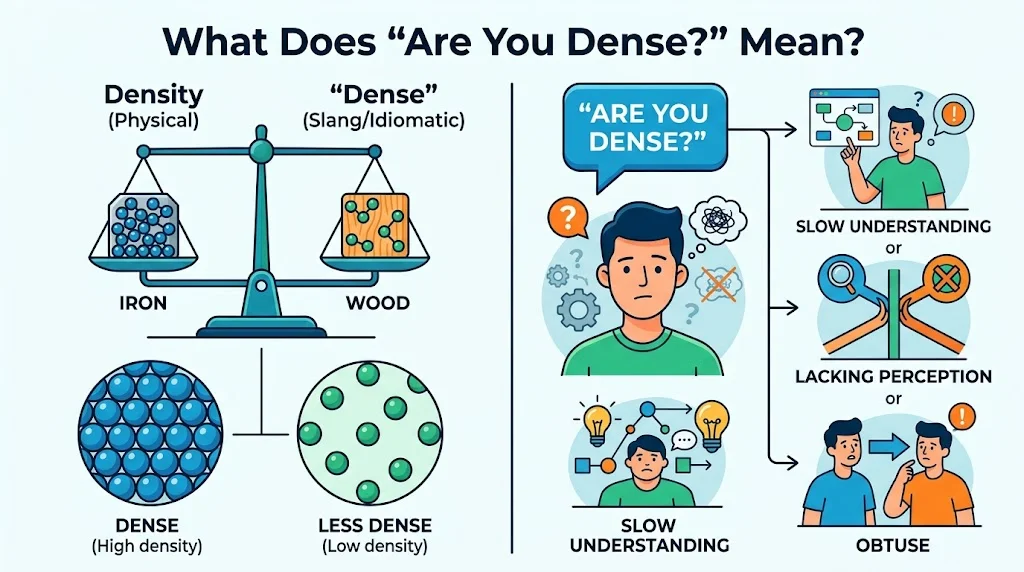
“Are you dense?” means “Are you having difficulty understanding something that seems obvious?” The phrase questions a person’s ability to comprehend information quickly and is commonly used when someone repeats a mistake, misunderstands an explanation, or fails to recognize a clear point. However, it often carries a negative or critical tone.
The phrase is not usually asking about intelligence in a literal sense. Instead, it comments on a person’s perceived lack of understanding at a specific moment. Someone may use it when they feel surprised, impatient, or frustrated that another person has not understood something they believe should be clear.
For example:
- “Are you dense? I already explained that the meeting was moved to Friday.”
- “Are you dense, or did you miss the instructions?”
Although the speaker may intend to express frustration, the listener may interpret it as a personal attack rather than helpful feedback.
In professional or sensitive situations, alternatives such as “Did that make sense?” “Could I clarify that point?” or “Is there anything unclear?” usually communicate the same concern without creating unnecessary tension.
Origin & History of “Are You Dense?”
The word “dense” originally comes from the Latin word densus, meaning “thick” or “closely packed.” In English, it was first used to describe physical things such as dense forests, thick materials, or tightly concentrated substances.
Over time, the meaning expanded from physical description to intellectual description. By the 18th and 19th centuries, “dense” began being used informally to describe someone slow to understand an idea or difficult to teach.
The phrase “Are you dense?” developed from this figurative meaning. Instead of referring to physical thickness, it refers to a perceived “thickness” in comprehension. Similar expressions, such as “Are you slow?” or “Are you not following?”, developed from the same idea of questioning someone’s understanding.
In modern English, the phrase became more common through everyday conversation, movies, television, and online communication. It is often used dramatically or humorously in fictional dialogue because it creates a strong emotional reaction. However, in real-life conversations, especially professional ones, it can easily sound disrespectful.
Today, the phrase has a reputation for being direct, sarcastic, and potentially offensive, although close friends may sometimes use it playfully when the relationship allows teasing.
Synonyms & Alternatives by Tone
Choosing the right alternative depends on your intention. A manager correcting an employee, a friend joking with another friend, and a teacher helping a student all need different language choices.
Professional & Neutral Alternatives
- Did you understand the point?
- Is anything unclear?
- Could I clarify that?
- Did that explanation make sense?
- Are we aligned on this?
- Do you have any questions about this?
- Would it help if I explained it another way?
- Is there a part that needs more detail?
- Are you following the reasoning?
- Let me know if anything needs clarification.
Polite & Supportive Alternatives
- Did that make sense?
- Would you like me to go over that again?
- Is there anything I can explain better?
- Should we review that point together?
- What part feels unclear?
- Can I help clear up any confusion?
- Would another example help?
- Let’s walk through it together.
- Is there anything you want me to clarify?
- Where did things become unclear?
Encouraging & Reassuring Alternatives
- Let’s make sure we’re on the same page.
- I may not have explained that clearly.
- Let’s look at it from another angle.
- We can go through it step by step.
- Tell me what part is confusing.
- Let’s figure this out together.
- I’ll explain it another way.
- There may be a simpler way to approach this.
- Let’s revisit the main idea.
- We’ll get it sorted out.
Casual, Playful & Idiomatic Alternatives
- Are you following me?
- Did I lose you?
- Are we on the same page?
- Did that go over your head?
- Wait, are you serious?
- You’re missing the point.
- Did you catch that?
- Where did I lose you?
- Are you with me?
- Come on, you know what I mean.
When Should You Use “Are You Dense?”
The phrase can be effective when the relationship and situation clearly allow direct or humorous communication. However, it requires awareness because the listener may interpret it differently than intended.
Professional Settings
In workplaces, “Are you dense?” is usually not recommended because it attacks the person rather than focusing on the misunderstanding. Even if the speaker is frustrated, professional communication usually works better when it addresses the information gap.
Better choices include:
- “Could we review that point again?”
- “I think there may have been a misunderstanding.”
- “Let’s clarify the expectation.”
These alternatives maintain authority while keeping the conversation productive.
Casual Conversations
Among close friends, the phrase may sometimes be used jokingly. For example, two friends who regularly tease each other might use it without serious offense.
Example:
“Are you dense? I literally told you the surprise party was tomorrow.”
In this situation, tone, facial expression, and relationship determine whether it sounds playful or insulting.
Writing, Presentations, and Digital Communication
In written communication, the phrase is riskier because the reader cannot hear your tone. Emails, messages, and online comments often make direct phrases appear harsher.
A sentence that sounds funny when spoken may look aggressive in writing.
Instead of:
“Are you dense? The instructions clearly say Monday.”
Consider:
“The instructions mention Monday. Let me clarify in case there was any confusion.”
When It Is Especially Effective
“Are you dense?” works best when:
- The speaker and listener have a strong informal relationship
- Humor is clearly intended
- The situation is low-risk
- The audience understands the speaker’s personality
It is least effective when the goal is teaching, coaching, persuading, or building trust.
When Should You Avoid “Are You Dense?”
There are many situations where avoiding this phrase is the smarter communication choice.
Overly Formal Situations
Avoid using it in:
- Job interviews
- Business negotiations
- Customer communication
- Performance reviews
- Academic discussions
Professional environments require language that focuses on solutions rather than personal criticism.
Legal, Academic, or Sensitive Contexts
The phrase can create unnecessary problems in situations involving:
- Formal documentation
- Research discussions
- Educational feedback
- Conflict resolution
- Workplace investigations
In these settings, precision and neutrality are more valuable than emotional expression.
Situations Where Nuance May Be Lost
Because “Are you dense?” is short and emotionally charged, it does not explain what went wrong.
The listener may wonder:
- Did I misunderstand the information?
- Is the person criticizing my ability?
- Are they angry with me?
Clearer alternatives identify the actual problem.
For example:
Instead of:
“Are you dense? That’s not what I meant.”
Try:
“I think my explanation was unclear. Let me rephrase it.”
Is “Are You Dense?” Professional, Polite, or Casual?
“Are you dense?” is generally considered casual, direct, and potentially rude. It is not normally appropriate for professional communication unless used jokingly between people with an established informal relationship.
Tone Analysis
The phrase often communicates:
- Frustration
- Surprise
- Impatience
- Sarcasm
- Disbelief
The emotional message behind it is often stronger than the literal meaning.
Formality Level
| Category | Rating |
| Professional | Low |
| Casual | High |
| Friendly teasing | Possible |
| Formal writing | Not recommended |
| Academic use | Rare |
Emotional Subtext
When someone hears “Are you dense?”, they may not only hear a question about understanding. They may also hear:
- “You should already know this.”
- “I cannot believe you missed this.”
- “The problem is your ability, not the explanation.”
This is why the phrase can trigger defensiveness.
Audience Perception
Different audiences may react differently:
- Close friends may see it as humor.
- Coworkers may see it as disrespectful.
- Students may feel discouraged.
- Clients may view it as unprofessional.
Effective communicators consider not only what they mean but also what the listener is likely to receive.
Pros and Cons of Using “Are You Dense?”
Advantages
Clarity
The phrase immediately communicates that the speaker believes there is a misunderstanding.
Efficiency
It is short and emotionally expressive, making it memorable in informal conversations.
Accessibility
Because the phrase is common, many English speakers understand its meaning instantly.
Potential Drawbacks
Oversimplification
It suggests the problem is the person rather than the explanation or situation.
Tone Mismatch
A phrase intended as humor may appear insulting, especially in text.
Repetition
Frequent use can make a person appear impatient or dismissive.
Reduced Collaboration
In workplaces or learning environments, it may discourage people from asking questions.
Real-Life Examples of “Are You Dense?” by Context
Email Example
A manager would usually avoid writing:
“Are you dense? I already explained the deadline.”
A better professional version:
“Hi James, I think there may have been some confusion about the deadline. The final submission date is Friday at 3 PM. Let me know if you have any questions.”
Meeting Example
A team leader might say:
“Are you dense? That isn’t what the client requested.”
This could damage teamwork.
A better option:
“I think we may be interpreting the client’s request differently. Let’s review their requirements together.”
Presentation Example
A presenter explaining a complex topic might say:
“Are you dense? This is obvious.”
This would likely make the audience uncomfortable.
A better approach:
“Let’s break this down another way because this part can be confusing.”
Conversation Example
Between close friends:
“Are you dense? I told you the restaurant moved locations.”
This may work if the relationship includes playful teasing.
Social Media Example
Online discussions often amplify tone problems. A comment like:
“Are you dense? Read the article.”
Can quickly become hostile.
A more constructive response:
“I think you may have missed an important detail in the article. Here’s the part I’m referring to.”
“Are You Dense?” vs Similar Expressions (Key Differences)
The following expressions are related but differ in intensity, politeness, and social meaning.
| Phrase | Meaning Difference | Tone Difference | Best Use Scenario |
| Are you dense? | Questions someone’s ability to understand something obvious | Direct, sarcastic, potentially insulting | Informal teasing with close friends |
| Are you following me? | Checks whether someone understands the explanation | Neutral to supportive | Meetings, teaching, conversations |
| Did you miss something? | Suggests someone overlooked information | Mildly corrective | Workplace or casual clarification |
| Are you confused? | Focuses on uncertainty rather than intelligence | More neutral | Supportive conversations |
| Are we on the same page? | Checks agreement or shared understanding | Professional and collaborative | Teams and business communication |
| Did that make sense? | Invites feedback about clarity | Polite and encouraging | Teaching, presentations, discussions |
Common Mistakes & Misuse of “Are You Dense?”
Overuse
Using the phrase repeatedly can make someone appear impatient or arrogant. Even casual users may damage relationships if every misunderstanding receives criticism.
Incorrect Context
A phrase acceptable between friends may be inappropriate with:
- Employees
- Customers
- Teachers
- New colleagues
Contradictory Usage
Some speakers use “Are you dense?” while claiming they are trying to help. The phrase itself may conflict with a supportive intention because it focuses on the person rather than the problem.
Cultural Misunderstandings
English speakers from different backgrounds may interpret the phrase differently. ESL learners may recognize the dictionary meaning but miss the emotional impact.
In many cultures, direct criticism about intelligence is considered especially disrespectful.
Psychological Reasons People Prefer “Are You Dense?”
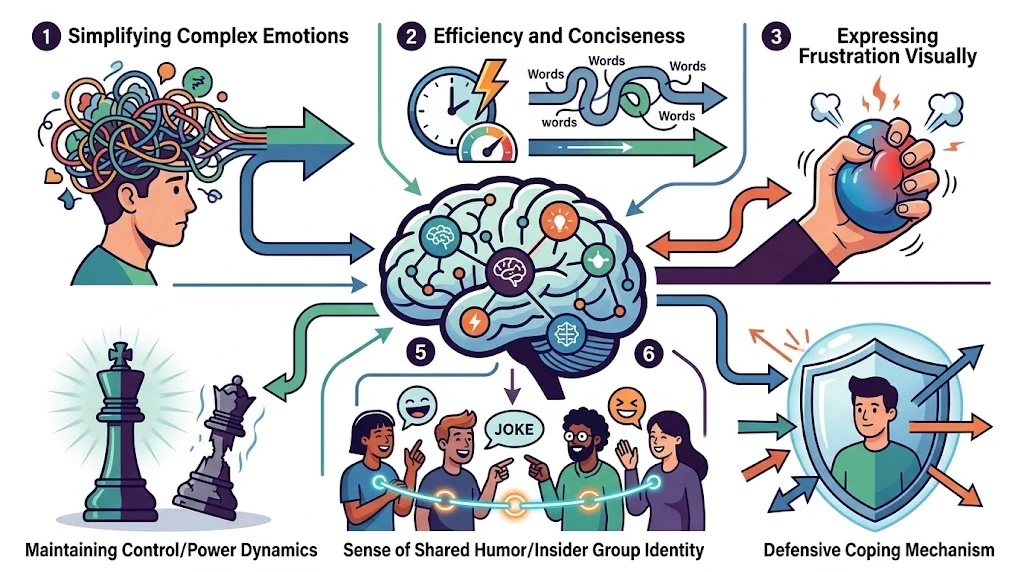
Cognitive Load Reduction
People often choose short phrases during moments of frustration because they quickly express emotion without requiring careful wording.
Trust and Authority Signals
Some speakers use direct language to appear confident or knowledgeable. However, overly harsh wording can reduce trust instead of increasing authority.
Attention Economy
Modern communication rewards quick, memorable phrases. Expressions like “Are you dense?” spread easily online because they create strong emotional reactions.
Modern Communication Habits
Digital conversations often encourage faster responses and less context. This increases the risk that emotionally strong phrases are misunderstood.
US vs UK Usage of “Are You Dense?”
The phrase exists in both American and British English, but the perception can vary.
United States Usage
In American English, “Are you dense?” is often understood as:
- Sarcastic
- Blunt
- Slightly insulting
- Sometimes humorous
It appears frequently in movies, television, and casual speech.
United Kingdom Usage
British speakers may use similar expressions such as:
- “Are you being dense?”
- “Are you being slow?”
- “Are you not getting it?”
The British version may sometimes carry a more sarcastic or understated tone.
Regional Preference
In both regions, workplace communication increasingly favors softer alternatives because collaboration and emotional intelligence are valued.
“Are You Dense?” in Digital & Modern Communication
Emails
Email removes voice tone, making direct phrases more dangerous. A phrase meant as frustration can appear aggressive when written.
Slack / WhatsApp
Instant messaging encourages casual language, but workplace chats still require professionalism.
Instead of:
“Are you dense?”
Try:
“Did I explain that clearly?”
Social Media
On social platforms, the phrase is often used during arguments. It can quickly shift a discussion from ideas to personal attacks.
AI-Generated Summaries
AI writing tools often recommend replacing phrases like “Are you dense?” with clearer, more neutral alternatives because professional communication usually prioritizes cooperation and clarity.
Linguistic & Communication Insight
Emotional Weight & Subtext
The literal meaning of “Are you dense?” relates to understanding, but native speakers often hear additional emotional signals:
- Frustration
- Judgment
- Superiority
- Sarcasm
The phrase carries social meaning beyond its dictionary definition.
Direct vs Indirect Phrasing
Direct phrasing:
“Are you dense?”
Communicates urgency and frustration but risks creating defensiveness.
Indirect phrasing:
“Could we go over that again?”
Communicates cooperation and keeps attention on the issue.
Experienced communicators often choose indirect wording when their goal is improvement rather than criticism.
Professional Communication Perspective
In workplaces, strong communication is not only about being correct. It is about creating conditions where people can understand, respond, and collaborate.
A leader who says:
“I think we may have missed an important detail”
usually achieves more than someone who says:
“Are you dense?”
Pragmatic Reasons for Alternatives
Professionals choose softer alternatives because they:
- Reduce defensiveness
- Encourage questions
- Preserve relationships
- Improve teamwork
- Maintain credibility
Social Signaling
Word choice tells people how we view them.
A phrase like:
“Are we on the same page?”
Signals partnership.
A phrase like:
“Are you dense?”
May signal criticism.
Tone & Context Guidance
Use “Are you dense?” carefully. It may work in humor, entertainment, or close relationships, but it is risky when the goal is education, leadership, or professional communication.
The strongest communicators adjust their language based on audience, purpose, and relationship.
Did You Understand the Point?
Meaning
“Did you understand the point?” is a neutral alternative to “Are you dense?” that checks whether someone has understood the main idea, argument, or message being communicated. It focuses on the information rather than judging the person’s ability.
Why This Phrase Works
This phrase works because it separates the misunderstanding from the individual. Instead of suggesting that someone lacks intelligence, it simply asks whether the intended message was clear.
Real-World Usage Insight
Professionals often use this phrase when they want confirmation that everyone understands an important detail. It is especially useful in meetings, training sessions, and explanations where accuracy matters.
Best Use
- Workplace discussions
- Teaching situations
- Project explanations
- Presentations
- Problem-solving conversations
Avoid When
Avoid using it if the person has already clearly understood the point. Repeating the question too often may sound like you doubt their ability.
Tone
Neutral, professional, and clarification-focused.
US vs UK Usage
In both US and UK English, this phrase is widely understood. American speakers may use it more directly, while British speakers may sometimes prefer softer forms like “Does that make sense?”
Example (Meeting)
“Before we move forward with the new process, did everyone understand the point about the updated approval steps?”
Is That Clear?
Meaning
“Is that clear?” asks whether information, instructions, or expectations have been understood. It is a direct way to check comprehension without implying that someone is incapable of understanding.
Why This Phrase Works
The phrase works because it places attention on the explanation rather than the listener. It allows the speaker to identify confusion and correct it quickly.
Real-World Usage Insight
Managers, teachers, and trainers often use this phrase after explaining procedures or responsibilities. However, depending on tone, it can sometimes sound authoritative.
Best Use
- Giving instructions
- Explaining procedures
- Confirming expectations
- Training employees
Avoid When
Avoid using it in a way that sounds like a warning or command. A harsh tone can make it feel similar to criticism.
Tone
Direct, professional, and sometimes authoritative.
US vs UK Usage
Common in both regions. In the US, it is frequently used in leadership contexts. In the UK, speakers may soften it with phrases like “Is that clear enough?”
Example (Email)
“I’ve attached the updated guidelines. Please review them and let me know if anything is unclear. Is that clear before we begin the next stage?”
Did That Make Sense?
Meaning
“Did that make sense?” is a supportive alternative that asks whether an explanation was understandable. It focuses on communication quality rather than blaming the listener.
Why This Phrase Works
This phrase works because it allows the speaker to accept some responsibility for clarity. It suggests that confusion may come from the explanation, not the person.
Real-World Usage Insight
Many effective communicators use this phrase after explaining complicated topics because it encourages people to ask questions without embarrassment.
Best Use
- Teaching
- Coaching
- Presentations
- Friendly conversations
- Technical explanations
Avoid When
Avoid using it sarcastically, because tone can completely change the meaning.
Tone
Friendly, collaborative, and supportive.
US vs UK Usage
Very common in both American and British English. It is one of the most natural replacements for “Are you dense?” in everyday communication.
Example (Conversation)
“I know this process has a few steps. Did that make sense, or should I explain the second part again?”
Are We On The Same Page?
Meaning
“Are we on the same page?” means “Do we share the same understanding, expectations, or goals?” It is commonly used to confirm agreement between people.
Why This Phrase Works
This phrase works because it presents understanding as a shared responsibility. It avoids blaming one person and encourages teamwork.
Real-World Usage Insight
Business professionals frequently use this expression during meetings and projects to prevent misunderstandings before they become problems.
Best Use
- Team meetings
- Business discussions
- Project planning
- Negotiations
Avoid When
Avoid using it for simple facts where a direct question would be clearer.
Tone
Professional, cooperative, and diplomatic.
US vs UK Usage
Popular in both US and UK workplaces. It is especially common in American corporate communication, but British professionals also use it frequently.
Example (Meeting)
“Before we finalize the launch date, are we all on the same page about the customer requirements?”
Conclusion
“Are You Dense?” is a phrase that carries a much stronger message than its literal meaning. While it is often used to express frustration, surprise, or disbelief, it can easily sound insulting because it questions a person’s ability to understand. The phrase may work in playful conversations between close friends, but it is usually unsuitable for professional, academic, or sensitive situations.
Effective communication depends on choosing words that match the audience, purpose, and relationship. Alternatives such as “Did that make sense?” “Are we on the same page?” and “Could you clarify what you mean?” help maintain clarity while encouraging cooperation and respect. Understanding the tone behind phrases like “Are You Dense?” allows speakers, writers, and ESL learners to communicate more confidently. The best language choices not only deliver information; they also build trust, reduce misunderstandings, and create stronger connections in modern communication.
FAQs
What does “Are You Dense?” mean?
“Are You Dense?” means “Are you having difficulty understanding something that seems obvious?” The phrase is usually used when someone believes another person has missed a clear point. However, it often carries a critical or insulting tone because it suggests a problem with the person’s ability to understand rather than the explanation itself.
Is “Are You Dense?” considered rude?
Yes, “Are You Dense?” is generally considered rude or impolite in many situations. Although close friends may use it jokingly, most listeners interpret it as criticism because it questions their intelligence or ability to understand. In professional communication, softer alternatives are usually more effective and respectful.
What are polite alternatives to “Are You Dense?”
Polite alternatives include “Did that make sense?” “Is anything unclear?” “Could you clarify what you need?”“Are we on the same page?” nd “Would you like me to explain that another way?” These phrases focus on improving understanding rather than blaming the person.
Can “Are You Dense?” be used professionally?
“Are You Dense?” is rarely appropriate in professional settings. It may damage relationships, reduce trust, and make coworkers or clients feel disrespected. Professional communication usually focuses on clarification, teamwork, and solving misunderstandings instead of criticizing someone’s understanding.
Why do people say “Are You Dense?”
People often say “Are You Dense?” when they feel frustrated, surprised, or impatient because someone has misunderstood information. The phrase provides a quick emotional reaction, but it may communicate annoyance more strongly than the speaker intends.
What is a softer way to say “Are You Dense?”
A softer way to express the same idea is to ask about understanding instead of intelligence. Examples include “Did you miss something?” “Did I explain that clearly?” “What part seems unclear?” or “Should we review that point again?” These alternatives encourage communication without creating defensiveness.
Is “Are You Dense?” common in American and British English?
Yes, “Are You Dense?” is understood in both American and British English. In the US, it is often associated with sarcasm or blunt humor. In the UK, similar expressions such as “Are you being dense?” may be heard, often with a sarcastic tone. In both regions, context determines how offensive it sounds.
What is the difference between “Are You Dense?” and “Are You Confused?”
“Are You Dense?” suggests that someone is failing to understand something obvious and can sound insulting. “Are You Confused?” focuses on a temporary state of uncertainty and is usually more neutral. The second phrase is better for teaching, support, and professional conversations.
Should writers use “Are You Dense?” in articles or on social media?
Writers should use “Are You Dense?” carefully because it can appear aggressive or judgmental. It may work when discussing language, quoting dialogue, or analyzing tone, but it is usually not suitable for professional content, educational materials, or respectful online discussions.
What is the best replacement for “Are You Dense?” in workplace communication?
The best replacement depends on the situation. For most workplace conversations, “Are we on the same page?” “Did that make sense?” and “Could we clarify this point?” work well. They maintain professionalism while helping teams resolve confusion and move forward.