
Imagine you are in a workplace meeting where someone constantly agrees with the manager, praises every decision, and seems more interested in gaining approval than sharing honest opinions. A colleague might quietly say, “They are such a suck-up.” The phrase “suck up” is commonly used to describe a person who tries too hard to gain someone’s favor, often through excessive praise, agreement, or flattering behavior. Understanding this phrase matters because its meaning depends heavily on tone, context, and relationship. In professional communication, choosing a more neutral alternative can help you express the same idea without sounding overly negative or judgmental.
What Does “Suck Up” Mean?
“Suck up” means to behave in an overly flattering or agreeable way toward someone, usually to gain their approval, attention, or personal advantage. The phrase is often used when a person appears to praise, support, or agree with someone more than they genuinely feel. It commonly appears in the workplace, school, and social situations.
The expression usually describes behavior rather than a permanent personality trait. People may call someone a suck-up when others believe their compliments or agreement are motivated by a desire for benefits, recognition, protection, or a better relationship with someone influential.
The phrase can be playful among friends, but it can also sound insulting because it suggests a person’s behavior isn’t entirely sincere. The meaning often depends on the speaker’s intention, the relationship between people, and the situation where it is used.
Origin & History of “Suck Up”
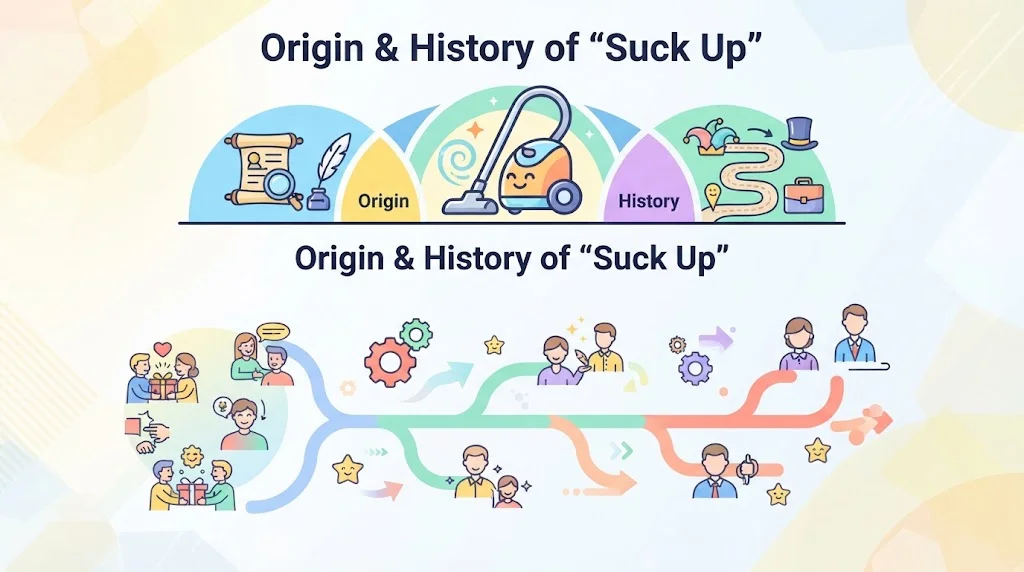
The phrase “suck up” has a long history in English, with its modern social meaning developing from the older verb phrase “to suck up,” which originally referred to physically drawing in or absorbing something. Over time, the expression gained figurative meanings connected with accepting, taking in, or submitting to something.
The idea of “sucking up” to someone became associated with seeking favor through excessive politeness, obedience, or flattery. By the 19th and 20th centuries, the phrase was increasingly used in social and workplace contexts to describe people who tried to gain advantages by pleasing those in authority.
Today, “suck up” is widely understood in informal English, especially in conversations about workplaces, schools, politics, and social relationships. While the phrase remains common, many people choose softer alternatives in professional settings because it can sound dismissive or disrespectful.
Synonyms & Alternatives by Tone
Professional & Neutral Alternatives
- Seeking approval
- Trying to impress
- Building rapport
- Showing loyalty
- Being highly agreeable
- Showing strong support
- Demonstrating enthusiasm
- Seeking recognition
Polite & Supportive Alternatives
- Being supportive
- Showing appreciation
- Expressing admiration
- Building a positive relationship
- Giving encouragement
- Showing respect
- Being cooperative
Encouraging & Reassuring Alternatives
- Being enthusiastic
- Showing commitment
- Being engaged
- Taking initiative
- Supporting leadership
- Showing dedication
Casual, Playful & Idiomatic Alternatives
- Brown-nosing
- Kissing up
- Teacher’s pet
- Flattering someone
- Buttering someone up
- Trying to win points
- Being a yes-person
When Should You Use “Suck Up”?
The phrase “suck up” works best in informal conversations where the audience understands that the speaker is making a casual observation rather than a serious accusation.
Professional settings
In workplaces, “suck up” is usually used privately among colleagues rather than directly toward someone. It may appear when discussing office dynamics, leadership relationships, or workplace behavior.
Example:
“Everyone noticed he agreed with every suggestion the director made. Some people think he’s just trying to suck up.”
However, in formal communication such as performance reviews, reports, or workplace feedback, more objective language is usually better.
Casual conversations
Among friends, classmates, or family members, “suck up” is often used jokingly.
Example:
“You brought the teacher coffee? You’re such a suck-up.”
The phrase can create humor because everyone understands the teasing intention.
Writing, presentations, and digital communication
Writers should use “suck up” carefully because it carries a strong judgment. It is common in opinion pieces, blogs, social media discussions, and informal commentary, but it may not fit professional documents.
When it is especially effective
“Suck up” is effective when:
- You want to describe obvious attempts to gain favor.
- Your audience understands informal language.
- The situation involves social behavior or workplace relationships.
- A conversational tone is appropriate.
When Should You Avoid “Suck Up”?
Although common, “suck up” can easily sound insulting, especially when the person being described may have genuine reasons for showing respect or agreement.
Avoid using it in:
Overly formal situations
Business reports, academic writing, professional evaluations, and official communication usually require more neutral wording.
Instead of:
“He is a suck-up who always agrees with management.”
Use:
“He often appears highly focused on gaining management approval.”
Legal, academic, or sensitive contexts
The phrase can imply bad intentions without evidence. In sensitive situations, describing specific behavior is more accurate.
Instead of labeling someone, explain what happened:
“During meetings, she consistently supported senior leadership’s proposals without offering alternative viewpoints.”
Situations where nuance may be lost
Someone who praises a colleague or supports a manager may not necessarily be trying to gain personal advantage. They may simply be enthusiastic, respectful, or aligned with the idea being discussed.
Is “Suck Up” Professional, Polite, or Casual?
“Suck up” is mainly casual and informal. It is rarely considered professional language because it often contains criticism and suggests insincerity.
Tone analysis
The phrase usually carries:
- A negative judgment
- A sense of exaggeration
- A suggestion that someone is seeking personal benefits
However, among friends, it can be playful rather than offensive.
Formality level
| Communication Style | Suitability |
| Workplace conversation | Sometimes acceptable informally |
| Professional emails | Usually avoid |
| Academic writing | Not recommended |
| Social media | Common |
| Casual conversations | Very common |
Emotional subtext
When people hear “suck up,” they often perceive more than simple agreement. They may assume the person is:
- Seeking special treatment
- Acting less honestly
- Trying to gain influence
- Avoiding disagreement
Because of this emotional meaning, the phrase should be used carefully.
Pros and Cons of Using “Suck Up”
Advantages
Clarity:
The phrase quickly communicates the idea of excessive approval-seeking behavior.
Efficiency:
It expresses a complex social behavior in only two words.
Accessibility:
Most English speakers understand the phrase immediately.
Potential Drawbacks
Oversimplification:
It may ignore the possibility that someone is genuinely supportive or respectful.
Tone mismatch:
The phrase can sound rude in professional environments.
Repetition:
Using it too often can make communication sound overly critical or judgmental.
Real-Life Examples of “Suck Up” by Context
Emails
Using “suck up” directly in workplace emails is usually inappropriate. However, informal discussions about office culture may use it.
Example:
“I don’t want to sound like I’m trying to suck up, but I really appreciate how much effort the project team has put into this.”
Meetings
Example:
“During the meeting, Mark agreed with every suggestion from the department head. Afterward, someone joked that he was trying to suck up.”
Presentations
Example:
“A presenter might avoid saying a competitor’s strategy is just a way to suck up to investors and instead explain how the strategy appears focused on gaining approval.”
Conversations
Example:
“My brother always helps the teacher organize books before exams. His friends tease him and call him a suck-up.”
Social Media
Example:
“People online criticized the influencer for constantly praising brands and accused them of being a suck-up.”
“Suck Up” vs Similar Expressions (Key Differences)
Understanding similar expressions helps you choose language that matches the situation. Some alternatives focus on admiration, some on manipulation, and others on simple cooperation.
| Phrase | Meaning Difference | Tone Difference | Best Use Scenario |
| Suck Up | Suggests excessive praise or agreement to gain favor | Informal, negative, sometimes humorous | Casual conversations about behavior |
| Brown-nose | Strongly implies dishonest or excessive flattery | More insulting and negative | Informal criticism |
| Kiss Up | Similar to suck up but often slightly playful | Casual and teasing | Friends or workplace jokes |
| Flatter Someone | Focuses on giving compliments, not always negatively | Neutral or positive | Social and professional situations |
| People-Pleaser | Describes someone who tries to keep others happy | Neutral to slightly critical | Personality discussions |
| Yes-Person | Describes someone who always agrees | Informal, critical | Workplace discussions |
Common Mistakes & Misuse of “Suck Up”
Overuse
Calling everyone who gives compliments a “suck up” can create unfair judgments. Genuine appreciation and respect are not always attempts to gain advantage.
Incorrect context
Using the phrase in formal feedback can make communication appear personal rather than professional.
Contradictory usage
A person can support someone’s idea sincerely. Agreement alone does not automatically mean someone is sucking up.
Cultural misunderstandings
English learners may misunderstand the phrase because “suck” has several meanings. In this expression, it does not refer to the physical meaning of the word but to social behavior involving approval-seeking.
Psychological Reason People Prefer “Suck Up”
People use short expressions like “suck up” because they quickly communicate social judgments and shared understanding.
Cognitive load reduction
The phrase summarizes a complicated behavior—excessive approval-seeking—without requiring a long explanation.
Trust and authority signals
Using this phrase can signal that someone is aware of workplace politics, social relationships, or power dynamics.
Attention economy
In online conversations, short emotional phrases spread easily because they create immediate reactions and are easy to understand.
Modern communication habits
Digital communication favors quick labels, but experienced communicators often replace labels with specific descriptions to avoid misunderstandings.
Linguistic & Communication Insight
The phrase “suck up” carries more emotional meaning than its literal definition. Native speakers usually hear an implied criticism: the person is not simply being friendly or supportive but may be acting that way to gain approval, status, protection, or personal benefit. Because of this hidden meaning, the phrase often creates a stronger reaction than more neutral expressions like “trying to impress” or “seeking recognition.”
Emotional Weight & Subtext
The emotional weight of “suck up” comes from the assumption of insincerity. When someone uses this phrase, they are often suggesting that the person’s behavior is strategic rather than genuine.
For example:
- “She thanked the manager after the presentation” sounds neutral.
- “She is sucking up to the manager” suggests the speaker, who believes the appreciation has another motive.
The difference is not the action itself but the perceived intention behind it. This is why the phrase can feel judgmental even when describing the same behavior.
Direct vs Indirect Phrasing
“Suck up” is a direct phrase because it quickly communicates a negative opinion. It can be useful when discussing informal situations, but it may create defensiveness if used in professional environments.
Compare:
Direct:
“He’s just sucking up to the boss.”
More indirect:
“He seems focused on gaining the boss’s approval.”
The first version expresses a stronger judgment. The second version leaves room for different interpretations and focuses on observable behavior.
Professional Communication Perspective
In workplaces, experienced communicators often avoid labels like “suck up” because they can damage relationships and appear personal. Professional communication usually focuses on actions rather than assumptions about motivation.
Instead of saying:
“She is a suck-up.”
A workplace leader might say:
“She frequently agrees with senior leadership but rarely shares alternative viewpoints.”
This approach is more balanced because it describes behavior without making an unverified claim about intent.
Pragmatic Reasons for Alternatives
Professionals choose alternatives to “suck up” for several reasons:
- To reduce defensiveness: Neutral wording encourages discussion instead of conflict.
- To maintain credibility, objective language sounds more thoughtful and fair.
- To show collaboration: Softer phrases can recognize positive behavior without implying manipulation.
- To balance authority and respect: Leaders often need language that addresses concerns without damaging trust.
Social Signaling
Word choice affects how people perceive the speaker. Calling someone a “suck-up” can signal humor, frustration, jealousy, or criticism depending on the context.
Using more neutral alternatives can signal:
- Emotional intelligence
- Fair judgment
- Professional maturity
- Awareness of different perspectives
Tone & Context Guidance
Use “suck up” when:
- Talking casually with people who understand your tone.
- Making a humorous comment among friends.
- Discussing informal social behavior.
Avoid it when:
- Giving workplace feedback.
- Writing professional documents.
- Discussing sensitive interpersonal issues.
The phrase is powerful because it is easy to understand, but that same strength makes it risky when precision and fairness matter.
Brown-Nose
Meaning:
Brown-nose means to behave in an extremely flattering or obedient way toward someone, usually because you want their approval, support, or advantage. It is one of the closest and most negative alternatives to “suck up.”
Why This Phrase Works:
This phrase clearly communicates the idea of excessive flattery and often implies that the behavior is obvious to others. It is commonly understood in the workplace and social situations.
Real-World Usage Insight:
Native speakers often use “brown-nose” when they believe someone is not being genuine. Compared with “suck up,” it usually sounds harsher and more critical.
Best Use:
- Informal conversations
- Workplace discussions among colleagues
- Describing exaggerated approval-seeking behavior
Avoid When:
- Writing professional feedback
- Speaking about someone you do not know well
- Situations requiring neutrality
Tone:
Negative, informal, critical, sometimes humorous
US vs UK Usage:
In the US, “brown-nose” is widely understood but considered quite blunt. In the UK, similar meanings are often expressed with phrases like “suck up” or “crawl to someone.”
Example (Meeting):
“After the meeting, a few employees joked that Tom was brown-nosing the director because he praised every single decision.”
Kiss Up
Meaning:
Kiss up means to behave in a flattering or overly agreeable way toward someone to gain their favor. It has a similar meaning to “suck up” but often sounds slightly more playful.
Why This Phrase Works:
“Kiss up” is easy to understand and common in everyday speech. It communicates approval-seeking behavior without sounding as harsh as some alternatives.
Real-World Usage Insight:
People often use this phrase jokingly among friends or coworkers. It can describe harmless teasing as well as genuine criticism.
Best Use:
- Casual conversations
- Friendly workplace jokes
- Informal discussions
Avoid When:
- Formal communication
- Serious accusations
- Professional evaluations
Tone:
Casual, playful, mildly negative
US vs UK Usage:
“Kiss up” is more common in American English. British speakers are more likely to use “suck up” or “brown-nose.”
Example (Conversation):
“You only volunteered to present because you wanted the manager to notice you. Are you trying to kiss up?”
Flatter Someone
Meaning:
To flatter someone means to give compliments or praise that make them feel valued or appreciated. Unlike “suck up,” it does not automatically suggest dishonest intentions.
Why This Phrase Works:
This phrase is useful because it separates genuine compliments from manipulative behavior. It allows speakers to describe praise without adding a negative judgment.
Real-World Usage Insight:
Professionals often prefer “flatter” because appreciation and recognition are normal parts of healthy communication.
Best Use:
- Professional conversations
- Social interactions
- Writing and presentations
Avoid When:
- You specifically want to describe obvious manipulation
Tone:
Neutral, positive, sometimes slightly suspicious depending on context
US vs UK Usage:
“Flatter” is commonly used in both American and British English with the same meaning.
Example (Email):
“I was genuinely flattered when the client mentioned that my research helped their team make a decision.”
People-Pleaser
Meaning:
A people-pleaser is someone who tries hard to make others happy, often by agreeing, helping, or avoiding conflict. The phrase focuses more on personality than strategic behavior.
Why This Phrase Works:
It provides a broader and softer explanation than “suck up.” It describes a tendency rather than accusing someone of having bad intentions.
Real-World Usage Insight:
People use this phrase when discussing communication styles, relationships, and workplace habits.
Best Use:
- Personality discussions
- Self-development conversations
- Workplace culture discussions
Avoid When:
- You specifically mean someone is trying to gain power or advantages
Tone:
Neutral, reflective, sometimes critical
US vs UK Usage:
The phrase is common in both regions and is often used in psychology and everyday conversations.
Example (Conversation):
“Sarah sometimes struggles to disagree with the team because she’s naturally a people-pleaser.”
Yes-Person
Meaning:
A yes-person is someone who agrees with others constantly, especially people in authority, instead of offering independent opinions.
Why This Phrase Works:
It focuses on agreement behavior rather than compliments. It is useful when discussing workplace communication and decision-making.
Real-World Usage Insight:
Managers often use this phrase when talking about teams that need more honest feedback and diverse viewpoints.
Best Use:
- Leadership discussions
- Workplace conversations
- Team evaluations
Avoid When:
- Describing someone who simply agrees for valid reasons
Tone:
Negative, informal, workplace-focused
US vs UK Usage:
“Yes-person” is common in American English. British English often uses “yes-man” or “yes-woman.”
Example (Meeting):
“A strong team needs people who challenge ideas, not just yes-people who approve everything.”
Butter Someone Up
Meaning:
To butter someone up means to be especially nice or complimentary because you want something from them.
Why This Phrase Works:
This phrase clearly suggests preparation for a request or favor. It often describes temporary behavior rather than someone’s personality.
Real-World Usage Insight:
People commonly use it when someone suddenly becomes unusually friendly before asking for help.
Best Use:
- Casual conversations
- Humor
- Social situations
Avoid When:
- Professional writing
- Formal feedback
Tone:
Casual, playful, slightly suspicious
US vs UK Usage:
“Butter someone up” is widely understood in both US and UK English.
Example (Conversation):
“Why are you suddenly bringing coffee for everyone? Are you trying to butter us up before asking for a favor?”
Trying to Impress
Meaning:
Trying to impress means making an effort to appear capable, successful, or valuable to others.
Why This Phrase Works:
It is more neutral than “suck up” because it does not assume bad intentions. Many people try to impress others naturally in professional and social situations.
Real-World Usage Insight:
This phrase works well when describing ambition, confidence, or first impressions.
Best Use:
- Workplace communication
- Interviews
- Social situations
Avoid When:
- You need to specifically describe dishonest flattery
Tone:
Neutral, sometimes positive
US vs UK Usage:
Common in both varieties of English.
Example (Meeting):
“During his first week, he was clearly trying to impress the leadership team by sharing detailed ideas.”
Seeking Approval
Meaning:
Seeking approval means looking for acceptance, recognition, or agreement from others.
Why This Phrase Works:
It describes motivation without accusing someone of manipulation. It is useful in professional and analytical discussions.
Real-World Usage Insight:
This phrase is often used when discussing workplace behavior, leadership, and communication styles.
Best Use:
- Professional writing
- Psychology discussions
- Workplace feedback
Avoid When:
- You want a humorous or casual expression
Tone:
Neutral, professional
US vs UK Usage:
Common in both US and UK English.
Example (Report):
“The employee appeared focused on seeking approval from senior leaders rather than sharing independent recommendations.”
Showing Loyalty
Meaning:
Showing loyalty means demonstrating commitment, support, or dedication to a person, group, or organization.
Why This Phrase Works:
It presents supportive behavior positively rather than assuming someone has selfish motives.
Real-World Usage Insight:
This alternative is useful when describing genuine commitment instead of excessive agreement.
Best Use:
- Professional communication
- Leadership discussions
- Team environments
Avoid When:
- The behavior clearly involves manipulation
Tone:
Positive, respectful
US vs UK Usage:
Used naturally in both American and British English.
Example (Meeting):
“Her support for the company during a difficult period showed genuine loyalty, not simply an attempt to gain attention.”
Comparison Table of 10 Best Alternatives
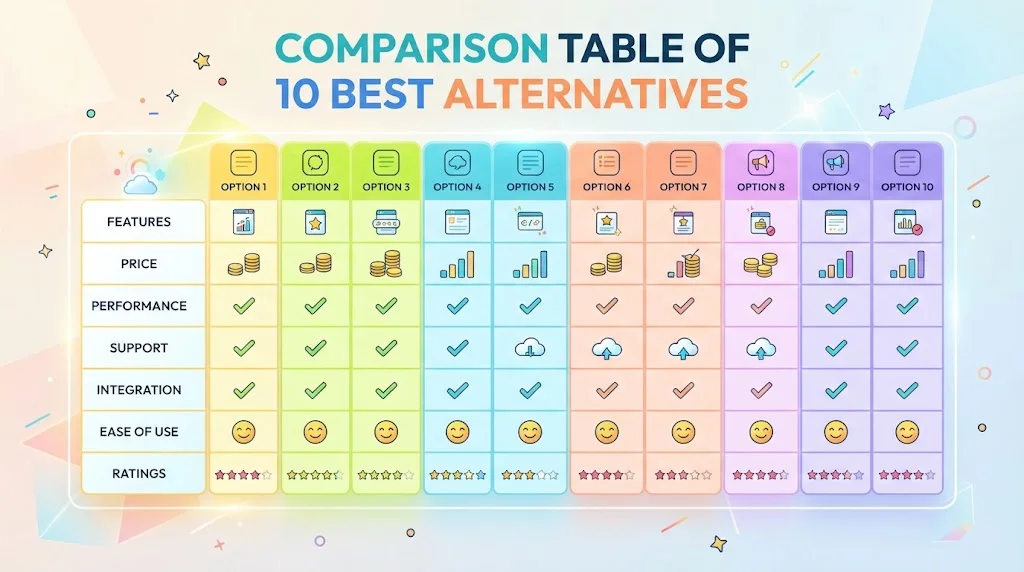
The following alternatives provide different ways to express the idea behind “suck up” depending on your intended meaning, audience, and level of formality. Some focus on excessive praise, while others describe genuine support, ambition, or approval-seeking behavior.
| Phrase | Meaning | Best Use | Worst Use | Tone | US vs UK Usage |
| Brown-Nose | To flatter someone excessively to gain an advantage | Informal conversations about obvious favoritism | Professional feedback or formal writing | Negative, critical | Common in the US; understood in the UK but less preferred |
| Kiss Up | To act overly friendly or agreeable to gain favor | Casual conversations and jokes | Serious workplace discussions | Casual, playful | More common in US English |
| Flatter Someone | To praise or compliment someone, sometimes strategically | Professional communication and social situations | When you need to criticize manipulation | Neutral to positive | Common in both the US and the UK |
| People-Pleaser | Someone who tries to keep others happy or avoid disagreement | Personality discussions and workplace conversations | When describing intentional manipulation | Neutral, reflective | Common in both regions |
| Yes-Person | Someone who always agrees with authority figures | Leadership and workplace discussions | Describing normal teamwork or agreement | Negative, informal | “Yes-man” is also common in UK English |
| Butter Someone Up | To be extra nice before asking for something | Casual conversations and humor | Formal communication | Playful, suspicious | Common in both the US and the UK |
| Trying to Impress | Making an effort to gain admiration or recognition | Workplaces, interviews, social situations | When behavior is clearly dishonest | Neutral | Common in both regions |
| Seeking Approval | Looking for acceptance or recognition from others | Professional analysis and communication | Casual jokes between friends | Professional, neutral | Common in both regions |
| Showing Loyalty | Demonstrating commitment and support | Workplace culture and leadership contexts | When someone is clearly manipulating others | Positive | Common in both regions |
| Being Supportive | Helping or encouraging someone genuinely | Professional and personal relationships | When criticizing fake behavior | Positive | Common in both regions |
Conclusion
The phrase “suck up” is a common informal expression used to describe someone who appears to seek approval through excessive praise, agreement, or flattering behavior. While it is easy to understand and widely used in everyday conversations, its negative emotional tone means it should be chosen carefully. In casual settings, it can add humor or clearly express an opinion, but in professional communication, more neutral alternatives often create better understanding.
Words such as “seeking approval,” “trying to impress,” “showing loyalty,” and “being supportive” allow speakers and writers to describe behavior without making assumptions about someone’s intentions. Understanding the difference between these expressions helps improve workplace communication, academic writing, and everyday conversations.
Whether you are a professional, student, ESL learner, or content writer, choosing the right alternative to “suck up” allows you to communicate with greater accuracy, respect, and awareness of tone.
FAQs
What does “suck up” mean?
“Suck up” means trying to gain someone’s approval, attention, or favor by being overly flattering, agreeable, or supportive. The phrase usually suggests that the behavior is not completely genuine and is often used in informal conversations about workplaces, schools, or social situations.
Is “suck up” a rude word?
Yes, “suck up” can sound rude because it often implies that someone is acting in a fake or overly flattering way to gain an advantage. However, among friends, it can also be used jokingly or playfully depending on the relationship and tone.
Is “suck up” professional language?
No, “suck up” is generally considered informal and is not recommended for professional writing or workplace feedback. In formal situations, alternatives like “seeking approval,” “trying to impress,” or “showing strong support” are more appropriate because they sound more objective.
What is a polite alternative to “suck up”?
Polite alternatives to “suck up” include “seeking approval,” “being supportive,” “showing appreciation,” “building rapport,” and “trying to impress.” These expressions describe similar behavior while avoiding the negative judgment associated with the original phrase.
What is the difference between “suck up” and “brown-nose”?
The main difference is intensity. “Brown-nose” usually sounds more negative and insulting than “suck up.” Both describe excessive attempts to gain favor, but “brown-nose” often suggests obvious or dishonest flattery, especially in workplace situations.
Can “suck up” be used as a joke?
Yes, “suck up” can be used humorously in casual conversations when the speaker and listener have a friendly relationship. For example, friends may tease someone for complimenting a teacher or manager. The meaning depends heavily on tone, context, and familiarity.
What is the opposite of “suck up”?
The opposite of “suck up” is someone who gives honest opinions, communicates independently, or respectfully disagrees when needed. Expressions like “being straightforward,” “speaking honestly,” or “offering constructive feedback” describe behavior opposite to excessive approval-seeking.
Why do people use the phrase “suck up”?
People use “suck up” because it quickly describes a recognizable social behavior. The phrase summarizes the idea of excessive approval-seeking in just two words. It is common in everyday speech because it is simple, memorable, and easily understood by native English speakers.
Is “suck up” the same as being supportive?
No, “suck up” and being supportive are not the same. Supporting someone can come from genuine respect or teamwork, while “suck up” usually suggests that the support is motivated by personal benefit. The difference depends on the person’s intention and how others interpret the behavior.
How can I replace “suck up” in professional writing?
In professional writing, replace “suck up” with more neutral phrases that describe specific actions. Examples include “actively seeking recognition,” “building relationships,” “showing commitment,” or “expressing strong support.” These options maintain professionalism while explaining the situation clearly.