
Imagine you’re in a team meeting where someone notices that the discussion has become tense. They pause and say, “Let’s do a quick vibe check before we continue.” Instantly, everyone understands that they’re being asked to assess the mood, energy, or overall atmosphere rather than the technical details of the conversation. This simple phrase has become a staple of modern communication because it encourages awareness of emotions, social dynamics, and group interactions.
The phrase “Vibe Check” is widely used in workplaces, classrooms, online communities, and everyday conversations. While it originated as casual internet slang, it has evolved into a useful way to encourage people to pause, reflect, and evaluate how a situation or interaction feels. Knowing its meaning, tone, and suitable alternatives helps you communicate more clearly, choose words that fit your audience, and avoid misunderstandings in both professional and personal settings.
What Does “Vibe Check” Mean?
Vibe Check refers to a quick assessment of the emotional atmosphere, mood, or overall feeling of a person, group, or situation. The phrase is commonly used to determine whether people are comfortable, engaged, or reacting positively before continuing a conversation, activity, or decision.
Origin & History of “Vibe Check”
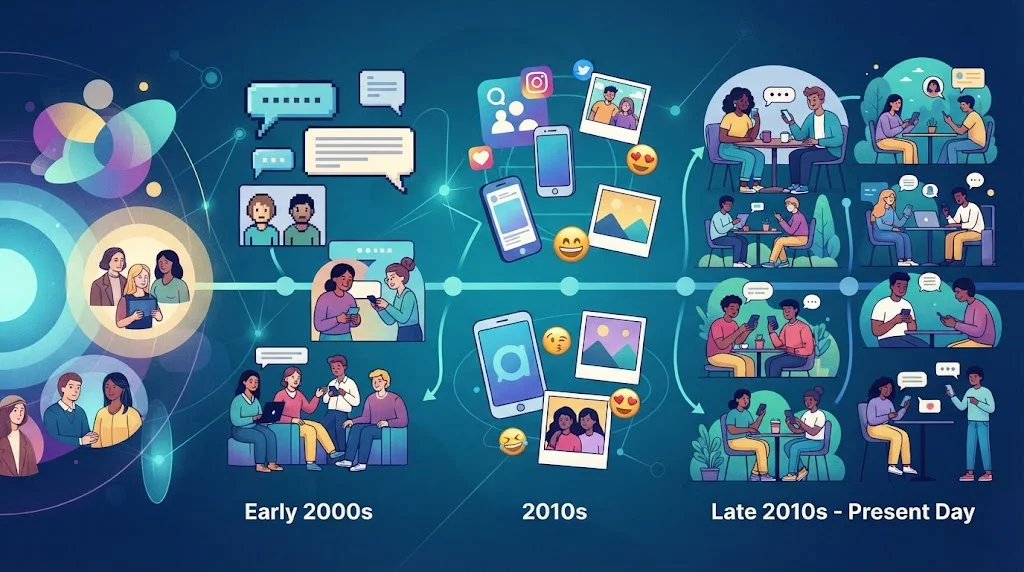
The phrase “Vibe Check” combines two familiar English words: “vibe,” a shortened form of vibration referring to a person’s mood or atmosphere, and “check,” meaning to examine or evaluate something. Although “vibe” had been used informally since the 1960s to describe feelings or energy, the complete expression “Vibe Check” became popular much later through internet culture.
Around the late 2010s, the phrase spread rapidly across social media platforms, online forums, meme communities, and video-sharing sites. It often appeared humorously as a way to judge someone’s attitude, behavior, or emotional energy. Internet users would jokingly say that someone had “passed the vibe check” if they seemed trustworthy, friendly, or socially compatible.
As the expression gained popularity, its meaning expanded beyond memes. Professionals, educators, team leaders, and content creators began using it to encourage brief emotional check-ins before meetings, presentations, classroom discussions, or collaborative projects. Today, “Vibe Check” represents more than internet slang—it reflects the growing emphasis on emotional intelligence, workplace culture, psychological safety, and mindful communication.
Its evolution demonstrates how informal digital language can gradually become part of everyday English, adapting from humorous online conversations into practical communication used across many settings.
Synonyms & Alternatives by Tone
Professional & Neutral Alternatives
- Check in with everyone
- Assess the current situation
- Gauge the atmosphere
- Review how everyone feels
- Evaluate team sentiment
- Take a quick pulse
- Read the room
- Assess group dynamics
- Understand everyone’s perspective
- Confirm everyone’s comfort level
Polite & Supportive Alternatives
- How is everyone feeling?
- Is everyone comfortable moving forward?
- Let’s check in together.
- Does anyone have concerns?
- I’d like to hear everyone’s thoughts.
- Are we all on the same page?
- Is everyone doing okay?
- Let’s make sure everyone feels heard.
- How are things going?
- Would anyone like to share how they’re feeling?
Encouraging & Reassuring Alternatives
- Let’s pause for a moment.
- Take a moment to reflect.
- Let’s reconnect before moving on.
- Let’s make sure we’re aligned.
- We’re all in this together.
- Let’s see where everyone stands.
- Let’s reset if needed.
- Let’s take everyone’s perspective into account.
- Let’s ensure everyone feels comfortable.
- Let’s move forward together.
Casual, Playful & Idiomatic Alternatives
- Read the room.
- What’s the mood?
- Feeling okay?
- Everyone good?
- Energy check.
- How’s everybody doing?
- Quick pulse check.
- Catch the vibe.
- Pass the vibe check.
- What’s everyone thinking?
When Should You Use “Vibe Check”?
A Vibe Check works best when understanding people’s emotions or reactions is just as important as discussing facts. It encourages open communication and helps identify concerns before they become larger problems.
Professional Settings
Although slightly informal, the phrase can be appropriate in collaborative workplaces with relaxed communication styles. Managers, facilitators, and project leaders often use it to ensure team members remain engaged during meetings, brainstorming sessions, or major project discussions. In more formal organizations, a neutral alternative such as “Let’s check in with everyone” may be better.
Casual Conversations
Among friends, family members, classmates, or online communities, “Vibe Check” naturally fits conversations about emotions, social interactions, plans, or group activities. It helps create an environment where people feel comfortable expressing how they feel.
Writing, Presentations, and Digital Communication
The phrase appears frequently in Slack messages, Microsoft Teams chats, WhatsApp groups, newsletters, blogs, podcasts, and social media posts. Content creators also use it as a headline or conversation starter because it immediately signals an emotional or cultural check-in with the audience.
When It Is Especially Effective
A Vibe Check is especially useful:
- Before making an important group decision.
- During long meetings when engagement seems to decline.
- After receiving unexpected news.
- When discussions become emotionally charged.
- Before launching a new project or presentation.
- During team-building activities.
- When resolving misunderstandings.
- While moderating online communities or group discussions.
Using the phrase thoughtfully shows awareness of group dynamics and encourages people to share honest feedback before moving forward.
When Should You Avoid “Vibe Check”?
Although “Vibe Check” is widely understood, it is not suitable for every situation. Because it originated as internet slang, it may sound too casual or vague in environments where precision and professionalism are expected.
Avoid using the phrase in highly formal business correspondence, legal documents, academic research papers, government communications, or official policy discussions. In these settings, expressions such as “assess stakeholder sentiment,” “evaluate participant feedback,” or “conduct a status review” provide greater clarity.
You should also avoid using it during sensitive conversations involving medical issues, legal disputes, disciplinary meetings, financial negotiations, or crisis communication. The casual tone may unintentionally minimize the seriousness of the situation or make participants feel their concerns are being treated too lightly.
Additionally, not everyone is familiar with internet slang. International audiences, English learners, or people from different generations may misunderstand the phrase or interpret it literally. Choosing clearer alternatives helps ensure your message remains inclusive and easy to understand.
Is “Vibe Check” Professional, Polite, or Casual?
Vibe Check is primarily a casual expression with a friendly and approachable tone. It is neither inherently impolite nor unprofessional, but its suitability depends heavily on context and audience.
From a formality perspective, it sits between everyday conversation and modern workplace language. Many startups, creative industries, technology companies, educational settings, and collaborative teams use it comfortably because it encourages openness and emotional awareness. However, traditional corporate environments may prefer more formal wording.
Emotionally, the phrase carries a supportive rather than critical tone. It suggests curiosity instead of judgment and invites people to share how they feel without placing pressure on them.
Audience perception also varies. Younger professionals and digital-native audiences generally recognize the phrase immediately, while older professionals or international audiences may prefer more explicit language.
Overall, “Vibe Check” is best viewed as a conversational communication tool that works well when relationships are collaborative, and the environment values empathy and psychological safety.
Pros and Cons of Using “Vibe Check”
Advantages
Creates clarity about emotional context
Instead of focusing only on tasks, the phrase reminds people to consider emotions, engagement, and group dynamics before making decisions.
Encourages open communication
It permits participants to express concerns, confusion, or discomfort, making conversations more honest and productive.
Easy to understand in modern communication
Among many English speakers, especially younger audiences, the phrase is instantly recognizable and communicates its purpose with very few words.
Supports collaboration
Checking the emotional atmosphere often prevents misunderstandings, improves teamwork, and strengthens relationships during discussions and projects.
Works across many digital platforms
The phrase adapts naturally to meetings, messaging apps, online communities, presentations, and social media without sounding forced.
Potential Drawbacks
Can sound too informal
In highly professional environments, the expression may appear overly casual or trendy, reducing credibility with certain audiences.
May oversimplify complex emotions
A quick “Vibe Check” cannot replace meaningful conversations when people face significant concerns or conflicts.
Not universally understood
Some English learners, international audiences, or individuals unfamiliar with internet culture may misunderstand the phrase.
Can become repetitive
As the expression has grown in popularity, frequent use may make it feel like a buzzword rather than a thoughtful communication tool.
Tone depends heavily on context.
When used carelessly during serious discussions, the phrase may unintentionally seem dismissive or insensitive, even if the speaker’s intention is supportive.
Real-Life Examples of “Vibe Check” by Context
Emails
Using “Vibe Check” in emails works best when communicating with colleagues, creative teams, or organizations that encourage informal collaboration. It signals a desire to understand how everyone is feeling before making decisions.
Example:
“Hi team, before we finalize the campaign, I’d like to do a quick vibe check. Does everyone feel confident about the direction, or are there any concerns we should discuss first?”
Meetings
In meetings, the phrase helps leaders pause and assess engagement, especially after complex discussions or major announcements.
Example:
“We’ve covered a lot today. Let’s do a quick vibe check—does anyone have questions or feel we need to revisit any part of the plan before moving forward?”
Presentations
Presenters can use the expression to reconnect with their audience and maintain engagement without sounding overly formal.
Example:
“Before we move to the next section, quick vibe check. Is everyone following so far, or should I clarify anything?”
Conversations
Among friends, classmates, or coworkers, “Vibe Check” naturally encourages honest communication.
Example:
“You’ve been pretty quiet today. Just doing a vibe check—everything okay?”
Social Media
Online, the phrase often appears as a humorous or interactive way to engage followers while inviting opinions.
Example:
“Monday morning vibe check. What’s one word that describes your mood today?”
“Vibe Check” vs Similar Expressions (Key Differences)
| Phrase | Meaning Difference | Tone Difference | Best Use Scenario |
| Read the room | Focuses on noticing people’s reactions rather than asking directly | Casual but observant | Meetings, presentations, group discussions |
| Check in | Emphasizes caring about someone’s well-being or progress | Professional and supportive | Workplaces, healthcare, education |
| Pulse check | Measures current opinions or engagement quickly | Professional and business-friendly | Team meetings, project reviews |
| How’s everyone feeling? | Directly asks about emotions | Warm and conversational | Team discussions, classrooms, family conversations |
| Gauge the atmosphere | Evaluates the overall mood of a group | Neutral and formal | Leadership meetings, workshops, presentations |
| Assess team sentiment | Focuses on collective opinions and morale | Formal and corporate | Executive meetings, organizational planning |
Common Mistakes & Misuse of “Vibe Check”
Overusing the Phrase
Because “Vibe Check” is trendy, repeating it too often can make communication sound predictable or insincere. Varying your language keeps conversations more natural.
Using It in the Wrong Context
The phrase is generally unsuitable for legal documents, formal negotiations, academic writing, official announcements, or emergency communication. More precise language is usually more effective.
Contradictory Usage
Saying “Let’s do a vibe check” while immediately dismissing people’s opinions sends mixed messages. If you invite feedback, be prepared to genuinely consider it.
Assuming Everyone Understands It
Not all audiences are familiar with internet slang. English learners, international professionals, or older audiences may not recognize the intended meaning without additional context.
Treating It as a Solution
A “Vibe Check” identifies emotional temperature but does not resolve disagreements, conflicts, or organizational problems. It should be the beginning of a conversation rather than the end.
Psychological Reason People Prefer “Vibe Check”
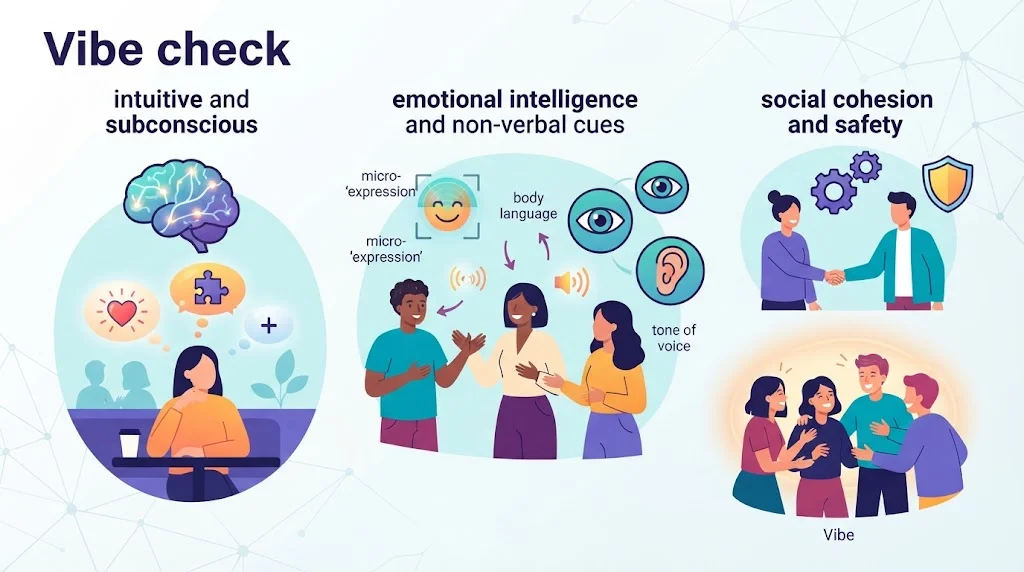
Cognitive Load Reduction
The phrase communicates a complex idea in just two words. Instead of asking several questions about emotions, engagement, and comfort, people immediately understand that the goal is to assess the current atmosphere.
Builds Trust
When someone suggests a “Vibe Check,” it often signals openness and emotional awareness. This can encourage people to share honest opinions because they feel their perspectives are valued.
Fits the Attention Economy
Modern communication favors concise language. Short expressions are easier to remember, quicker to process, and more likely to capture attention than lengthy explanations.
Reflects Modern Communication Habits
Digital conversations often prioritize emotional awareness alongside information sharing. “Vibe Check” aligns with today’s collaborative communication style, where understanding people’s reactions is considered just as important as completing tasks.
Encourages Psychological Safety
The phrase can reduce pressure by framing feedback as a shared conversation instead of a formal evaluation. This makes participation feel less intimidating in many group settings.
US vs UK Usage of “Vibe Check”
In the United States, “Vibe Check” is highly recognizable, particularly among younger professionals, students, social media users, and technology companies. It commonly appears in workplace chats, online discussions, podcasts, and marketing content.
In the United Kingdom, the phrase is also understood, especially among younger generations and people active on social media. However, British speakers may more frequently choose alternatives such as “check in,” “read the room,” or “see how everyone’s feeling” in professional conversations.
Overall, the meaning remains largely the same in both countries, but workplace culture influences how often the expression is used. American workplaces generally adopt trendy conversational language more readily, while British communication often favors slightly more understated wording.
“Vibe Check” in Digital & Modern Communication
Emails
Internal emails between colleagues sometimes use “Vibe Check” to encourage discussion before decisions are finalized. External business emails usually benefit from more formal alternatives.
Slack and WhatsApp
Messaging platforms are one of the most common places to use the phrase. Team leaders often write messages such as:
“Quick vibe check before we launch—does anyone have last-minute concerns?”
The wording feels conversational while still encouraging collaboration.
Social Media
On platforms like Instagram, TikTok, X, LinkedIn, and Threads, “Vibe Check” is frequently used to start conversations, invite audience participation, or introduce opinion-based content.
Examples include:
- Friday vibe check.
- Office vibe check.
- Study session vibe check.
- Vacation vibe check.
The phrase creates immediate engagement because it invites people to react personally.
AI-Generated Summaries
Modern AI writing tools increasingly recognize “Vibe Check” as a cultural expression rather than literal language. When summarizing conversations, AI may interpret it as a request to evaluate group mood, emotional engagement, or audience sentiment instead of simply checking emotions.
Linguistic & Communication Insight
Emotional Weight & Subtext
Although “Vibe Check” literally refers to assessing a mood or atmosphere, native English speakers often hear a deeper message. The phrase communicates curiosity, empathy, and a willingness to pause before moving ahead. Rather than focusing only on outcomes, it signals that people’s feelings and reactions matter. This subtle emotional layer helps make conversations feel more collaborative and respectful.
Direct vs Indirect Phrasing
Compared with direct questions such as “Do you agree?” or “Is there a problem?”, “Vibe Check” is noticeably softer. It invites reflection without implying that something is wrong. This indirect approach lowers defensiveness and encourages people to share honest feedback voluntarily.
However, in situations requiring precision or urgency, indirect wording may create ambiguity. Formal alternatives like “Let’s review any concerns” or “Please share your feedback before we proceed” provide clearer expectations while maintaining professionalism.
Professional Communication Perspective
In modern workplaces, the phrase often reflects leadership styles that prioritize collaboration, emotional intelligence, and psychological safety. Team leaders who use “Vibe Check” appropriately demonstrate awareness that productivity depends not only on tasks but also on engagement and morale.
At the same time, experienced communicators recognize that audience expectations differ. Traditional industries, executive meetings, and client-facing conversations often benefit from more neutral language to maintain credibility and clarity.
Pragmatic Reasons for Alternatives
Professionals frequently choose alternatives because they offer greater precision. Expressions such as “check in with everyone,” “gauge the atmosphere,” or “assess team sentiment” reduce ambiguity while matching the formality of business communication.
Alternative wording can also soften difficult conversations, minimize misunderstandings across cultures, and help speakers adapt their tone for different audiences without changing their underlying intention.
Social Signaling
Language communicates more than information—it also shapes how speakers are perceived. Choosing “Vibe Check” may signal approachability, emotional awareness, and familiarity with modern communication trends. Using a more formal alternative can instead project professionalism, authority, or organizational leadership.
Selecting the right phrase therefore influences trust, engagement, and the overall perception of the speaker’s communication style.
Tone & Context Guidance
The effectiveness of “Vibe Check” depends largely on context. It works especially well in collaborative workplaces, educational environments, creative industries, online communities, and everyday conversations where informal language feels natural.
In highly formal, legal, academic, medical, or crisis-related situations, clearer and more precise wording is generally the better choice. Matching your language to your audience ensures your message is understood while maintaining the appropriate balance of empathy, clarity, and professionalism.
Check In With Everyone
Meaning: This phrase means to briefly ask each person how they are doing, what they think, or whether they have any concerns before moving forward.
Why This Phrase Works: It is clear, inclusive, and widely understood across professional and personal settings.
Real-World Usage Insight: Team leaders, teachers, and project managers frequently use it to encourage participation and identify issues early.
Best Use: Team meetings, classrooms, project updates, and collaborative discussions.
Avoid When: Time is extremely limited or an individual conversation is more appropriate than a group check-in.
Tone: Professional, supportive, and approachable.
US vs UK Usage: Common and natural in both American and British English.
Example (Meeting): “Before we finalize today’s agenda, I’d like to check in with everyone. Is there anything we should address first?”
Gauge the Atmosphere
Meaning: This phrase means to observe and understand the overall mood, reactions, or emotional climate of a group.
Why This Phrase Works: It sounds professional while emphasizing awareness of group dynamics rather than individual opinions alone.
Real-World Usage Insight: Facilitators and managers often use this wording during workshops, presentations, or strategic discussions.
Best Use: Business meetings, conferences, presentations, and leadership discussions.
Avoid When: Speaking casually with close friends, where it may sound overly formal.
Tone: Neutral, professional, and thoughtful.
US vs UK Usage: Equally common in both regions, especially in workplace communication.
Example (Meeting): “Let’s gauge the atmosphere before announcing the next phase of the project.”
Conclusion
“Vibe Check” has evolved from internet slang into a widely recognized expression that encourages people to pause and assess the emotional atmosphere of a conversation, meeting, or situation. Whether you’re collaborating with colleagues, connecting with friends, or engaging an online audience, the phrase helps promote empathy, awareness, and open communication. However, its effectiveness depends on choosing the right context.
In casual conversations and modern workplaces, it feels approachable and inclusive, while more formal settings often call for alternatives like “check in with everyone” or “gauge the atmosphere.” Understanding its meaning, history, tone, and practical alternatives allows you to communicate with greater confidence and professionalism. By selecting language that matches your audience and purpose, you can strengthen relationships, reduce misunderstandings, and encourage more meaningful conversations.
Ultimately, mastering “Vibe Check” and its alternatives helps you become a more adaptable, emotionally intelligent, and effective communicator in both personal and professional environments.
FAQs
What does “Vibe Check” mean?
“Vibe Check” refers to briefly assessing the mood, emotional atmosphere, or energy of a person, group, or situation. People use it to ensure everyone feels comfortable, engaged, or aligned before continuing a discussion, making a decision, or starting an activity. It is commonly used in both casual conversations and collaborative workplaces.
Is “Vibe Check” considered professional?
It depends on the workplace. Creative companies, startups, educational institutions, and collaborative teams often use “Vibe Check” naturally. In formal corporate, legal, or government environments, more neutral alternatives such as “check in with everyone” or “assess team sentiment” are generally more appropriate.
Where did the phrase “Vibe Check” come from?
The phrase became popular through internet culture and social media during the late 2010s. It combines “vibe,” meaning mood or atmosphere, with “check,” meaning to evaluate something. Although it started as humorous online slang, it has gradually become part of everyday communication.
When should I use “Vibe Check”?
Use “Vibe Check” when you want to understand how people feel before moving forward. It works well in team meetings, classrooms, workshops, online communities, social media, and casual conversations where emotional awareness and collaboration are important.
When should I avoid using “Vibe Check”?
Avoid using the phrase in legal documents, academic papers, official business correspondence, crisis communication, or highly sensitive discussions. Because it is informal, more precise language is usually better in situations that require clarity and professionalism.
What are the best alternatives to “Vibe Check”?
Some of the best alternatives include “check in with everyone,” “gauge the atmosphere,” “take a quick pulse,” “read the room,” “assess team sentiment,” and “make sure we’re all on the same page.” The best choice depends on your audience and the level of formality required.
Is “Vibe Check” common in both the US and the UK?
Yes. The phrase is widely recognized in both countries, especially among younger speakers and professionals familiar with digital communication. However, British workplaces may more often use alternatives like “check in” or “see how everyone’s feeling” in formal conversations.
Why has “Vibe Check” become so popular?
Its popularity comes from its simplicity and relevance to modern communication. The phrase quickly expresses the idea of checking emotional or social dynamics, making it useful in workplaces, online discussions, and everyday interactions where empathy and collaboration are valued.
Can “Vibe Check” be used in emails?
Yes, but mainly in internal emails or relaxed workplace cultures. For example, a manager might write, “Before we finalize the proposal, let’s do a quick vibe check.” In formal business emails, clearer alternatives such as “I’d like to gather everyone’s feedback” are usually preferable.
How can I use “Vibe Check” effectively?
Use the phrase only when it genuinely supports communication. Consider your audience, the level of formality, and the purpose of the conversation. If your goal is to encourage honest feedback and emotional awareness, “Vibe Check” can be highly effective. If precision is more important, choose a professional alternative that clearly communicates your intent.


