

Imagine you’re trying to focus on an important project when someone repeatedly interrupts you with unnecessary questions. Frustrated, you might be tempted to say, “Bug off!” While the phrase quickly tells someone to leave you alone, it also carries a strong emotional tone that may not always fit the situation. Understanding what “Bug Off” means, when it works, and which alternatives sound more professional or polite can help you communicate more effectively in everyday conversations, workplace interactions, and digital messages. Whether you’re an English learner, content writer, student, or professional, knowing how to choose the right expression improves clarity, avoids misunderstandings, and helps you match your words to your audience.
What Does “Bug Off” Mean?
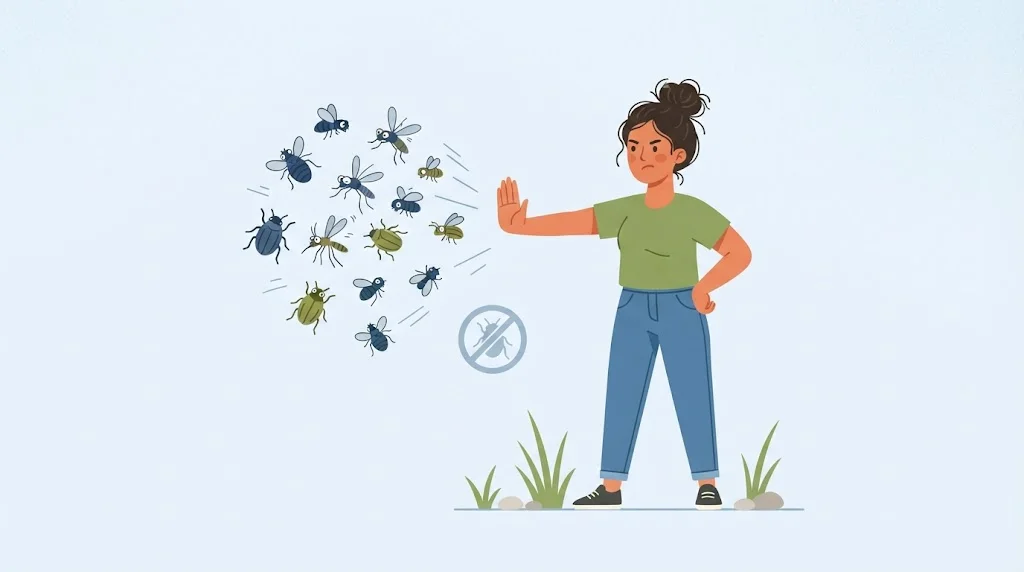
“Bug Off” is an informal English expression used to tell someone to go away or stop bothering you. It usually communicates annoyance or a desire for personal space and is most commonly heard in casual conversations rather than professional or formal settings.
Origin & History of “Bug Off”
The expression “Bug Off” became popular in American English during the early twentieth century. It is generally believed to have evolved from the verb “bug,” meaning to annoy, bother, or irritate someone. The word itself traces back to the slang use of “bug” for something that causes discomfort or persistent irritation.
As spoken English evolved, people began using “Bug Off” as a direct command telling someone to stop being annoying and leave. The phrase gained wider recognition through films, television shows, comic books, and military slang, where short, forceful commands were common.
Today, “Bug Off” remains a familiar casual expression. Although it still means “go away,” its tone can range from playful teasing among friends to genuine irritation, depending on the speaker’s voice, relationship with the listener, and overall context.
Synonyms & Alternatives by Tone
Professional & Neutral Alternatives
- Please give me some space.
- Let’s continue this later.
- I’d like to focus right now.
- Could we discuss this another time?
- I need a moment to concentrate.
Polite & Supportive Alternatives
- Would you mind giving me a little space?
- I appreciate your understanding.
- I’ll get back to you shortly.
- Let’s reconnect in a few minutes.
- Thanks for giving me some time.
Encouraging & Reassuring
- Take your time.
- Let’s pause for now.
- We’ll talk when the timing is better.
- I need a short break.
- We’ll sort this out later.
Casual, Playful & Idiomatic Alternatives
- Give me a break.
- Leave me alone.
- Get lost.
- Beat it.
- Shoo.
- Scram.
- Take a hike.
- Go away.
- Buzz off.
- Get out of here.
When Should You Use “Bug Off”?
The phrase “Bug Off” works best when you want to express annoyance or ask someone to stop bothering you in an informal setting. Because it is direct, the relationship with the other person and the surrounding context matter.
Professional Settings
In most workplaces, “Bug Off” is not appropriate. If you’re interrupted while working, choose more respectful alternatives such as “I’d like to finish this first” or “Can we talk in a few minutes?” These maintain professionalism while communicating the same need for space.
Casual Conversations
Among close friends, siblings, or family members, “Bug Off” can sometimes be playful rather than offensive. Tone of voice and familiarity usually determine whether it sounds humorous or genuinely rude.
Writing, Presentations, and Digital Communication
Avoid using “Bug Off” in business emails, academic writing, presentations, or customer communication. In casual texts or social media conversations between friends, it may be acceptable if everyone understands the intended humor.
When It Is Especially Effective
The phrase is most effective when:
- Someone repeatedly interrupts you.
- A friend is joking around and understands playful teasing.
- You want to express irritation briefly in an informal conversation.
- The relationship allows direct, casual language without causing offense.
When Should You Avoid “Bug Off”?
Although the phrase is common in everyday English, there are many situations where using it can damage relationships or create misunderstandings.
Overly Formal Situations
Business meetings, interviews, conferences, and official events require respectful communication. Using “Bug Off” in these settings may appear disrespectful or unprofessional.
Legal, Academic, or Sensitive Contexts
When discussing legal matters, education, healthcare, or emotionally sensitive topics, direct dismissive language can undermine trust and cooperation. Neutral wording is a better choice.
Situations Where Nuance May Be Lost
Text messages, emails, and online chats lack facial expressions and vocal tone. A phrase intended as a joke may instead be interpreted as anger or hostility.
Is “Bug Off” Professional, Polite, or Casual?
“Bug Off” is primarily a casual and informal expression. It is rarely considered professional and is only polite when used jokingly between people who know each other well.
Its emotional subtext often includes frustration, impatience, or irritation. Even when spoken playfully, it still signals that the speaker wants distance or fewer interruptions.
Most audiences perceive the phrase as stronger than a simple “Please leave me alone.” Because of this, professionals typically choose softer alternatives that communicate the same message without sounding confrontational.
Overall, “Bug Off” fits relaxed conversations better than workplaces, classrooms, or customer-facing communication.
Pros and Cons of Using “Bug Off”
Advantages
- Clearly communicates that you want to be left alone.
- Quick and easy to understand.
- Common in everyday spoken English.
- Can sound humorous among close friends.
- Requires little explanation because of its familiar meaning.
Potential Drawbacks
- May sound rude or dismissive.
- Unsuitable for professional communication.
- Can damage relationships if used with the wrong audience.
- Easily misunderstood in written communication.
- Repeated use may make the speaker appear impatient or unfriendly.
Real-Life Examples of “Bug Off” by Context
Emails
Avoid:
“Bug off until I’m done.”
Better:
“I’m finishing another task right now. I’ll respond once I’m available.”
Meetings
A teammate interrupts repeatedly.
“I’d like to finish this point first, and then I’ll be happy to hear your thoughts.”
Presentations
Instead of saying:
“Bug off with the questions.”
Say:
“Let’s save questions until the end so we can stay on schedule.”
Conversations
Friend:
“Can I keep guessing your surprise?”
You:
“Bug off—you’ll find out tonight!”
Social Media
“Everyone keeps asking for spoilers. Bug off until you’ve watched the episode!” 😄
“Bug Off” vs Similar Expressions (Key Differences)
| Phrase | Meaning Difference | Tone Difference | Best Use Scenario |
| Buzz Off | Similar meaning but slightly less harsh in many conversations | Casual and mildly annoyed | Friendly disagreements or playful exchanges |
| Get Lost | Stronger dismissal with greater emotional force | Rude and confrontational | Heated arguments or fictional dialogue |
| Leave Me Alone | Focuses on wanting privacy rather than ordering someone away | Neutral to serious | Personal boundaries and respectful conversations |
| Go Away | A straightforward request for someone to leave | Neutral and direct | Everyday situations with children, friends, or acquaintances |
| Take a Hike | Idiomatic way of dismissing someone | Casual, sarcastic | Informal conversations and humorous banter |
| Scram | Quick command telling someone to leave immediately | Playful or sharp | Casual conversations, movies, and storytelling |
Common Mistakes & Misuse of “Bug Off”
Overuse
Using “Bug Off” too frequently can make you appear impatient or unfriendly, even if you don’t intend to offend others.
Incorrect Context
Many English learners mistakenly use the phrase in workplaces or formal emails because it translates directly from similar expressions in their native language. In English, it is generally considered too informal for those settings.
Contradictory Usage
Saying “Bug Off” while trying to sound welcoming or collaborative sends mixed signals and may confuse your audience.
Cultural Misunderstandings
Native speakers often understand the difference between playful teasing and genuine annoyance through tone and facial expressions. Non-native speakers may unintentionally sound much harsher than they expect when using the phrase, especially in international communication.
Psychological Reason People Prefer “Bug Off”
People often choose “Bug Off” because it delivers a clear message with minimal effort. In fast-paced conversations, the brain naturally favors expressions that reduce cognitive load. Rather than explaining frustration in a long sentence, a short phrase immediately communicates the speaker’s desire to be left alone.
From a psychological perspective, the phrase also establishes personal boundaries. It signals that the speaker values their time, attention, or privacy and wants to end an unwanted interaction quickly. This directness can make the speaker appear confident, although it may also be perceived as impatient if the relationship lacks familiarity.
Modern communication places a premium on speed and efficiency. Whether in text messages or spoken conversations, concise expressions attract attention and reduce ambiguity. However, because “Bug Off” carries emotional weight, experienced communicators often replace it with softer alternatives when maintaining trust or cooperation is important.
US vs UK Usage of “Bug Off”
Although “Bug Off” is understood in both American and British English, it is noticeably more common in the United States.
In the US, the phrase is generally viewed as an informal way of telling someone to leave. Depending on tone, it may sound playful among friends or rude during disagreements.
In the UK, speakers are more likely to use alternatives such as “Buzz off,” “Sod off,” “Get lost,” or “Leave me alone.” While British audiences recognize “Bug Off,” it is less frequent in everyday conversation.
Regional preferences also influence tone perception. American speakers may interpret the phrase as mildly annoyed, whereas British speakers may find other expressions more natural for the same situation.
“Bug Off” in Digital & Modern Communication
Emails
Using “Bug Off” in professional emails is rarely appropriate because written communication lacks vocal tone. Readers may interpret it as hostile rather than humorous.
Instead of writing:
“Bug off until tomorrow.”
A better alternative is:
“I’m unavailable today but will respond tomorrow.”
Slack / WhatsApp
Private chats among close coworkers or friends sometimes include “Bug Off” as playful banter. However, workplace messaging platforms usually benefit from more collaborative wording.
For example:
“I’m in focus mode for the next hour. I’ll message you afterward.”
Social Media
The phrase appears frequently in memes, humorous comments, and lighthearted exchanges. Emojis or context often soften its meaning.
Example:
“Bug off, Monday. I’m not ready for you yet.”
AI-Generated Summaries
Modern AI writing tools generally avoid phrases like “Bug Off” in business content because they prioritize neutral, inclusive language. Instead, they recommend alternatives that maintain professionalism while expressing the same intent.
Linguistic & Communication Insight
Emotional Weight & Subtext
Native English speakers often hear more than the literal meaning of “Bug Off.” Beyond asking someone to leave, it communicates irritation, impatience, or a desire to end an interaction immediately. Depending on facial expressions and tone of voice, it may sound playful, sarcastic, or genuinely angry.
Direct vs Indirect Phrasing
“Bug Off” represents direct communication. It clearly states what the speaker wants without softening the message.
Compare:
- “Bug off.” — Immediate and forceful.
- “Could you give me a few minutes?” — Direct but respectful.
- “I’d appreciate some space right now.” — Collaborative and professional.
Indirect alternatives often preserve relationships because they acknowledge both the speaker’s needs and the listener’s feelings.
Professional Communication Perspective
In workplaces, people are judged not only by what they say but also by how they say it. While “Bug Off” communicates efficiently, it may reduce perceptions of professionalism, emotional intelligence, and teamwork.
Managers, leaders, teachers, and customer-facing professionals typically prefer language that solves the problem without creating unnecessary conflict.
Pragmatic Reasons for Alternatives
Experienced communicators often avoid “Bug Off” because softer wording reduces defensiveness. Expressions like “Let’s revisit this later” or “Could I have a few minutes?” maintain authority while encouraging cooperation.
Choosing an alternative does not weaken the message. Instead, it improves the likelihood that the other person will respond positively.
Social Signaling
Language signals personality, confidence, empathy, and professionalism. Using “Bug Off” may suggest that the speaker values efficiency over diplomacy, while gentler alternatives signal patience, respect, and emotional awareness.
Word choice also shapes long-term relationships. Repeatedly using harsh expressions can make someone appear less approachable, even if their intentions are harmless.
Tone & Context Guidance
Before using “Bug Off,” consider three questions:
- Do I know this person well enough for playful language?
- Could my tone be misunderstood?
- Would a softer alternative achieve the same result?
In close friendships, the phrase may strengthen humor and familiarity. In professional, academic, or multicultural environments, a more neutral expression usually creates better outcomes.
Please Give Me Some Space
Meaning: A polite request asking someone to allow you personal time, distance, or uninterrupted focus.
Why This Phrase Works: It communicates your need clearly while respecting the other person’s feelings.
Real-World Usage Insight: Frequently used in workplaces, families, and friendships when someone needs time to think or concentrate.
Best Use: Professional conversations, personal boundaries, and stressful situations.
Avoid When: Immediate danger or urgent action requires direct commands.
Tone: Polite, respectful, calm.
US vs UK Usage: Common and natural in both American and British English.
Example (Meeting): “I’d appreciate a little space to finish this report, and then we can review everything together.”
Let’s Continue This Later
Meaning: Suggests postponing a conversation until a better time.
Why This Phrase Works: It keeps communication open while reducing immediate pressure.
Real-World Usage Insight: Common during busy workdays, meetings, or emotionally charged discussions.
Best Use: Office discussions, collaborative projects, and scheduling conversations.
Avoid When: An immediate decision is required.
Tone: Professional, cooperative.
US vs UK Usage: Equally common across both regions.
Example (Email): “Let’s continue this later this afternoon once I’ve finished preparing the client presentation.”
I’d Like to Focus Right Now
Meaning: Politely explains that your current priority requires full attention.
Why This Phrase Works: It emphasizes your task instead of criticizing the other person.
Real-World Usage Insight: Often heard in offices, libraries, and study sessions.
Best Use: Deep work, studying, and presentations.
Avoid When: The interruption concerns an emergency.
Tone: Respectful and professional.
US vs UK Usage: Widely accepted in both varieties of English.
Example (Message): “I’d like to focus right now, but I’ll reply as soon as I’m finished.”
Could We Discuss This Another Time?
Meaning: Politely asks to postpone a discussion.
Why This Phrase Works: It acknowledges the other person’s concern while setting a boundary.
Real-World Usage Insight: Frequently used by managers, teachers, and professionals handling multiple priorities.
Best Use: Business meetings and scheduled conversations.
Avoid When: The issue cannot wait.
Tone: Courteous and diplomatic.
US vs UK Usage: Standard in both American and British English.
Example (Meeting): “Could we discuss this another time after we’ve completed today’s agenda?”
I Need a Moment to Concentrate
Meaning: Explains that you require uninterrupted attention for your current task.
Why This Phrase Works: It sounds honest rather than dismissive.
Real-World Usage Insight: Common in offices, classrooms, and remote work environments.
Best Use: Focus-intensive work and studying.
Avoid When: The conversation is urgent or time-sensitive.
Tone: Calm, neutral, professional.
US vs UK Usage: Frequently used in both countries.
Example (Email): “I need a moment to concentrate on this deadline, and I’ll respond shortly.”
Would You Mind Giving Me a Little Space?
Meaning: A courteous request for temporary privacy or uninterrupted time.
Why This Phrase Works: The question format sounds considerate and respectful.
Real-World Usage Insight: Used when maintaining positive relationships is important.
Best Use: Workplace conversations, family discussions, and customer interactions.
Avoid When: You need someone to leave immediately for safety reasons.
Tone: Polite, empathetic.
US vs UK Usage: Common throughout English-speaking countries.
Example (Conversation): “Would you mind giving me a little space while I finish this call?”
I Appreciate Your Understanding

Meaning: Expresses gratitude while indirectly asking for patience or cooperation.
Why This Phrase Works: It encourages positive responses by assuming goodwill.
Real-World Usage Insight: Frequently appears in customer service emails and workplace communication.
Best Use: Professional emails and service updates.
Avoid When: You need to deliver an urgent, direct instruction.
Tone: Warm, professional.
US vs UK Usage: Extremely common in both American and British English.
Example (Email): “I’m currently handling another priority and appreciate your understanding while I complete it.”
Conclusion
The phrase “Bug Off” is a familiar informal expression that tells someone to leave or stop bothering you. While it is simple and memorable, its effectiveness depends heavily on context, tone, and the relationship between the people involved. Among close friends, it can sound playful or humorous, but in professional, academic, or customer-facing situations, it may come across as dismissive or impolite. Understanding its meaning, history, emotional impact, and suitable alternatives helps you make better communication choices.
Expressions such as “Please give me some space,” “Let’s continue this later,” or “I’ll get back to you shortly” often achieve the same objective while maintaining respect and professionalism. Effective communication is about more than choosing the right words; it’s about matching your language to your audience and purpose. By recognizing when “Bug Off” is appropriate and when a softer alternative is the better choice, you can express boundaries confidently while building stronger, more positive personal and professional relationships.
FAQs
Is “Bug Off” offensive?
“Bug Off” is generally considered mildly offensive because it directly tells someone to go away. Whether it sounds rude depends on your tone, relationship with the listener, and the situation. Friends may use it jokingly without offending, while using it with strangers, coworkers, or clients can appear disrespectful or confrontational.
What does “Bug Off” actually mean?
“Bug Off” means “go away” or “stop bothering me.” It is an informal command used when someone wants space or feels annoyed by another person’s actions. The phrase is common in everyday spoken English but is rarely appropriate in formal writing or professional communication.
Is “Bug Off” professional?
No. “Bug Off” is considered a casual expression rather than professional language. In workplaces, business emails, or meetings, it’s better to use alternatives like “Could we discuss this later?”, “I’d like to focus right now,” or “Please give me a few minutes.” These communicate the same message while maintaining respect.
Is “Bug Off” stronger than “Go Away”?
Yes, in many situations. While both expressions ask someone to leave, “Bug Off” often carries more frustration because it suggests the other person is being annoying. “Go Away” is more neutral and can sound less confrontational depending on how it’s delivered.
Can I use “Bug Off” in an email?
It’s best to avoid “Bug Off” in emails, especially professional or customer-facing messages. Written communication lacks vocal tone, making the phrase easy to misinterpret. A polite alternative such as “I’ll respond once I’m available” or “Let’s revisit this later” creates a much better impression.
What are the best alternatives to “Bug Off”?
Some of the best alternatives include “Please give me some space,” “Let’s continue this later,” “I’d like to focus right now,” “I’ll get back to you shortly,” and “Would you mind giving me a little space?” These options communicate boundaries clearly while sounding more respectful and collaborative.
Is “Bug Off” used more in the US or the UK?
“Bug Off” is more common in American English. British English speakers generally understand the phrase but often prefer expressions like “Buzz off,” “Get lost,” or “Sod off.” The meaning is similar, although regional preferences influence which expression sounds more natural.
Why do native English speakers use “Bug Off”?
Native speakers often choose “Bug Off” because it’s short, expressive, and instantly communicates annoyance. In casual conversations, it saves time and conveys emotion efficiently. However, experienced communicators usually replace it with softer wording when maintaining positive relationships or professionalism is important.
Can “Bug Off” be playful?
Yes. Among close friends, siblings, or family members, “Bug Off” can be used humorously. Tone of voice, facial expressions, and shared understanding usually make it clear that the speaker is joking rather than expressing genuine anger. Without those cues, the phrase may sound much harsher.
How do I politely tell someone to stop bothering me?
Instead of saying “Bug Off,” try phrases such as “I’d appreciate a little space,” “Can we talk later?” “I’m focusing on something right now,” or “I’ll get back to you shortly.” These alternatives communicate your needs clearly while preserving goodwill and reducing the risk of sounding rude.