
Imagine a student hearing the phrase “Eat my shorts” in a comedy show and wondering whether it is an insult, a joke, or a serious expression. The phrase can sound confusing because its meaning depends heavily on tone, relationship, and situation. In modern communication, understanding expressions like this helps people choose words that match their audience, whether they are writing professionally, learning English, or communicating online.
“Eat my shorts” is a humorous, sarcastic, and informal expression used to show disagreement, annoyance, confidence, or playful defiance. Although it is rarely appropriate in professional settings, it remains recognizable because of its connection to popular culture and casual English conversations.
Knowing alternatives for this phrase helps speakers communicate the same attitude with more accuracy. A playful response among friends may need a different expression from a workplace discussion, academic presentation, or customer interaction.
What Does “Eat My Shorts” Mean?
“Eat my shorts” is an informal slang expression meaning “go away,” “deal with my disagreement,” or “I reject what you are saying.” The phrase is usually used jokingly or sarcastically rather than literally. It commonly appears in casual conversations, entertainment, and situations where someone wants to express playful confidence or irritation.
The phrase communicates a refusal to accept criticism, a challenge, or a humorous comeback. Its meaning is determined by context, facial expression, and the relationship between speakers.
Origin & History of “Eat My Shorts”
The exact origin of “eat my shorts” is difficult to trace, but the expression became widely recognized through American popular culture during the 1980s. It was strongly associated with teenage slang and rebellious humor.
The phrase gained international attention through television, especially through the character Bart Simpson on the animated series The Simpsons, where it became one of his recognizable catchphrases.
Over time, “eat my shorts” moved from being a youth slang phrase into a broader cultural reference. Today, many people use it mainly as a humorous or nostalgic expression rather than a serious insult.
Synonyms & Alternatives by Tone
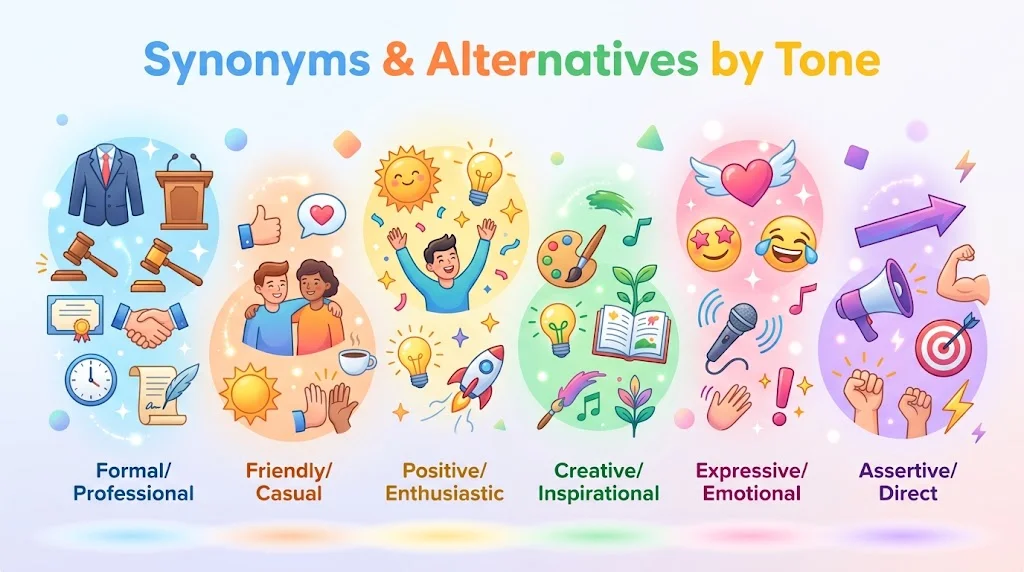
Professional & Neutral Alternatives
- I disagree
- I see things differently
- I cannot support that idea
- I have another perspective
- I would challenge that point
Polite & Supportive Alternatives
- I understand your point, but I see it differently
- Let’s look at another option
- I appreciate your view, although I have concerns
- Could we consider another approach?
Encouraging & Reassuring Alternatives
- Let’s find a better solution
- We can work through this
- Let’s approach it differently
- There may be another way forward
Casual, Playful & Idiomatic Alternatives
- No way
- Nice try
- Not happening
- Dream on
- Keep wishing
- Think again
When Should You Use “Eat My Shorts”?
Professional settings
In professional environments, “eat my shorts” is usually too informal. It may work only among colleagues who have a close relationship and understand the humor.
Casual conversations
The phrase can be effective among friends, especially when joking, teasing, or responding playfully.
Writing, presentations, digital communication
The phrase may appear in creative writing, social media posts, entertainment reviews, or informal online discussions. It is generally unsuitable for reports, business emails, or academic writing.
When it is especially effective
It works best when the goal is humor, exaggeration, or playful disagreement rather than serious confrontation.
When Should You Avoid “Eat My Shorts”?
Avoid using “eat my shorts” when:
- Communicating with managers, clients, or customers
- Writing academic assignments
- Creating legal or professional documents
- Discussing sensitive disagreements
- Speaking with people unfamiliar with English slang
The phrase can easily be misunderstood by non-native speakers because the literal meaning does not match the intended message.
Is “Eat My Shorts” Professional, Polite, or Casual?
“Eat my shorts” is casual and humorous, not professional or formal.
Its emotional meaning depends on delivery:
- Among friends, it may sound playful.
- Between strangers, it may sound rude.
- In workplaces, it may appear immature or disrespectful.
The phrase carries a rebellious and sarcastic feeling, which makes it memorable but limits its usefulness in serious communication.
Pros and Cons of Using “Eat My Shorts”
Advantages
- Clarity: The speaker clearly shows disagreement or resistance.
- Efficiency: It communicates a strong reaction quickly.
- Accessibility: Many English speakers recognize the cultural reference.
Potential Drawbacks
- Oversimplification: It may not explain the actual reason for disagreement.
- Tone mismatch: Listeners may interpret it as disrespectful.
- Repetition: Frequent use can make communication sound childish or predictable.
Real-Life Examples of “Eat My Shorts” by Context
A close coworker jokingly replies:
“Your idea of replacing coffee with morning meetings? Eat my shorts — I’m keeping my coffee!”
Meeting
A team member jokingly says:
“Everyone thinks I’ll finish this project late? Eat my shorts. I’ll have it ready tomorrow.”
Presentation
A speaker discussing pop culture might explain:
“Bart Simpson’s ‘eat my shorts’ became a symbol of teenage rebellion.”
Conversation
Friend:
“You’ll never finish that challenge.”
Response:
“Eat my shorts. Watch me prove you wrong.”
Social media
A humorous post might say:
“When someone says you cannot learn a new skill after 30… eat my shorts.”
“Eat My Shorts” vs Similar Expressions
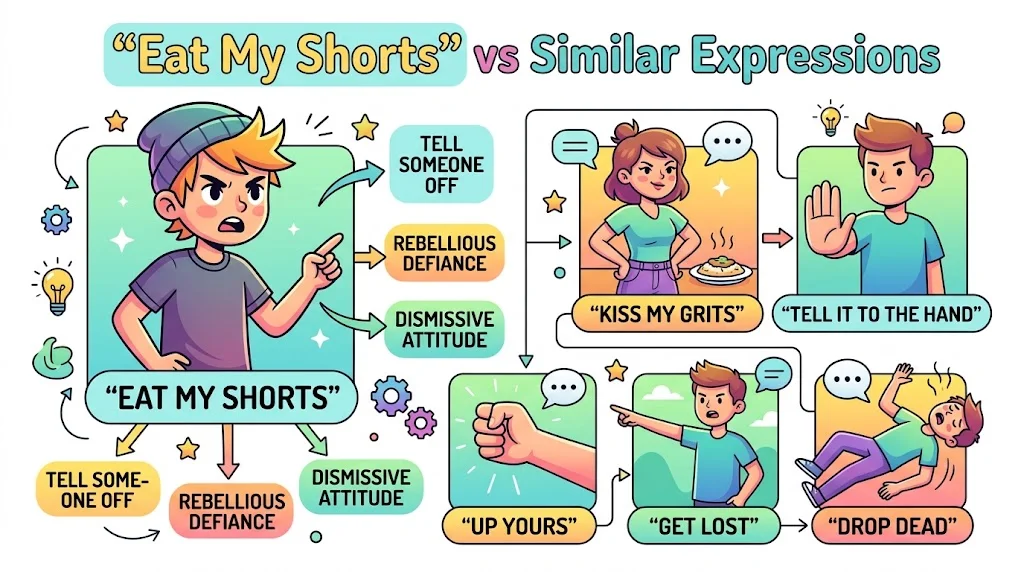
| Phrase | Meaning Difference | Tone Difference | Best Use Scenario |
| Bite me | Strong rejection or annoyance | More aggressive and rude | Casual arguments |
| Get lost | Tells someone to leave | Direct and sometimes hostile | Informal conflict |
| Dream on | Says something is unrealistic | Playful or sarcastic | Friendly teasing |
| No way | Shows disbelief or refusal | Casual and common | Everyday conversation |
| Nice try | Acknowledges an attempt but rejects it | Lighthearted | Games and friendly challenges |
Common Mistakes & Misuse of “Eat My Shorts”
Common mistakes include:
- Using it with people who do not understand the cultural reference
- Treating it as a professional disagreement phrase
- Using it during serious conflicts
- Assuming everyone will find it funny
English learners should remember that slang expressions often depend more on relationship and tone than dictionary meaning.
Psychological Reasons People Prefer “Eat My Shorts”
People often choose expressions like “eat my shorts” because they reduce communication effort and create an immediate emotional signal.
The phrase works because:
- It quickly shows resistance.
- It creates a memorable reaction.
- It signals confidence or humor.
- It matches modern informal communication styles.
Short expressions are especially common online because digital conversations reward quick emotional responses.
US vs UK Usage of “Eat My Shorts”
In the United States, “eat my shorts” is widely recognized because of American television and youth culture.
In the UK, the phrase is understood but may feel more like an American pop-culture reference than everyday British slang.
US speakers may perceive it as humorous rebellion, while UK speakers may associate it more strongly with American media.
“Eat My Shorts” in Digital & Modern Communication
Emails
Rarely suitable except in very informal personal messages.
Slack / WhatsApp
Possible among friends or close coworkers who share a humorous communication style.
Social media
Common in jokes, memes, and entertainment discussions.
AI-generated summaries
AI tools may identify it as slang, sarcasm, or informal disagreement. Context is essential because the literal meaning can be misleading.
Linguistic & Communication Insight
Emotional weight & subtext
Native speakers usually understand “eat my shorts” as more than a refusal. It often carries humor, confidence, teasing, or mild rebellion.
Direct vs indirect phrasing
The phrase is direct and emotionally strong. Softer alternatives such as “I see things differently” create cooperation rather than confrontation.
Professional communication perspective
Experienced communicators often avoid expressions like this at work because they prioritize clarity, respect, and relationship-building.
Pragmatic reasons for alternatives
Professionals choose different wording to reduce defensiveness, maintain trust, and show disagreement without creating unnecessary tension.
Social signaling
Word choice communicates identity. Using slang can make someone sound relaxed and humorous, while formal alternatives can signal professionalism and authority.
Tone & context guidance
The phrase works best when humor is expected. It becomes risky when the listener may interpret it as disrespectful.
Meaning, Usage & Examples for Each Alternative
I Disagree
Meaning: A direct way to express that your opinion differs from someone else’s.
Why This Phrase Works: It is clear, respectful, and suitable for professional communication.
Real-World Usage Insight: Many workplace discussions rely on this phrase because it separates disagreement from personal conflict.
Best Use: Meetings, reports, academic discussions.
Avoid When: A softer approach is needed for sensitive issues.
Tone: Professional and neutral.
US vs UK Usage: Common in both regions.
Example (Meeting): “I disagree with that approach because the customer data suggests another solution may work better.”
I See Things Differently
Meaning: A polite expression used to show that your opinion or interpretation is different from another person’s.
Why This Phrase Works: It communicates disagreement without sounding confrontational. It keeps the focus on ideas rather than people.
Real-World Usage Insight: Professionals often prefer this phrase because it encourages discussion and makes disagreement feel collaborative.
Best Use: Workplace conversations, presentations, academic discussions, and respectful debates.
Avoid When: A quick, direct answer is required or when strong disagreement must be clearly stated.
Tone: Polite, thoughtful, and diplomatic.
US vs UK Usage: Common in both US and UK English. It is especially popular in professional and educational settings.
Example (Email): “Thanks for sharing your proposal. I see things differently because our customer feedback suggests we should focus on a simpler approach first.”
I Cannot Support That Idea.
Meaning: A formal way to explain that you do not agree with a suggestion, decision, or proposal.
Why This Phrase Works: It clearly communicates a boundary while remaining respectful and professional.
Real-World Usage Insight: This phrase is often used when someone needs to express serious disagreement without creating unnecessary conflict.
Best Use: Business meetings, management discussions, policy conversations, and professional reviews.
Avoid when: Talking casually with friends or when the disagreement is minor.
Tone: Formal, firm, and professional.
US vs UK Usage: Used commonly in both regions, especially in workplace environments.
Example (Meeting): “I cannot support that idea until we have more information about the long-term costs.”
I Have Another Perspective
Meaning: A phrase used to introduce a different viewpoint or interpretation.
Why This Phrase Works: It frames disagreement as an opportunity for discussion rather than opposition.
Real-World Usage Insight: Experienced communicators use this wording to invite conversation and avoid making others feel criticized.
Best Use: Team discussions, brainstorming sessions, interviews, and presentations.
Avoid When: You need to communicate an urgent objection.
Tone: Collaborative, respectful, and constructive.
US vs UK Usage: Natural in both American and British professional communication.
Example (Meeting): “I have another perspective on this campaign. Instead of targeting everyone, we could focus on a smaller audience first.”
I Would Challenge That Point
Meaning: A phrase used when someone wants to question or disagree with a specific statement or assumption.
Why This Phrase Works: It shows critical thinking while keeping the discussion focused on the idea.
Real-World Usage Insight: It is common among professionals who need to analyze information carefully.
Best Use: Academic discussions, strategy meetings, research conversations.
Avoid When: Speaking with someone who may interpret challenges as personal criticism.
Tone: Analytical, confident, and direct.
US vs UK Usage: Common in formal discussions in both regions.
Example (Presentation): “I would challenge that point because the latest research shows a different trend.”
I Understand Your Point, But I See It Differently
Meaning: A polite disagreement phrase that acknowledges another person’s opinion before presenting another view.
Why This Phrase Works: It balances respect and honesty, making disagreement easier to accept.
Real-World Usage Insight: This structure is useful because people are more open to different ideas when they feel heard first.
Best Use: Negotiations, teamwork, customer communication, and difficult conversations.
Avoid When: You need a short response with no explanation.
Tone: Respectful, diplomatic, and supportive.
US vs UK Usage: Frequently used in both American and British English, especially in professional settings.
Example (Email): “I understand your point, but I see it differently because the current process has already reduced response times.”
Let’s Look at Another Option
Meaning: A cooperative phrase suggesting that a different solution should be considered.
Why This Phrase Works: It shifts the conversation from disagreement toward problem-solving.
Real-World Usage Insight: Leaders often use this expression to keep teams focused on solutions instead of conflicts.
Best Use: Meetings, project planning, teamwork, and negotiations.
Avoid When: You need to clearly reject an unsuitable idea.
Tone: Positive, collaborative, and solution-focused.
US vs UK Usage: Widely understood and natural in both regions.
Example (Meeting): “This plan may create extra delays. Let’s look at another option before moving forward.”
I Appreciate Your View, Although I Have Concerns
Meaning: A respectful way to acknowledge someone’s opinion while expressing reservations.
Why This Phrase Works: It shows consideration while allowing honest feedback.
Real-World Usage Insight: This phrase is useful when maintaining relationships is as important as sharing criticism.
Best Use: Professional feedback, management conversations, and client discussions.
Avoid When: You need a casual response with friends.
Tone: Courteous, careful, and professional.
US vs UK Usage: Common in formal communication in both countries.
Example (Email): “I appreciate your view, although I have concerns about whether this timeline is realistic.”
Let’s Find a Better Solution
Meaning: A phrase that encourages moving from a problem toward improvement.
Why This Phrase Works: It avoids blame and focuses attention on progress.
Real-World Usage Insight: Teams often use this language because it creates a shared goal instead of highlighting mistakes.
Best Use: Workplace problem-solving, customer service, and group projects.
Avoid When: The purpose is simply to reject an idea without discussion.
Tone: Encouraging, practical, and cooperative.
US vs UK Usage: Common in both American and British workplaces.
Example (Meeting): “The current system is causing delays. Let’s find a better solution before the next deadline.”
We Can Work Through This
Meaning: A reassuring phrase that suggests a problem can be solved through cooperation.
Why This Phrase Works: It creates confidence and reduces tension during difficult situations.
Real-World Usage Insight: Managers and team leaders often use this expression to encourage persistence.
Best Use: Challenges, disagreements, stressful projects, and teamwork.
Avoid When: Immediate rejection or a firm decision is needed.
Tone: Supportive, calm, and reassuring.
US vs UK Usage: Common in both regions, particularly in workplace communication.
Example (Message): “The launch has some issues, but we can work through this and fix the remaining problems together.”
Let’s Approach It Differently
Meaning: A suggestion to use a new method or perspective.
Why This Phrase Works: It encourages flexibility without criticizing previous efforts.
Real-World Usage Insight: This phrase is often preferred by experienced professionals because it promotes improvement rather than assigning blame.
Best Use: Strategy meetings, creative projects, and problem-solving discussions.
Avoid When: A direct disagreement needs to be expressed immediately.
Tone: Constructive, positive, and open-minded.
US vs UK Usage: Natural in both US and UK English.
Example (Meeting): “The current marketing plan is not reaching enough people. Let’s approach it differently and test a new audience.”
There May Be Another Way Forward
Meaning: A phrase suggesting that alternative solutions or paths exist.
Why This Phrase Works: It creates optimism and encourages exploration.
Real-World Usage Insight: This wording is useful when people feel stuck because it introduces possibilities without dismissing current efforts.
Best Use: Leadership conversations, negotiations, and difficult decisions.
Avoid When: A simple yes-or-no answer is required.
Tone: Encouraging, thoughtful, and diplomatic.
US vs UK Usage: Used in both regions, with a slightly more formal feel in British English.
Example (Email): “The original proposal may not meet our goals, but there may be another way forward that works for everyone involved.”
No Way
Meaning: A casual expression showing disbelief, refusal, or strong disagreement.
Why This Phrase Works: It is short, natural, and commonly understood in everyday conversations.
Real-World Usage Insight: Native speakers often use it for emotional reactions rather than serious disagreements.
Best Use: Friendly conversations, casual messages, and informal reactions.
Avoid when: Communicating professionally or discussing sensitive topics.
Tone: Casual, emotional, and sometimes playful.
US vs UK Usage: Very common in both American and British English.
Example (Conversation): “No way, you actually finished that entire project in one week?”
Nice Try
Meaning: A phrase recognizing someone’s attempt while indicating that it was unsuccessful or unconvincing.
Why This Phrase Works: It can reject an idea without sounding overly harsh.
Real-World Usage Insight: It is often used playfully between friends, in games, or during friendly competition.
Best Use: Casual conversations, jokes, games, and light challenges.
Avoid When: Giving serious professional criticism.
Tone: Playful, teasing, and informal.
US vs UK Usage: Common in both regions, especially in informal speech.
Example (Social Media): “Someone said I would quit my fitness challenge after a week. Nice try — I’m still going.”
Think Again
Meaning: A phrase telling someone that their assumption, decision, or expectation may be incorrect.
Why This Phrase Works: It communicates confidence and challenges an idea directly.
Real-World Usage Insight: The phrase can motivate or provoke depending on the relationship between speakers.
Best Use: Friendly challenges, debates, and confident responses.
Avoid When: Speaking with customers, supervisors, or people expecting polite disagreement.
Tone: Direct, confident, and sometimes confrontational.
US vs UK Usage: Common in both countries.
Example (Conversation): “You think I cannot finish this project alone? Think again.”
Comparison Table of 10 Best Alternatives
The following alternatives provide a range of communication choices, from professional disagreement to playful responses. Selecting the right phrase depends on your audience, relationship, and communication goal.
| Phrase | Meaning | Best Use | Worst Use | Tone | US vs UK Usage |
| I Disagree | Shows a different opinion clearly | Meetings and discussions | Sensitive personal conflicts | Professional | Common in both |
| I See Things Differently | Expresses another viewpoint politely | Workplace conversations | Urgent objections | Diplomatic | Common in both |
| I Have Another Perspective | Introduces another idea | Brainstorming and teamwork | Casual arguments | Collaborative | Common in both |
| I Would Challenge That Point | Questions an assumption | Research and analysis | Emotional discussions | Analytical | Common in both |
| Let’s Look at Another Option | Suggests alternatives | Problem-solving | Simple decisions | Cooperative | Common in both |
| I Appreciate Your View, Although I Have Concerns | Respectful disagreement | Feedback situations | Casual chats | Formal | Common in both |
| Let’s Find a Better Solution | Focuses on improvement | Teamwork | Personal disagreements | Positive | Common in both |
| We Can Work Through This | Offers reassurance | Difficult situations | Rejecting ideas | Supportive | Common in both |
| No Way | Shows disbelief or refusal | Casual conversations | Professional emails | Informal | Common in both |
| Nice Try | Playful rejection | Friendly situations | Serious criticism | Humorous | Common in both |
Conclusion
“Eat My Shorts” is a memorable informal expression that reflects humor, sarcasm, and playful disagreement in modern English. While the phrase became popular through American pop culture, its meaning today depends mainly on tone, relationship, and context. It can create a funny reaction among friends but may sound disrespectful or unprofessional in formal situations.
Understanding alternatives allows speakers and writers to express the same emotions with better accuracy. Professional phrases such as “I see things differently” or “I have another perspective” communicate disagreement respectfully, while casual options like “no way” or “nice try” maintain a playful tone.
For English learners, content writers, and professionals, the key lesson is that effective communication is not only about knowing vocabulary. It is about choosing expressions that match the audience, purpose, and situation. By understanding the meaning, history, and usage of “Eat My Shorts,” you can communicate with greater confidence and avoid unnecessary misunderstandings.
FAQs About “Eat My Shorts”
What does “Eat My Shorts” mean?
“Eat My Shorts” is an informal slang expression used to show disagreement, annoyance, confidence, or playful defiance. It usually means “I disagree,” “leave me alone,” or “I reject what you are saying.” The phrase is rarely literal and is mainly understood through tone, humor, and the relationship between speakers.
Is “Eat My Shorts” considered rude?
“Eat My Shorts” can be considered rude depending on the situation. Among friends, it is often used as a joke or playful comeback. However, in professional, academic, or unfamiliar settings, it may sound disrespectful because it expresses disagreement sarcastically and informally.
Where did the phrase “Eat My Shorts” come from?
The exact origin of “Eat My Shorts” is uncertain, but it became widely popular in American culture during the 1980s. The phrase gained international recognition through television, especially through Bart Simpson on The Simpsons. It later became a humorous reference rather than a serious insult.
Can “Eat My Shorts” be used in professional communication?
Generally, “Eat My Shorts” should be avoided in professional communication. It may appear immature or overly casual in emails, meetings, or business discussions. More suitable alternatives include “I disagree,” “I have another perspective,” or “I see things differently,” which maintain professionalism while expressing a different opinion.
What are the best alternatives to “Eat My Shorts”?
The best alternatives depend on the tone you want to create. Professional options include “I disagree,” “I see things differently,” and “I have another perspective.” Casual alternatives include “No way,” “Nice try,” and “Think again.” Choosing the right phrase depends on your audience and communication goal.
Is “Eat My Shorts” an insult or a joke?
“Eat My Shorts” is usually a humorous insult rather than a serious one. It often communicates playful rebellion or sarcasm instead of genuine hostility. The listener’s interpretation depends on the speaker’s tone, facial expression, cultural understanding, and the relationship between the people involved.
Do British people use “Eat My Shorts”?
British speakers understand “Eat My Shorts,” but it is not as common in everyday British English as in American culture. Many UK speakers recognize it mainly through American movies and television. In Britain, it may sound more like an American pop-culture reference than a natural everyday expression.
Why do people say “Eat My Shorts”?
People use “Eat My Shorts” because it is short, expressive, and emotionally clear. The phrase quickly communicates confidence, frustration, or humor without requiring a long explanation. Its popularity also comes from entertainment and its association with rebellious, playful language.
What is a polite way to say “Eat My Shorts”?
A polite replacement for “Eat My Shorts” depends on the situation. In professional settings, use phrases such as “I understand your point, but I see it differently” or “Let’s look at another option.” These alternatives express disagreement while maintaining respect and encouraging conversation.
Should English learners use “Eat My Shorts”?
English learners can understand “Eat My Shorts,” but they should use it carefully. Because it is slang, the phrase may be misunderstood by people unfamiliar with its cultural background. Learners should recognize it in conversations and media but choose clearer, more neutral expressions for formal communication.


