Imagine you are in a business meeting, preparing an email to a client, or discussing a new idea with a colleague. You want to introduce a suggestion, offer, or possible solution, but the words you choose can change how people receive your message. “I Have A Proposition” is a phrase that signals you have something to suggest or discuss, but depending on the situation, it may sound formal, persuasive, serious, or even slightly transactional.
Understanding its meaning and choosing the right alternative helps professionals, students, and English learners communicate with more clarity and confidence.
The phrase “I Have A Proposition” is commonly used when someone wants to present an idea, proposal, plan, offer, or request for consideration. While it is grammatically correct, its tone can vary based on context. In business settings, it may sound strategic and professional. In personal conversations, it can sometimes feel overly formal or create curiosity because it suggests that something important is about to be presented.
Choosing the right expression depends on your purpose. A manager may say “I have a proposal” when introducing a business plan, while a friend might say “I have an idea” for a casual suggestion. The difference is not only vocabulary—it is also about tone, relationship, intention, and audience expectations.
What Does “I Have A Proposition” Mean?
“I Have A Proposition” means that someone has an idea, suggestion, offer, or plan they want another person to consider. The phrase is used when introducing a possible agreement, solution, opportunity, or course of action, especially in professional, business, negotiation, or formal discussion settings.
In simple terms, when someone says “I Have A Proposition,” they are telling others that they have something specific to suggest or present. The speaker usually expects the listener to evaluate the idea and respond.
Common situations where this phrase appears include:
- Business negotiations
- Partnership discussions
- Workplace proposals
- Sales conversations
- Personal agreements
- Formal presentations
The phrase does not automatically mean the proposition is good or bad. It simply introduces an idea that requires attention or consideration.
Origin & History of “I Have A Proposition”
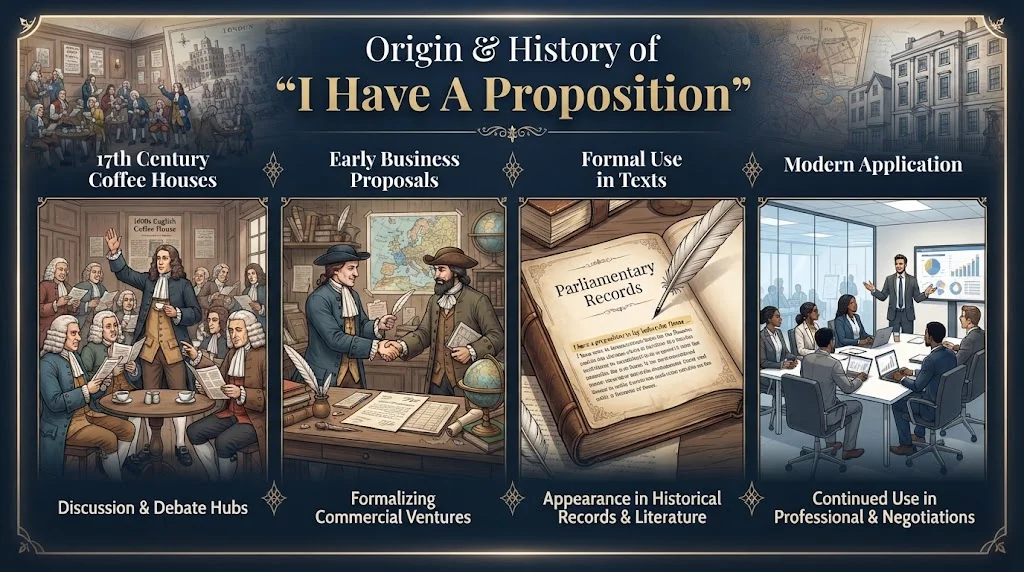
The word “proposition” comes from the Latin word proposition, meaning “a statement, proposal, or something put forward.” It entered English through Old French and became widely used in formal writing and speech.
Historically, a proposition was associated with presenting an idea, argument, or statement that could be examined or debated. In philosophy and logic, a proposition refers to a statement that could be judged as true or false. Over time, the word expanded into everyday English and began referring to offers, plans, and suggested agreements.
Today, the phrase can carry different impressions depending on culture and context. In a corporate meeting, it may sound professional. In casual conversation, it can sound dramatic or unusually formal because people often use simpler alternatives like “I have an idea” or “I’d like to suggest something.”
Synonyms & Alternatives by Tone
The best alternative depends on the relationship between speakers, the importance of the idea, and the desired impression. A phrase used with a client may not work the same way with a friend or coworker.
Professional & Neutral Alternatives
- I have a proposal
- I’d like to suggest something
- I have an idea
- I have a recommendation
- I’d like to present an option
- I have a suggestion
- I’d like to discuss a possibility
- I have a plan
- I’d like to put forward an idea
- I’d like to offer a solution
Polite & Supportive Alternatives
- I’d like to share an idea
- Could I suggest something?
- I was thinking we could…
- I’d like your thoughts on something.
- I have a thought I’d like to share
- Would you consider this option?
- I’d appreciate your feedback on an idea
Encouraging & Reassuring Alternatives
- I think I have a solution
- I have an approach that may help
- I’d like to explore an opportunity
- I have a possible way forward
- I think we could try something new
- I have an idea that might work well
Casual, Playful & Idiomatic Alternatives
- I have an idea
- Hear me out
- I’ve got a thought
- What if we tried this?
- I have something in mind
- Let me run something by you
- I’ve been thinking about something
When Should You Use “I Have A Proposition”?
The phrase can be effective when you want to introduce a specific idea and make the listener aware that a meaningful discussion is about to happen.
Professional Settings
In professional environments, “I Have A Proposition” works best when discussing:
- Business partnerships
- Negotiations
- Strategic opportunities
- Financial agreements
- Major workplace decisions
Example:
“I have a proposition that could help both teams improve collaboration. I’d like to explain the details.”
In this situation, the phrase creates a sense of importance and preparation.
Casual Conversations
In everyday conversations, the phrase is less common because it can sound more serious than necessary.
For example, telling a friend:
“I have a proposition for you.”
May make them expect a major request or unusual offer.
A more natural option would often be:
“I have an idea.”
or
“Can I suggest something?”
Writing, Presentations, and Digital Communication
The phrase can work well in:
- Business emails
- Formal proposals
- Presentations
- Negotiation messages
However, in digital communication such as Slack or WhatsApp, shorter alternatives often feel more natural.
Instead of:
“I have a proposition regarding our upcoming project.”
Many professionals would write:
“I have an idea for our upcoming project that I’d like to discuss.”
When It Is Especially Effective
“I Have A Proposition” is most effective when:
- The idea involves cooperation
- The listener needs to evaluate an option
- The discussion has a clear purpose
- The situation requires a professional tone
When Should You Avoid “I Have A Proposition”?
Although correct, this phrase is not always the best choice.
Overly Formal Situations
In highly formal communication, such as legal documents or official contracts, the phrase may be too conversational. More precise wording is usually preferred.
Examples:
Instead of:
“I have a proposition.”
Use:
“I would like to submit a formal proposal.”
Legal, Academic, or Sensitive Contexts
In legal or academic settings, “proposition” has specific meanings. Using it casually may create confusion.
For example:
- Legal documents require exact terminology.
- Academic writing may require “argument,” “claim,” or “hypothesis.”
- Research discussions may require specific technical language.
Situations Where Nuance May Be Lost
The phrase can sometimes make a simple suggestion sound more serious than intended.
Example:
“I have a proposition about dinner tonight.”
This may sound unnecessarily formal compared with:
“I have an idea for dinner.”
Is “I Have A Proposition” Professional, Polite, or Casual?
“I Have A Proposition” is generally professional and formal rather than casual.
Its tone depends heavily on context:
| Factor | Analysis |
| Formality | Moderately formal |
| Workplace Use | Appropriate for proposals and negotiations |
| Casual Use | Possible but uncommon |
| Emotional Feeling | Serious, intentional, sometimes persuasive |
| Audience Reaction | May suggest importance or a major request |
The phrase communicates that the speaker has prepared something worth discussing. It can create authority because it shows intention, but it may also create distance if the situation does not require formality.
In workplace communication, experienced speakers often choose alternatives because they want to sound collaborative rather than transactional.
For example:
- “I have a proposition” → sounds like an offer requiring consideration.
- “I’d like to share an idea” → sounds more open and cooperative.
Pros and Cons of Using “I Have A Proposition”
Advantages
Clarity
The phrase immediately signals that the speaker wants to introduce a specific idea or offer.
Efficiency
It quickly prepares the listener for a discussion rather than a casual conversation.
Accessibility
The meaning is easy for most English speakers to understand.
Professional Impact
In negotiation or business contexts, it can create a sense of importance.
Potential Drawbacks
Oversimplification
The phrase does not explain whether the proposition is a suggestion, offer, request, or solution.
Tone Mismatch
It may sound too serious in relaxed conversations.
Repetition
Using it too frequently can make communication feel stiff or scripted.
Possible Suspicion
In some situations, listeners may expect a sales pitch or personal request.
Real-Life Examples of “I Have A Proposition” by Context
Hi Sarah,
I have a proposition regarding our upcoming campaign collaboration. I believe there is an opportunity for both teams to benefit, and I’d like to discuss the details during our next meeting.
Meeting
“I have a proposition that could reduce project delays. Before we make any decisions, I’d like to share the approach with everyone.”
Presentation
“Today, I have a proposition for improving customer engagement through a more personalized strategy.”
Conversation
“I have a proposition for our weekend plans. What if we organize a small trip instead of staying in town?”
Social Media
“I have a proposition for creators: focus less on chasing trends and more on building genuine communities.”
“I Have A Proposition” vs Similar Expressions (Key Differences)
Understanding similar expressions helps you choose language that matches your intention.
| Phrase | Meaning Difference | Tone Difference | Best Use Scenario |
| I have a proposal | A formal plan or structured idea | Professional and organized | Business meetings, projects, partnerships |
| I have an idea | A general thought or suggestion | Friendly and flexible | Everyday conversations, brainstorming |
| I have a suggestion | A recommendation or possible improvement | Polite and helpful | Feedback, teamwork, advice |
| I have an offer | A specific opportunity or deal | Transactional and direct | Sales, negotiations, agreements |
| I’d like to suggest something | Introducing an idea while inviting discussion | Collaborative and respectful | Workplace communication |
| I have a recommendation | A preferred choice based on judgment or experience | Professional and confident | Advice, reports, decision-making |
Common Mistakes & Misuse of “I Have A Proposition”
Using It for Simple Ideas
A common mistake is using “proposition” when the situation only requires a basic suggestion.
Incorrect:
“I have a proposition about where we should eat.”
Better:
“I have an idea about where we should eat.”
Making Every Suggestion Sound Serious
The phrase can unintentionally increase the perceived importance of a message.
Cultural Misunderstandings
Some English learners may use “proposition” because it translates directly from another language. However, native speakers often choose simpler words depending on context.
Contradictory Usage
A serious introduction followed by a minor suggestion can create an awkward mismatch.
Example:
“I have a proposition.”
“Let’s order pizza.”
The wording and the idea do not match in seriousness.
Psychological Reasons People Prefer “I Have A Proposition”
People choose phrases like “I Have A Proposition” because language influences how others prepare to receive information.
Cognitive Load Reduction
The phrase helps listeners understand that a specific idea is coming, allowing them to shift attention toward evaluation.
Trust and Authority Signals
Formal wording can suggest preparation, confidence, and seriousness.
Attention Economy
In modern communication, short phrases that create curiosity can help capture attention.
Modern Communication Habits
Digital communication has encouraged people to use concise phrases that quickly establish purpose.
However, effective communicators balance attention with approachability. A phrase that sounds too formal may reduce openness.
US vs UK Usage of “I Have A Proposition”
The phrase is understood in both American and British English, but the perception can differ.
| Area | US Usage | UK Usage |
| Popularity | Less common in everyday speech | Slightly more associated with formal offers |
| Workplace Tone | Can sound business-oriented | Can sound traditional or formal |
| Casual Use | Often replaced by “I have an idea” | Often replaced by “I have a suggestion” |
| Emotional Effect | May create seriousness | May sound more reserved or deliberate |
In both regions, professionals often prefer more specific alternatives depending on the situation. “Proposal,” “suggestion,” and “idea” are usually more common choices.
Linguistic & Communication Insight
The phrase “I Have A Proposition” carries meaning beyond its dictionary definition. In real communication, people do not only respond to words—they respond to the intention, confidence, and social signals behind those words. The phrase tells the listener that the speaker has something prepared and wants consideration, but the emotional impact depends on the relationship, situation, and delivery.
Emotional Weight & Subtext
When native speakers hear “I Have A Proposition,” they often expect something important, structured, or potentially persuasive. The phrase can suggest that the speaker has a specific outcome in mind, such as a business arrangement, negotiation, or serious request.
The emotional meaning may include:
- Confidence: The speaker appears prepared and intentional.
- Importance: The listener expects a meaningful topic.
- Persuasion: The phrase can suggest that the speaker wants agreement or approval.
- Distance: In casual situations, it may feel slightly formal or strategic.
For example:
“I have a proposition for you.”
This sentence creates more anticipation than:
“I have an idea for you.”
The first suggests a possible agreement or exchange, while the second feels more open and collaborative.
Direct vs Indirect Phrasing
“I Have A Proposition” is a direct phrase. It clearly announces that the speaker wants to introduce something.
Direct phrasing can be useful because it:
- Saves time
- Shows confidence
- Makes the purpose clear
However, softer alternatives may work better when collaboration is important.
Compare:
“I have a proposition.”
This can sound like a formal offer that requires evaluation.
“I’d like to share an idea.”
This sounds more inviting and encourages discussion.
Experienced communicators often adjust their wording based on their goal. When they want cooperation, they may choose softer language. When they want to emphasize importance or negotiation, they may use stronger wording.
Professional Communication Perspective
In workplaces, the phrase can be effective when introducing:
- A business opportunity
- A partnership idea
- A strategic change
- A negotiation point
However, modern professional communication often values collaboration. A phrase that feels too transactional may create unnecessary distance.
For example:
“I have a proposition for improving our workflow.”
Sounds formal and serious.
A more collaborative version:
“I have an idea that could improve our workflow, and I’d like your thoughts.”
Sounds more team-oriented.
Pragmatic Reasons for Choosing Alternatives
Professionals often replace “I Have A Proposition” with alternatives because they want to:
- Reduce defensiveness
- Encourage conversation
- Make the listener feel included
- Avoid sounding like they are presenting a final demand
Words such as idea, suggestion, recommendation, and possibility create more flexibility. They allow people to disagree or contribute without feeling pressured.
I Have A Proposal
Meaning
“I Have A Proposal” means that someone has a structured idea, plan, or suggestion that they want another person or group to consider. It usually implies that the idea has been developed with a specific goal in mind.
Why This Phrase Works
This phrase works because it sounds professional while clearly communicating that the speaker has something organized to present. It is more specific than “I have an idea” and less transactional than “I have an offer.”
Real-World Usage Insight
Professionals commonly use this phrase in meetings, business emails, project discussions, and partnership conversations. It suggests preparation and encourages the listener to review a complete thought.
Best Use
Use it for:
- Business discussions
- Project planning
- Client communication
- Team improvements
- Formal presentations
Avoid When
Avoid it when making a small suggestion or casual comment because it may sound unnecessarily formal.
Tone
Professional, organized, confident, and purposeful.
US vs UK Usage
Used commonly in both American and British English. In the US, it often appears in business settings. In the UK, it can sound slightly more traditional or formal depending on context.
Example (Email / Message / Meeting)
“I have a proposal for improving our customer onboarding process. I’d like to share the details in tomorrow’s meeting and get your feedback.”
I Have An Idea
Meaning
“I Have An Idea” introduces a thought, suggestion, or possible solution that the speaker wants to share. It is one of the most common and flexible alternatives to “I Have A Proposition.”
Why This Phrase Works
This phrase works because it feels natural, approachable, and open to discussion. It does not create pressure and allows others to contribute.
Real-World Usage Insight
People use this phrase in workplaces, classrooms, friendships, and creative discussions. It is especially effective during brainstorming because it encourages participation.
Best Use
Use it for:
- Brainstorming sessions
- Casual conversations
- Creative projects
- Problem-solving discussions
Avoid When
Avoid it when presenting a formal business plan that requires a stronger professional tone.
Tone
Friendly, flexible, creative, and collaborative.
US vs UK Usage
Very common in both regions. It is a natural everyday phrase and is often preferred over more formal expressions.
Example (Meeting)
“I have an idea that could make our weekly meetings shorter. What if we send updates before the meeting and only discuss key issues live?”
I Have A Suggestion
Meaning
“I Have A Suggestion” means the speaker wants to offer advice, improvement, or a possible solution to a situation.
Why This Phrase Works
It communicates helpful intent without sounding demanding. The word “suggestion” allows room for discussion and shows respect for other opinions.
Real-World Usage Insight
Managers, teachers, and colleagues often use this phrase when giving constructive feedback or proposing improvements.
Best Use
Use it for:
- Workplace feedback
- Team discussions
- Problem-solving
- Advice
Avoid When
Avoid it when you need to present a detailed business plan or formal agreement.
Tone
Polite, supportive, and cooperative.
US vs UK Usage
Common in both American and British English. British speakers may use it frequently because it often sounds more tactful.
Example (Email)
“I have a suggestion for the report format. Adding a summary section at the beginning may make it easier for readers to understand.”
I’d Like To Suggest Something
Meaning
“I’d Like To Suggest Something” is a polite way to introduce an idea while inviting consideration from others.
Why This Phrase Works
The phrase softens the message by showing respect and avoiding a commanding tone. It encourages conversation instead of presenting an instruction.
Real-World Usage Insight
This expression is popular in professional environments because it balances confidence with politeness.
Best Use
Use it for:
- Meetings
- Workplace discussions
- Customer conversations
- Team collaboration
Avoid When
Avoid it when a direct announcement or decision is required.
Tone
Respectful, diplomatic, and collaborative.
US vs UK Usage
Common in both regions. It is especially useful in international workplaces because the meaning is clear and polite.
Example (Meeting)
“I’d like to suggest something before we finalize the schedule. Could we consider moving the deadline by one week?”
Conclusion
“I Have A Proposition” is a clear and meaningful phrase used to introduce an idea, offer, or plan that requires consideration. While it can sound professional and intentional, the best choice depends on the situation, audience, and communication goal. In business discussions, negotiations, and formal conversations, it can create a sense of importance and preparation. However, in casual or collaborative situations, alternatives like “I have an idea,” “I have a suggestion,” or “I’d like to share a thought” may sound more natural and approachable.
Understanding the difference between similar expressions helps speakers choose words that create the right impression. Effective communication is not only about sharing information but also about building trust, encouraging discussion, and matching the tone to the relationship. Whether you are writing an email, leading a meeting, or having a conversation, selecting the right alternative to “I Have A Proposition” can make your message clearer, more professional, and easier for others to accept.
FAQs
What does “I Have A Proposition” mean?
“I Have A Proposition” means that someone has an idea, offer, suggestion, or plan they want another person to consider. The phrase usually introduces something important that may involve discussion, agreement, or decision-making. It is commonly used in professional settings, negotiations, business conversations, and situations where the speaker wants to present a specific opportunity or proposal.
Is “I Have A Proposition” a professional phrase?
Yes, “I Have A Proposition” is generally considered a professional phrase, especially in business, negotiation, and formal discussions. It communicates confidence and seriousness. However, it may sound slightly formal or transactional in casual conversations. In workplaces that value collaboration, alternatives like “I’d like to share an idea” or “I have a suggestion” may create a warmer impression.
Is “I Have A Proposition” formal or casual?
“I Have A Proposition” is a formal to semi-formal expression. It is not commonly used in everyday casual conversations because it can make a simple idea sound more significant. Native speakers often choose simpler phrases like “I have an idea” or “Can I suggest something?” when speaking with friends, coworkers, or familiar audiences.
What are the best alternatives to “I Have A Proposition”?
The best alternatives depend on the context. Professional options include “I have a proposal,” “I have a recommendation,” and “I’d like to present an option.” For casual situations, “I have an idea” or “Let me run something by you” sounds more natural. For collaborative communication, “I’d like your thoughts on something” works well.
Can I use “I Have A Proposition” in an email?
Yes, you can use “I Have A Proposition” in an email, especially when discussing business opportunities, partnerships, or formal suggestions. However, it is often better to be specific about the topic. For example, “I have a proposition regarding our upcoming collaboration” sounds clearer than using the phrase alone without context.
What is the difference between “I Have A Proposition” and “I Have A Proposal”?
The difference is mainly related to tone and usage. “I Have A Proposal” usually refers to a structured plan or formal document, especially in business. “I Have A Proposition” can refer to an offer, suggestion, or possible agreement. Proposal is often more common in professional environments, while proposition may sound more persuasive or negotiation-focused.
Does “I Have A Proposition” sound natural to native English speakers?
Yes, native English speakers understand the phrase, but its naturalness depends on context. It sounds appropriate when discussing serious ideas, offers, or negotiations. In everyday conversations, it may feel slightly dramatic or formal. Many native speakers would replace it with simpler expressions like “I have an idea” or “I’d like to suggest something.”
Is “I Have A Proposition” commonly used in American and British English?
“I Have A Proposition” is understood in both American and British English, but it is more common in formal situations than in everyday speech. American speakers often prefer “proposal” or “offer” in business contexts, while British speakers may use “proposition” more frequently in formal discussions. Both regions adjust wording based on context and audience.
When should I avoid saying “I Have A Proposition”?
Avoid using “I Have A Proposition” when the situation is informal, the idea is simple, or you want to encourage relaxed conversation. It may sound too serious for small suggestions. For example, asking a friend about dinner plans with “I have a proposition” can feel unnatural. A phrase like “I have an idea” would usually work better.
How can English learners use “I Have A Proposition” correctly?
English learners should use “I Have A Proposition” when introducing a meaningful suggestion, offer, or possible agreement. It is especially suitable for business meetings, professional emails, and formal discussions. Before using it, consider whether the situation requires a serious tone. In many everyday situations, simpler alternatives will sound more natural and conversational.