
You are finishing an email to a client, sending a report to your manager, or replying to a colleague who needs more information. You type “Please see below” because it feels clear, polite, and professional. This small phrase appears everywhere in modern communication, from workplace emails to academic messages and online conversations. However, the words you choose around it can influence how helpful, respectful, or formal your message feels.
“Please see below” means that additional information, details, instructions, or explanations are provided further down in the message or document. While the phrase is widely accepted, choosing the right alternative can improve clarity and match the relationship between the sender and receiver. A customer may need a warmer phrase, while a business document may require a more direct expression.
Understanding the meaning, tone, and alternatives of “Please see below” helps professionals, students, ESL learners, and content writers communicate more naturally and effectively.
What Does “Please See Below” Mean?
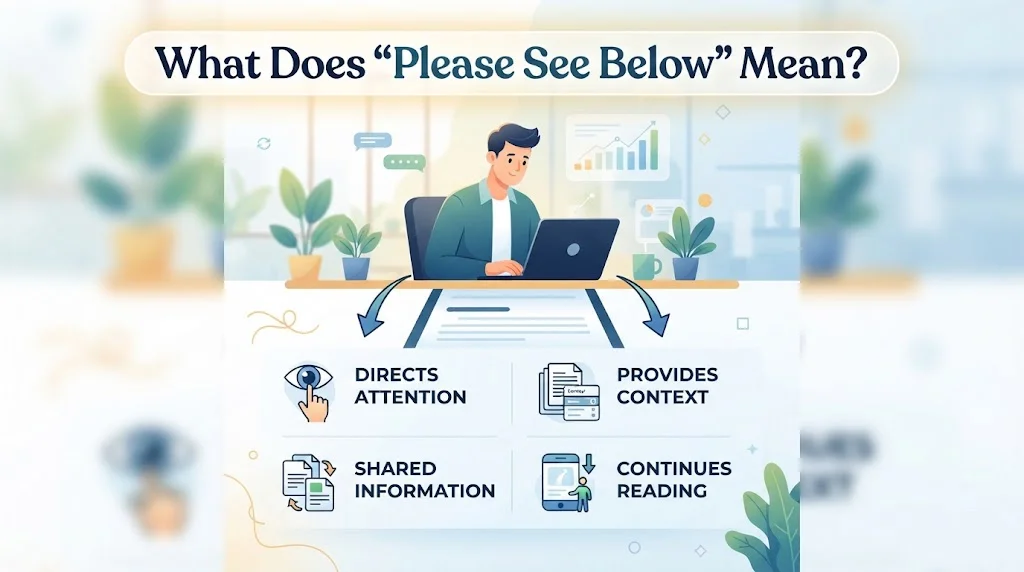
“Please see below” is a common phrase used to direct someone’s attention to information located later in an email, document, webpage, or message. It politely asks the reader to review the content that follows, such as details, answers, explanations, attachments, or instructions. The phrase is frequently used in professional, academic, and digital communication.
In simple terms, “Please see below” means “look at the information provided underneath this message.”
The phrase usually appears when the writer wants to avoid repeating information or wants the reader to focus on specific content already included in the communication.
Common situations where people use “Please see below” include:
- Responding to questions with answers listed underneath
- Sharing project updates or reports
- Providing instructions or explanations
- Referring someone to a previous message thread
- Directing attention to notes, comments, or additional details
Although the phrase is grammatically correct, its effectiveness depends on context. In some situations, it can sound professional and efficient; in others, a warmer or more specific alternative may create better communication.
Origin & History of “Please See Below”
The phrase “please see below” developed from traditional written communication practices where readers were physically directed to information placed later in a letter, document, or report. The word “below” originally referred to content positioned lower on the same page or in a following section of a written document.
The phrase combines two long-standing communication patterns:
- “Please” — a polite request marker commonly used in English to soften instructions.
- “See below” — a directional phrase used to guide attention toward additional information.
Before digital communication, similar expressions appeared in formal letters and business documents, including phrases such as “see below,” “refer below,” or “as indicated below.”
With the rise of email and workplace messaging, “Please see below” became a standard business phrase because it helped people organize information without unnecessary repetition. Instead of rewriting details, writers could place information beneath the main message and guide the reader toward it.
Today, the phrase remains common in corporate, administrative, academic, and customer service communication. However, modern communication trends increasingly favor more conversational alternatives because readers often prefer messages that feel direct and personal rather than formulaic.
Synonyms & Alternatives by Tone
Different situations require different levels of formality, warmth, and directness. The best alternative depends on your audience, purpose, and relationship with the reader.
Professional & Neutral Alternatives
- Please find the details below
- Please refer to the information below
- Kindly review the information below
- Please review the details provided
- The information is provided below
- Details are outlined below
- Please refer to the section below
- You can find the information below
- Please check the details below
Polite & Supportive Alternatives
- I’ve included the details below for your review
- I’ve provided the information below
- Please take a look at the details below
- I hope the information below helps
- I’ve added the relevant details below
- Please feel free to review the information below
- Here are the details you requested
- I’ve shared the information below for your convenience
Encouraging & Reassuring Alternatives
- I’ve included everything you need below
- You’ll find the requested information below
- I’ve gathered the details below for easy reference
- Here’s the information you were looking for
- I’ve summarized the key points below
- Everything is outlined below for clarity
Casual, Playful & Idiomatic Alternatives
- Here’s the information you need
- Take a look below
- Here you go
- Check this out
- See the details below
- I’ve dropped the details below
- Have a look at this
When Should You Use “Please See Below”?
Professional Settings
“Please see below” works well in professional environments when you need to direct attention to information without adding unnecessary explanation.
Common examples include:
- Email replies containing answers
- Project updates
- Internal company communication
- Customer support responses
- Administrative messages
Example:
Hi Sarah,
Thanks for your questions. Please see below for the updated timeline and next steps.
In workplace communication, the phrase is effective because it saves time and keeps messages organized.
Casual Conversations
The phrase can feel slightly formal in casual conversations with friends or close colleagues. In informal situations, alternatives like “Here’s the information you asked for” or “Take a look below” often sound more natural.
Example:
Here’s the link you wanted. Take a look below when you have a chance.
Writing, Presentations, and Digital Communication
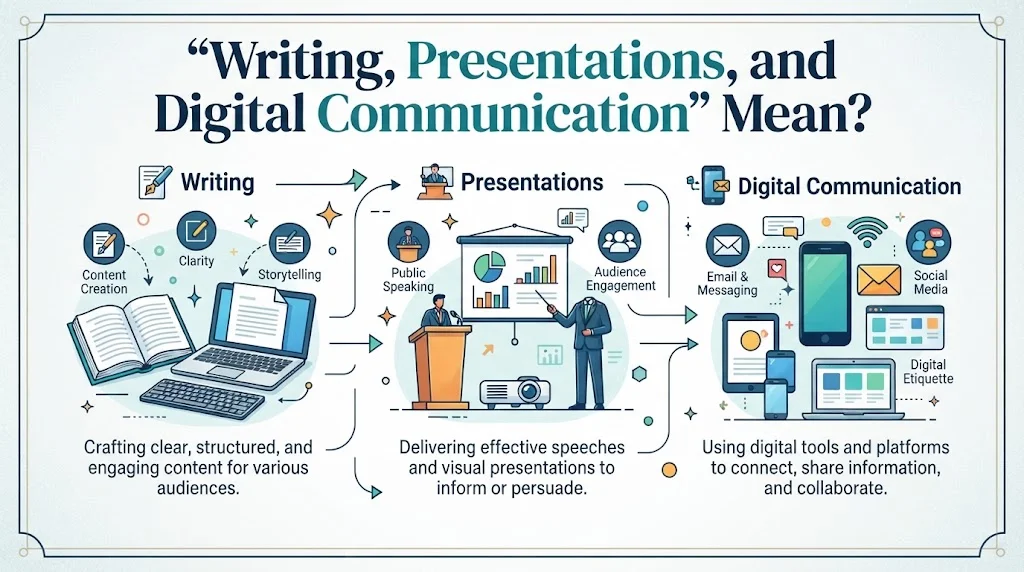
“Please see below” is useful in:
- Reports
- Online documents
- Email newsletters
- Business presentations
- Knowledge-sharing platforms
It helps readers understand where additional information is located.
When It Is Especially Effective
The phrase works best when:
- The reader already expects additional information
- The content appears immediately below
- The message requires a professional tone
- The information is too detailed to summarize in the opening sentence
However, specificity often improves communication. Instead of saying only “Please see below,” experienced writers often identify what the reader should look for.
Example:
Less specific:
Please see below.
More helpful:
Please see below for the updated pricing information and delivery schedule.
The second version reduces effort for the reader because it explains what they should find.
When Should You Avoid “Please See Below”?
Although “please see below” is acceptable, there are situations where another phrase may work better.
Overly Formal Situations
In highly formal documents, contracts, legal notices, or official communications, the phrase may feel too conversational.
Better choices may include:
- “Refer to the following section”
- “The information provided below outlines…”
Legal, Academic, or Sensitive Contexts
In situations requiring precision, vague directional phrases can create confusion.
For example:
Please see below.
does not explain:
- What information matters
- Why the reader should review it
- What action is expected
A clearer alternative:
The following section explains the required documentation process.
Situations Where Nuance May Be Lost
If the information is important, simply directing someone downward may seem dismissive.
Compare:
Please see below for details.
with:
I’ve summarized the key points below to make the next steps easier to follow.
The second option sounds more supportive and intentional.
Is “Please See Below” Professional, Polite, or Casual?
“Please see below” is generally professional and neutral. It is commonly accepted in business emails, workplace messages, and formal communication.
Tone Analysis
The phrase communicates:
- Organization
- Efficiency
- Professional distance
- A request for attention
It does not usually express strong emotion. It focuses on directing the reader rather than building a personal connection.
Formality Level
| Context | Suitability |
| Corporate emails | Highly suitable |
| Client communication | Suitable |
| Academic writing | Acceptable |
| Personal messages | Often too formal |
| Friendly workplace chats | Slightly stiff |
Emotional Subtext
Native speakers often interpret “Please see below” as:
- “The information you need is here.”
- “I have organized this for you.”
- “Please review this section.”
However, depending on the situation, it may also feel slightly distant because it focuses on instruction rather than conversation.
Audience Perception
The phrase can make the writer appear:
Positive:
- Organized
- Efficient
- Professional
Potentially negative:
- Less personal
- Slightly routine
- Less collaborative
The surrounding words usually determine the final impression.
Pros and Cons of Using “Please See Below”
Advantages
Clarity
The phrase clearly tells readers where to find additional information.
Efficiency
It avoids repeating information and keeps communication shorter.
Accessibility
Because it is simple English, it is easy for international audiences and ESL learners to understand.
Professional Acceptance
It is widely recognized in workplaces across industries.
Potential Drawbacks
Oversimplification
The phrase does not explain what the reader should focus on.
Tone Mismatch
It may sound too formal in friendly conversations or too casual in highly official documents.
Repetition
Using it frequently can make emails feel automated or impersonal.
Example:
Repeated:
Please see below. Please see below. Please see below.
This creates a template-like impression.
A stronger approach is to vary language based on purpose.
Real-Life Examples of “Please See Below” by Context
Email Example
Hi James,
Thanks for reaching out regarding the project timeline. Please see below for the updated milestones and completion dates. Let me know if you have any questions.
Best,
Emma
Meeting Example
“I’ve included the meeting notes below. Please see below for the action items assigned to each team member.”
Presentation Example
“Please see below for the quarterly performance summary and key findings.”
Conversation Example
“I sent you the information by email. Please see below for the details.”
Social Media Example
A company posting an update might write:
“Please see below for important information about our upcoming service changes.”
For social media, however, a more engaging phrase is usually better:
“Here’s everything you need to know.”
“Please See Below” vs Similar Expressions (Key Differences)
The following phrases are similar to “please see below,” but each carries a slightly different tone and purpose.
| Phrase | Meaning Difference | Tone Difference | Best Use Scenario |
| Please find attached | Directs attention to a separate file rather than the text below | Professional and formal | Sending documents or files |
| Please refer to the information below | Similar meaning but slightly more formal and instructional | Formal and precise | Reports, policies, official communication |
| See below | Removes the polite request element | Direct and brief | Internal messages, quick updates |
| Here are the details | Presents information directly instead of directing attention | Friendly and helpful | Customer service, team communication |
| Kindly review the information below | Adds a stronger request for attention | Polite and formal | Business requests and reviews |
| I’ve included the details below | Shows personal effort and involvement | Warm and professional | Client emails and collaboration |
Common Mistakes & Misuse of “Please See Below”
Although “Please see below” is widely accepted, using it incorrectly can reduce clarity and make communication feel less thoughtful. Good communication is not only about choosing the correct words; it is also about helping the reader understand what action to take.
Overuse
One common mistake is relying on “please see below” in every email or message. Repeating the same phrase can make communication feel automated, especially when the information could be introduced more naturally.
Example:
Please see below for the update.
Please see below for the report.
Please see below for the details.
A better approach is to vary the wording:
I’ve summarized the main updates below.
Here are the details you requested.
You’ll find the report information below.
Incorrect Context
“Please see below” is not always the best choice when the reader needs a specific action.
Weak:
Please see below.
Better:
Please review the updated figures below and confirm if everything looks correct.
The second version gives the reader a clear purpose.
Contradictory Usage
Sometimes writers use “please see below” when there is actually no information below. This creates confusion and damages credibility.
Incorrect:
Please see the attached document below.
If the document is attached, the phrase should refer to the attachment instead:
Please find the attached document for your review.
Cultural Misunderstandings
For non-native English speakers, “please see below” can appear more natural than it does to native speakers because it follows traditional business English patterns.
In some cultures, direct instructions are considered professional and respectful. However, English-speaking audiences may sometimes prefer a phrase that feels more collaborative.
Compare:
Please see below for the information.
vs.
I’ve included the information below for your convenience.
The second option feels more considerate because it highlights the reader’s experience.
Psychological Reasons People Prefer “Please See Below”
The popularity of “please see below” is not accidental. The phrase satisfies several communication needs in modern environments where people process large amounts of information quickly.
Cognitive Load Reduction
People receive hundreds of messages, notifications, and updates every day. A phrase like “please see below” reduces mental effort by directing attention to a specific location.
Instead of making readers search through an entire message, it creates a simple instruction:
Look here for the information you need.
This improves efficiency, especially in workplace communication.
Trust and Authority Signals
Professional phrases often create an impression of organization and reliability.
“Please see below” can signal that:
- Information has been prepared carefully
- Details are available in one place
- The sender values structure
However, authority depends on the surrounding message. A clear explanation creates more trust than a simple direction.
Compare:
Please see below.
with:
I’ve included the updated figures below, along with the changes we discussed during yesterday’s meeting.
The second example communicates preparation and accountability.
Attention Economy
Modern readers scan messages. They often look for:
- Key information
- Required actions
- Important dates
- Decisions
“Please see below” works because it quickly guides attention without adding unnecessary words.
However, effective communicators increasingly replace it with more specific wording because attention is limited.
Example:
Please see below for details.
vs.
Please see below for the three changes affecting your account.
The second version immediately tells the reader why the information matters.
Modern Communication Habits
Email, messaging apps, and workplace platforms have changed how people write. Short phrases have become common because speed and efficiency are important.
Despite this, modern professional communication is moving toward a balance between:
- Efficiency
- Personal connection
- Clear expectations
This is why phrases such as “I’ve included the details below” and “Here’s what you need to know” are becoming more popular.
US vs UK Usage of “Please See Below”
“Please see below” is understood in both American and British English. The meaning remains the same, but the tone can differ slightly depending on communication style.
Popularity
In both the US and UK, the phrase is common in:
- Business emails
- Administrative communication
- Customer service messages
- Corporate documents
It is especially frequent in professional environments where efficiency and structure are valued.
Tone Perception in the US
American workplace communication often values directness and friendliness. While “please see below” is acceptable, some American professionals may prefer warmer alternatives.
Common US alternatives:
- I’ve included the details below
- Here’s the information you requested
- You’ll find the details below
These phrases feel more conversational while remaining professional.
Tone Perception in the UK
British professional writing often uses more traditional and polite expressions. “Please see below” fits naturally within many UK business contexts.
However, overly repeated use may sound slightly formal or routine.
Common UK alternatives:
- Please find the details below
- Kindly refer to the information below
- I have included the details below
Regional Preference Summary
| Region | General Impression | Common Preference |
| US | Professional but sometimes slightly formal | More conversational alternatives are increasingly common |
| UK | Traditional and acceptable | Formal alternatives remain widely used |
| International Business | Clear and neutral | Simple, specific wording works best |
“Please See Below” in Digital & Modern Communication
Digital communication has changed how people interpret phrases like “please see below.” The phrase remains useful, but the platform often determines whether it feels natural.
Emails
Email remains the strongest environment for “please see below.”
Examples:
Hi Mark,
Thank you for your message. Please see below for my responses to each question.
This works because emails often contain structured information.
For client communication, adding context improves the tone:
I’ve added my comments below for your review.
Slack and Workplace Messaging
In quick workplace chats, “please see below” can feel overly formal.
Instead:
I’ve added the details here.
or:
Here’s the update you were looking for.
Example:
The design team shared the latest version. I’ve added the link below.
This feels more natural for fast conversations.
WhatsApp and Informal Messaging
In personal or informal communication, “please see below” usually sounds too business-like.
Better alternatives:
- Here you go
- Check this out
- I’ve sent the details below
Example:
Here you go — I added the address and timing below.
Social Media
Social media communication usually requires a more engaging style.
Instead of:
Please see below for details.
A brand may write:
Here’s everything you need to know.
or:
We’ve answered your most common questions below.
The goal on social platforms is not only clarity but also connection.
AI-Generated Summaries
With the rise of AI tools, phrases like “please see below” appear frequently in automatically generated emails and summaries.
This creates a new challenge: avoiding generic language.
AI-generated:
Please see below for the information requested.
Human-centered:
I’ve summarized the key points below so you can quickly review the updates.
The second version sounds more intentional and reader-focused.
Linguistic & Communication Insight
Understanding “please see below” requires looking beyond grammar. The phrase carries social meaning that depends on relationship, context, and intention.
Emotional Weight & Subtext
The literal meaning is simple: look at the information underneath.
However, native speakers often interpret additional signals:
Positive signals:
- The sender is organized
- The information is available
- The message has structure
Possible negative signals:
- The sender may be distant
- The message may feel copied or automated
- The reader may feel instructed rather than included
The surrounding language determines whether the phrase feels helpful or cold.
Direct vs Indirect Phrasing
“Please see below” is a direct communication tool. It clearly tells the reader where to look.
Direct style:
Please see below for the updated schedule.
Softer style:
I’ve included the updated schedule below for your reference.
The softer version creates a sense of cooperation rather than instruction.
Direct language is useful when:
- Time matters
- The information is straightforward
- The reader already understands the context
Softer language is useful when:
- Building relationships
- Requesting cooperation
- Communicating with customers or external partners
Professional Communication Perspective
In workplaces, word choice influences how people perceive professionalism.
“Please see below” can communicate:
- Efficiency
- Organization
- Confidence
But experienced communicators often add context because professional communication is not only about delivering information; it is about making information easy to understand.
Compare:
Please see below.
with:
I’ve included the requested information below, along with the next steps for your review.
The second version demonstrates awareness of the reader’s needs.
Pragmatic Reasons for Alternatives
Professionals choose alternatives for specific reasons:
To Reduce Defensiveness
A request can feel less demanding when framed collaboratively.
Instead of:
Please review below.
Use:
I’ve included the details below for your review.
To Signal Cooperation
Phrases that include “I’ve included” or “I’ve shared” show effort from the sender.
To Balance Authority and Friendliness
Leaders often need to sound confident without appearing distant.
Example:
I’ve outlined the key decisions below.
This sounds authoritative while remaining approachable.
Social Signaling
Language choices influence relationships.
A phrase like “please see below” signals efficiency and professionalism, but alternatives can signal:
- Care
- Collaboration
- Personal attention
- Respect
Small wording changes can affect how messages are received.
Tone & Context Guidance
Use “please see below” when:
- You need a professional, neutral phrase
- The reader expects additional information
- The message is structured and informational
Consider alternatives when:
- The audience is a client or customer
- The topic is sensitive
- You want a warmer relationship
- You need the reader to take a specific action
The best communicators do not avoid phrases like “please see below.” Instead, they understand when the phrase supports their purpose and when another option creates a stronger connection.
Conclusion
“Please see below” is a widely used phrase that helps people direct attention to additional information in emails, documents, and digital communication. Its simple meaning makes it useful across professional, academic, and everyday contexts, but the best communicators understand that tone matters. While the phrase is clear and professional, alternatives such as “I’ve included the details below,” “Here are the details you requested,” or “You’ll find the information below” can create a warmer and more reader-focused experience.
Choosing the right alternative depends on your audience, purpose, and communication style. A formal report may benefit from traditional wording, while a client email or team message may sound better with a more conversational approach. Understanding the subtle differences between these phrases helps improve clarity, professionalism, and trust.
Ultimately, “Please see below” remains a useful expression, but effective communication comes from knowing when to use it and when another phrase better supports your message.
FAQs About “Please See Below”
What does “Please see below” mean?
“Please see below” means that additional information, details, instructions, or explanations are provided underneath the current message or document. It is commonly used in emails, reports, and professional communication to direct readers toward relevant content without repeating the information.
Is “Please see below” professional?
Yes, “Please see below” is considered professional and acceptable in workplace communication. It is commonly used in business emails, customer service messages, and administrative writing. However, adding more specific wording, such as “I’ve included the details below,” can make the message sound more personal and collaborative.
Is “Please see below” polite?
Yes, the phrase is polite because it includes the word “please,” which softens the instruction. However, politeness also depends on context. In some situations, alternatives like “I’ve included the information below for your review” may sound more considerate because they acknowledge the reader’s needs.
What are better alternatives to “Please see below”?
Popular alternatives include “I’ve included the details below,” “Here are the details you requested,” “Please refer to the information below,” and “You’ll find the details below.” The best option depends on your tone, audience, and purpose. Professional emails often benefit from warmer, more specific wording.
Can I use “Please see below” in an email?
Yes, “Please see below” is commonly used in emails, especially when sharing updates, answers, instructions, or additional information. For better clarity, specify what the reader should look at, such as “Please see below for the updated schedule” or “Please see below for my responses.”
Is “Please see below” formal or casual?
“Please see below” is generally considered formal or professional rather than casual. It works well in business communication but may sound too formal in conversations with friends or close colleagues. Casual alternatives include “Here you go,” “Take a look below,” or “I’ve added the details below.”
Should I use “Please see below” in professional emails?
You can use it in professional emails, but avoid using it repeatedly. Modern business writing often favors clearer and more personalized alternatives. Instead of only saying “Please see below,” explain what information is included and why the reader should review it.
What is the difference between “Please see below” and “Please find below”?
Both phrases direct attention to information underneath a message. “Please see below” focuses on asking the reader to look at information, while “Please find below” emphasizes that the information has been provided. Both are acceptable, although “Please find below” may sound slightly more traditional.
Is “Please see below” common in US and UK English?
Yes, “Please see below” is used in both American and British English. It is common in professional communication worldwide. In the US, people often prefer slightly warmer alternatives, while UK business writing may use more traditional phrases such as “Please refer below” or “Please find below.”
How can I make “Please see below” sound more natural?
To make the phrase more natural, add context and explain what the reader will find. Instead of writing “Please see below,” write “I’ve included the updated report below for your review” or “You’ll find the requested information below.” This makes the message clearer and more helpful.


